UTV bill stalls after contested safety debate; sponsor temporarily postpones SB 356
January 21, 2026 | 2026 Legislature FL, Florida
This article was created by AI summarizing key points discussed. AI makes mistakes, so for full details and context, please refer to the video of the full meeting. Please report any errors so we can fix them. Report an error »
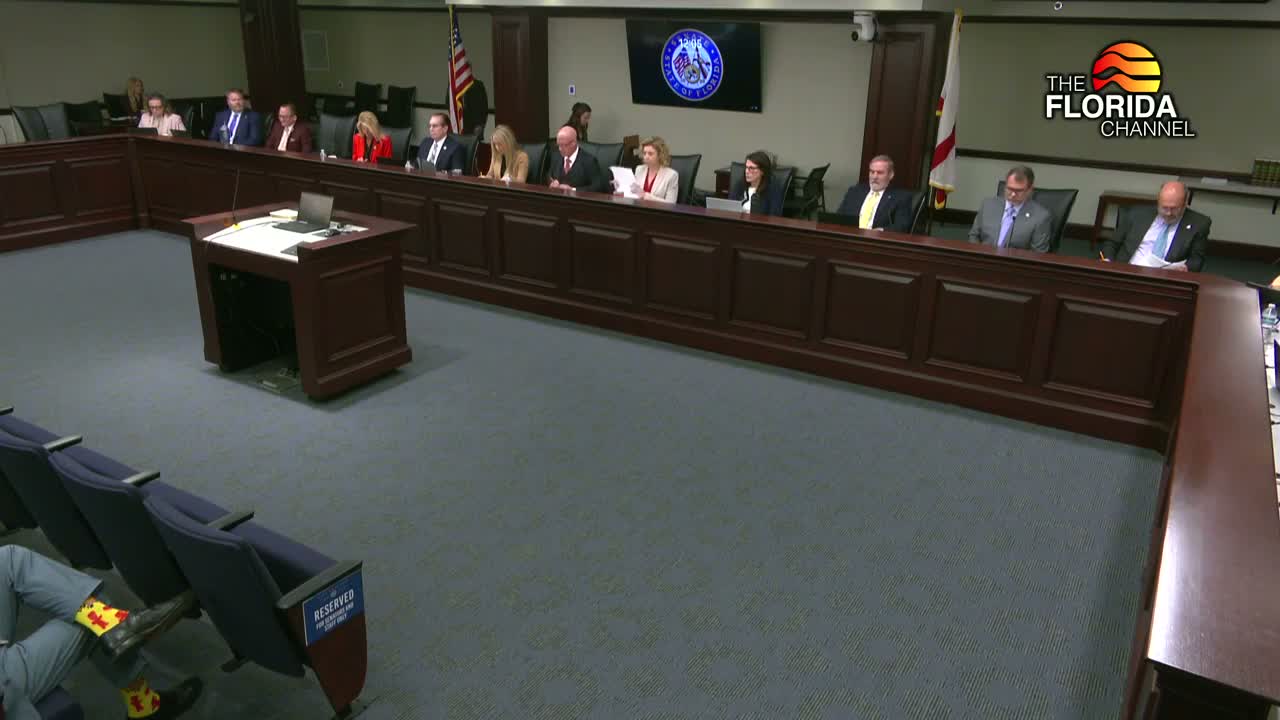
Senate Bill 356, an opt‑in framework to allow utility terrain vehicles (UTVs) on designated local roads, was temporarily postponed after prolonged debate in the Appropriations Committee on Transportation, Tourism and Economic Development.
Sponsor Senator Wright described the bill as a local opt‑in mechanism that would let counties and municipalities authorize UTVs on two‑lane roads posted under 55 mph, provided communities first determine the routes are safe and owners make UTVs street legal. "This bill creates regulations for UTVs to be operated on designated roads where local municipalities have decided it's safe to do so," Wright said.
Public testimony divided sharply. Several sheriffs and deputies — including the Flagler County chief deputy and Volusia County retired sheriff Ben Johnson — supported the bill, saying registration and tags would help identify vehicles and reduce unsafe flight from traffic stops. The sheriff's deputy testified that unregistered UTVs currently give drivers incentive to flee because officers cannot identify owners.
Manufacturers, the Recreational Off‑Highway Vehicle Association and the Florida Justice Association opposed the proposal. Wynn Peoples of the trade association warned that UTVs "do not meet federal motor vehicle standards" and that allowing road use "falsely signals that this practice is safe and it is not." Dale Swope of the Florida Justice Association warned the bill lacked required braking and speed‑engine limits removed from earlier drafts and said it "makes vehicles that are otherwise illegal legal and it makes vehicles legal that are not safe."
Senators raised questions about crash history, speed and insurance minimums; Senator Martin and others said concerns about night visibility and weight/speed differentials with passenger vehicles remained unresolved. Citing the breadth of outstanding issues, Senator Wright asked to "TP" (temporarily postpone) the bill and the chair granted the motion; the bill was marked temporarily postponed on the record.
Next steps: Sponsor indicated willingness to provide additional data and to work with colleagues on revisions before the bill returns to committee.
Sponsor Senator Wright described the bill as a local opt‑in mechanism that would let counties and municipalities authorize UTVs on two‑lane roads posted under 55 mph, provided communities first determine the routes are safe and owners make UTVs street legal. "This bill creates regulations for UTVs to be operated on designated roads where local municipalities have decided it's safe to do so," Wright said.
Public testimony divided sharply. Several sheriffs and deputies — including the Flagler County chief deputy and Volusia County retired sheriff Ben Johnson — supported the bill, saying registration and tags would help identify vehicles and reduce unsafe flight from traffic stops. The sheriff's deputy testified that unregistered UTVs currently give drivers incentive to flee because officers cannot identify owners.
Manufacturers, the Recreational Off‑Highway Vehicle Association and the Florida Justice Association opposed the proposal. Wynn Peoples of the trade association warned that UTVs "do not meet federal motor vehicle standards" and that allowing road use "falsely signals that this practice is safe and it is not." Dale Swope of the Florida Justice Association warned the bill lacked required braking and speed‑engine limits removed from earlier drafts and said it "makes vehicles that are otherwise illegal legal and it makes vehicles legal that are not safe."
Senators raised questions about crash history, speed and insurance minimums; Senator Martin and others said concerns about night visibility and weight/speed differentials with passenger vehicles remained unresolved. Citing the breadth of outstanding issues, Senator Wright asked to "TP" (temporarily postpone) the bill and the chair granted the motion; the bill was marked temporarily postponed on the record.
Next steps: Sponsor indicated willingness to provide additional data and to work with colleagues on revisions before the bill returns to committee.
View the Full Meeting & All Its Details
This article offers just a summary. Unlock complete video, transcripts, and insights as a Founder Member.
✓
Watch full, unedited meeting videos
✓
Search every word spoken in unlimited transcripts
✓
AI summaries & real-time alerts (all government levels)
✓
Permanent access to expanding government content
30-day money-back guarantee
