Florida committee advances bill tightening residency and presence limits for certain registrants amid sharp public opposition
January 20, 2026 | 2026 Legislature FL, Florida
This article was created by AI summarizing key points discussed. AI makes mistakes, so for full details and context, please refer to the video of the full meeting. Please report any errors so we can fix them. Report an error »
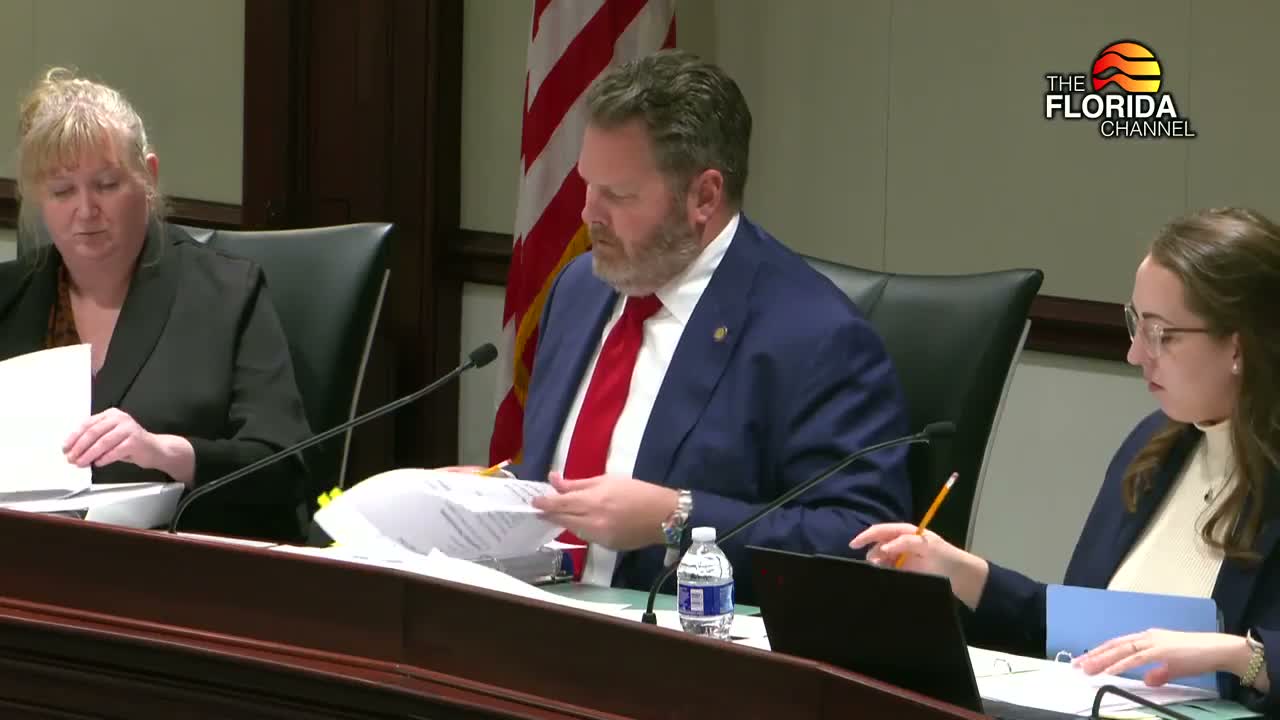
Senator MacLean introduced CS for SB 212, a rewritten bill that places key definitions into the criminal code and adds a narrowly defined restricted‑presence provision that would bar certain covered offenders from being within 200 feet of specified locations, while listing explicit exceptions. The sponsor said the amendment ‘‘places key definitions directly in the criminal code and adds a narrowly defined restricted presence provision,’’ and asked for the committee’s support.
The bill drew sustained public opposition. Emily Horowitz, identified in testimony materials as a sociologist whose research focuses on collateral consequences, said residency restrictions lack empirical support and ‘‘not 1 [case] would have been prevented by residency restrictions’’ in a cited Minnesota study. Francine Richmond, a parent who identified herself as affected by registries, said: "Punishment for life is what will happen if this bill goes through." She described the registry’s long‑term harms to her family and warned the bill would push people and families into poverty and homelessness.
Several speakers representing treatment, public‑safety and civil‑justice groups urged caution. George Deichman of the Florida Association for the Treatment and Prevention of [offenses] said his members ‘‘do not believe this proposal will accomplish’’ increased child safety and highlighted that most offenses occur in private settings with known perpetrators. David Perry of the Florida Coalition to Advance Racial Equity warned the bill’s geographic bans would make large areas of counties effectively off‑limits for the nearly 20,000 people on Florida’s registry and likely increase homelessness.
Sponsor remarks and the amendment emphasize targeted exceptions and retained registry checks for employment and volunteer roles; the amendment also adds arrest authority for violations and supervision steps for some registrants. The committee adopted the amendment and, after public testimony and brief debate, reported CS for SB 212 favorably.
The committee’s action moves the bill forward; next steps will be floor consideration and any additional amendments or committee referrals.
The bill drew sustained public opposition. Emily Horowitz, identified in testimony materials as a sociologist whose research focuses on collateral consequences, said residency restrictions lack empirical support and ‘‘not 1 [case] would have been prevented by residency restrictions’’ in a cited Minnesota study. Francine Richmond, a parent who identified herself as affected by registries, said: "Punishment for life is what will happen if this bill goes through." She described the registry’s long‑term harms to her family and warned the bill would push people and families into poverty and homelessness.
Several speakers representing treatment, public‑safety and civil‑justice groups urged caution. George Deichman of the Florida Association for the Treatment and Prevention of [offenses] said his members ‘‘do not believe this proposal will accomplish’’ increased child safety and highlighted that most offenses occur in private settings with known perpetrators. David Perry of the Florida Coalition to Advance Racial Equity warned the bill’s geographic bans would make large areas of counties effectively off‑limits for the nearly 20,000 people on Florida’s registry and likely increase homelessness.
Sponsor remarks and the amendment emphasize targeted exceptions and retained registry checks for employment and volunteer roles; the amendment also adds arrest authority for violations and supervision steps for some registrants. The committee adopted the amendment and, after public testimony and brief debate, reported CS for SB 212 favorably.
The committee’s action moves the bill forward; next steps will be floor consideration and any additional amendments or committee referrals.
Don't Miss a Word: See the Full Meeting!
Go beyond summaries. Unlock every video, transcript, and key insight with a Founder Membership.
✓
Get instant access to full meeting videos
✓
Search and clip any phrase from complete transcripts
✓
Receive AI-powered summaries & custom alerts
✓
Enjoy lifetime, unrestricted access to government data
30-day money-back guarantee
