Bottle bill debate draws opposition from grocers, beverage and hospitality groups
January 22, 2026 | Commerce and Consumer Affairs, House of Representatives, Committees , Legislative, New Hampshire
This article was created by AI summarizing key points discussed. AI makes mistakes, so for full details and context, please refer to the video of the full meeting. Please report any errors so we can fix them. Report an error »
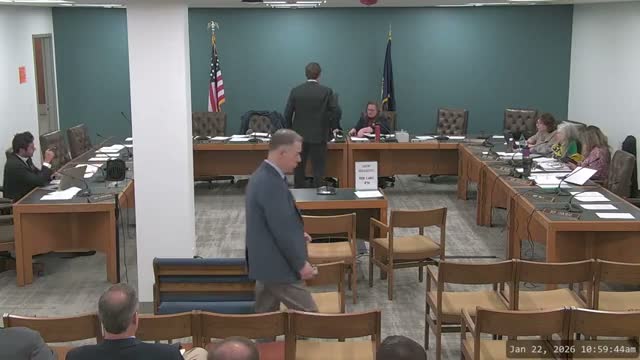
Representative Sullivan introduced HB 16‑79, modeled on Oregon’s redemption program, to establish a statewide beverage container deposit and redemption system. Sullivan said constituents had asked for the conversation and that the committee should weigh pros and cons.
Kevin Daigle, president of the New Hampshire Grocers Association, testified in opposition and handed out written testimony, saying bottle bills act like a regressive fee, increase out‑of‑pocket costs for low‑income consumers (including some WIC/SNAP recipients), and impose storage and sanitary burdens on retailers. “Beverage containers frequently contain residual sugar… If not thoroughly cleaned, which seldom are, they attract insects and rodents,” Daigle said.
Representatives of the New Hampshire Beverage Association and the New Hampshire Lodging and Restaurant Association echoed those concerns, warning that small retailers and restaurants lack space to store returned containers and that handling returned material could raise contamination and pest control issues.
Lieutenant Matthew Culver of the State Liquor Commission told the committee that enactment of a mandatory deposit law would change a wholesale distributor fee established in Title 13, RSA 178.26, reducing a 30¢‑per‑gallon fee to 18¢ per gallon on the effective date of deposit legislation, which the Liquor Commission estimated could result in roughly a $4 million revenue difference based on prior calendar figures.
Committee members asked questions and heard testimony; the committee closed the public hearing and did not move the bill to a final vote at that time. Staff and members said they will consider agency economic figures and stakeholder comments in drafting potential amendments.
Kevin Daigle, president of the New Hampshire Grocers Association, testified in opposition and handed out written testimony, saying bottle bills act like a regressive fee, increase out‑of‑pocket costs for low‑income consumers (including some WIC/SNAP recipients), and impose storage and sanitary burdens on retailers. “Beverage containers frequently contain residual sugar… If not thoroughly cleaned, which seldom are, they attract insects and rodents,” Daigle said.
Representatives of the New Hampshire Beverage Association and the New Hampshire Lodging and Restaurant Association echoed those concerns, warning that small retailers and restaurants lack space to store returned containers and that handling returned material could raise contamination and pest control issues.
Lieutenant Matthew Culver of the State Liquor Commission told the committee that enactment of a mandatory deposit law would change a wholesale distributor fee established in Title 13, RSA 178.26, reducing a 30¢‑per‑gallon fee to 18¢ per gallon on the effective date of deposit legislation, which the Liquor Commission estimated could result in roughly a $4 million revenue difference based on prior calendar figures.
Committee members asked questions and heard testimony; the committee closed the public hearing and did not move the bill to a final vote at that time. Staff and members said they will consider agency economic figures and stakeholder comments in drafting potential amendments.
View the Full Meeting & All Its Details
This article offers just a summary. Unlock complete video, transcripts, and insights as a Founder Member.
✓
Watch full, unedited meeting videos
✓
Search every word spoken in unlimited transcripts
✓
AI summaries & real-time alerts (all government levels)
✓
Permanent access to expanding government content
30-day money-back guarantee
