Committee debates applying PFAS restrictions to condoms and lubricants; members vote to study implementation
January 22, 2026 | Commerce and Consumer Affairs, House of Representatives, Committees , Legislative, New Hampshire
This article was created by AI summarizing key points discussed. AI makes mistakes, so for full details and context, please refer to the video of the full meeting. Please report any errors so we can fix them. Report an error »
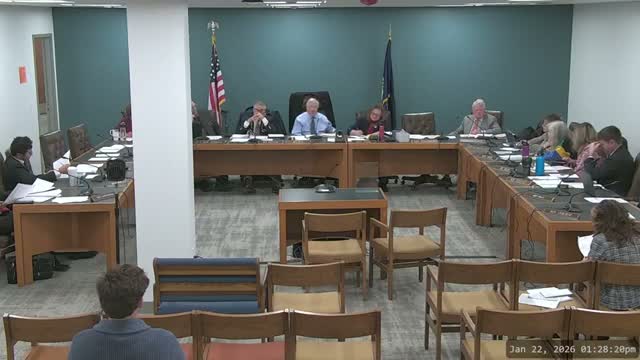
Lawmakers spent an extended portion of the hearing discussing whether recently enacted PFAS product restrictions should be applied to condoms and personal lubricants. A sponsor explained that government testing and nonprofit testing (cited sources: EWG and federal testing agencies) had identified a small set of products with PFAS; the bill as discussed would prohibit products with PFAS content and rely in part on manufacturer reporting and government testing.
Members expressed a series of concerns: Representative X (member identifying herself in the transcript) worried about the incompleteness of testing and whether banning only tested products could imply untested products are safe. Others questioned enforcement mechanics, noting the state does not proactively test every product and that the statute relies on reports and manufacturer disclosures. Health and environmental witnesses cited associations between PFAS exposure and certain cancers; members said the proposal could signal manufacturers to change formulas, as occurred previously with ski wax and other consumer products.
Committee members also debated narrowing the draft to lubricants only rather than condoms, because testimony suggested lubricants — not the condom sheath itself — were more likely sources of PFAS contamination. Several members urged caution on overbroad bans that could unintentionally limit consumer access. After robust discussion, a member moved interim study to investigate testing coverage, enforcement pathways, and market availability; the motion carried with a recorded tally of 7 in favor and 1 opposed.
Members expressed a series of concerns: Representative X (member identifying herself in the transcript) worried about the incompleteness of testing and whether banning only tested products could imply untested products are safe. Others questioned enforcement mechanics, noting the state does not proactively test every product and that the statute relies on reports and manufacturer disclosures. Health and environmental witnesses cited associations between PFAS exposure and certain cancers; members said the proposal could signal manufacturers to change formulas, as occurred previously with ski wax and other consumer products.
Committee members also debated narrowing the draft to lubricants only rather than condoms, because testimony suggested lubricants — not the condom sheath itself — were more likely sources of PFAS contamination. Several members urged caution on overbroad bans that could unintentionally limit consumer access. After robust discussion, a member moved interim study to investigate testing coverage, enforcement pathways, and market availability; the motion carried with a recorded tally of 7 in favor and 1 opposed.
View the Full Meeting & All Its Details
This article offers just a summary. Unlock complete video, transcripts, and insights as a Founder Member.
✓
Watch full, unedited meeting videos
✓
Search every word spoken in unlimited transcripts
✓
AI summaries & real-time alerts (all government levels)
✓
Permanent access to expanding government content
30-day money-back guarantee
