House Judiciary Committee releases bill to create tiered penalties for animal cruelty
January 21, 2026 | 2026 Legislature DE, Legislative, Delaware
This article was created by AI summarizing key points discussed. AI makes mistakes, so for full details and context, please refer to the video of the full meeting. Please report any errors so we can fix them. Report an error »
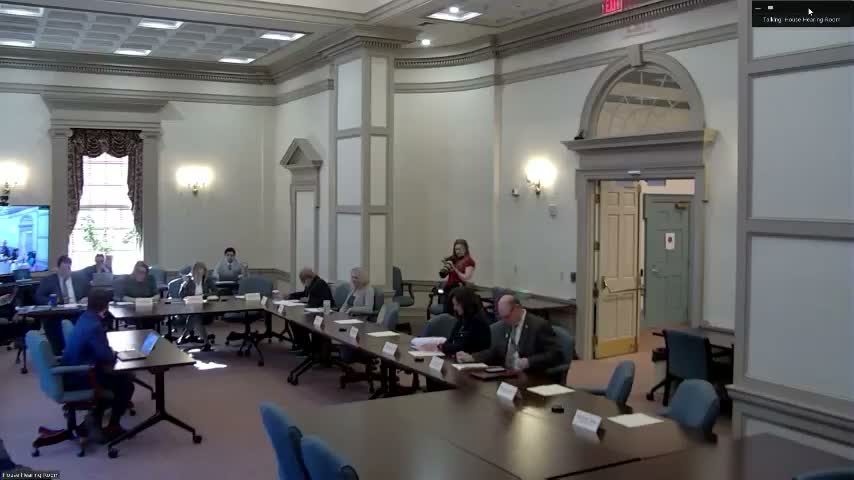
The Delaware House Judiciary Committee voted Jan. 21 to release House Bill 134, which would create a tiered system of penalties for animal cruelty under Title 11 of the Delaware Code, sending the measure to the full House for consideration.
Representative Steffen, the bill’s sponsor, told the committee the measure aims to replace the current uniform penalty structure with escalating consequences for repeat offenders, modeled on Delaware's DUI and protection-from-abuse statutes. “The first offense remains the offense that it currently is under code,” Steffen said, “but then other offenses actually create a tiered approach … If you do it a third time, we are really going to come down on you.” He highlighted as an example the statute that prohibits confining an animal in a vehicle when temperatures endanger the animal’s health.
The bill would increase fines and extend the period during which a person is barred from owning or possessing animals for repeat misdemeanor violations; Steffen said the measure also provides for escalation to a class F felony after repeated offenses, giving courts discretion to set punishment based on the circumstances. He noted the proposal changes a prior 15-year ownership prohibition to a ban “for the remainder of their life” in specified second-felony cases, and acknowledged questions about how that change would interact with expungement rules.
Representative Gorman, who said he added his name to the bill, raised a procedural concern after receiving an email from the Office of Defense Services citing a Supreme Court matter related to the sequencing of prior offenses in Delaware. “We did receive an email last night from Office of Defense Services that brought up concerns about a Supreme Court case about … the sequential existence of prior offenses,” Gorman said. Steffen said he had read the email and that courts were reviewing particular sections of code; he said the bill was modeled on other tiered statutes and that, if courts identify issues, they would inform the legislature.
Representative Fleming asked whether the courts had reviewed the bill and whether the Department of Justice had been consulted. Steffen said he had sent the bill to the courts but had not received a substantive response and had not yet spoken with DOJ; the chair asked him to follow up on those contacts.
Committee members also sought clarity on whether penalties would be charged per animal or per incident. A committee member asked explicitly whether the law operates per dog or per incident; Steffen replied that the statute is incident-based, not per animal. On expungement, Steffen said he did not know how a lifetime ownership prohibition would interact with possible expungement of convictions and said that remained unresolved.
There were no in-person or virtual public commenters signed up. Representative Cook moved to release the bill from committee; Representative Romer seconded. The committee approved the motion by roll call: Pulaski, Valerie Jones Giltner, Gorman, Cook, Romer and Griffith voted yes; several members were recorded absent. The chair said she would seek signatures from absent members and bring the bill to the House floor.
The meeting adjourned after the vote.
What happens next: HB 134 is scheduled to be walked for signatures and, if sufficient signatures are obtained, will be reported out of committee and placed on the House floor for further consideration. The committee requested additional review and possible comment from the courts and from DOJ; questions about expungement effects and the interaction with pending Office of Animal Welfare changes remain open.
Representative Steffen, the bill’s sponsor, told the committee the measure aims to replace the current uniform penalty structure with escalating consequences for repeat offenders, modeled on Delaware's DUI and protection-from-abuse statutes. “The first offense remains the offense that it currently is under code,” Steffen said, “but then other offenses actually create a tiered approach … If you do it a third time, we are really going to come down on you.” He highlighted as an example the statute that prohibits confining an animal in a vehicle when temperatures endanger the animal’s health.
The bill would increase fines and extend the period during which a person is barred from owning or possessing animals for repeat misdemeanor violations; Steffen said the measure also provides for escalation to a class F felony after repeated offenses, giving courts discretion to set punishment based on the circumstances. He noted the proposal changes a prior 15-year ownership prohibition to a ban “for the remainder of their life” in specified second-felony cases, and acknowledged questions about how that change would interact with expungement rules.
Representative Gorman, who said he added his name to the bill, raised a procedural concern after receiving an email from the Office of Defense Services citing a Supreme Court matter related to the sequencing of prior offenses in Delaware. “We did receive an email last night from Office of Defense Services that brought up concerns about a Supreme Court case about … the sequential existence of prior offenses,” Gorman said. Steffen said he had read the email and that courts were reviewing particular sections of code; he said the bill was modeled on other tiered statutes and that, if courts identify issues, they would inform the legislature.
Representative Fleming asked whether the courts had reviewed the bill and whether the Department of Justice had been consulted. Steffen said he had sent the bill to the courts but had not received a substantive response and had not yet spoken with DOJ; the chair asked him to follow up on those contacts.
Committee members also sought clarity on whether penalties would be charged per animal or per incident. A committee member asked explicitly whether the law operates per dog or per incident; Steffen replied that the statute is incident-based, not per animal. On expungement, Steffen said he did not know how a lifetime ownership prohibition would interact with possible expungement of convictions and said that remained unresolved.
There were no in-person or virtual public commenters signed up. Representative Cook moved to release the bill from committee; Representative Romer seconded. The committee approved the motion by roll call: Pulaski, Valerie Jones Giltner, Gorman, Cook, Romer and Griffith voted yes; several members were recorded absent. The chair said she would seek signatures from absent members and bring the bill to the House floor.
The meeting adjourned after the vote.
What happens next: HB 134 is scheduled to be walked for signatures and, if sufficient signatures are obtained, will be reported out of committee and placed on the House floor for further consideration. The committee requested additional review and possible comment from the courts and from DOJ; questions about expungement effects and the interaction with pending Office of Animal Welfare changes remain open.
Don't Miss a Word: See the Full Meeting!
Go beyond summaries. Unlock every video, transcript, and key insight with a Founder Membership.
✓
Get instant access to full meeting videos
✓
Search and clip any phrase from complete transcripts
✓
Receive AI-powered summaries & custom alerts
✓
Enjoy lifetime, unrestricted access to government data
30-day money-back guarantee
