New Castle courts consolidate retail-theft calendars into a monthly 'theft week'; small retailers remain vulnerable
January 20, 2026 | 2026 Legislature DE, Legislative, Delaware
This article was created by AI summarizing key points discussed. AI makes mistakes, so for full details and context, please refer to the video of the full meeting. Please report any errors so we can fix them. Report an error »
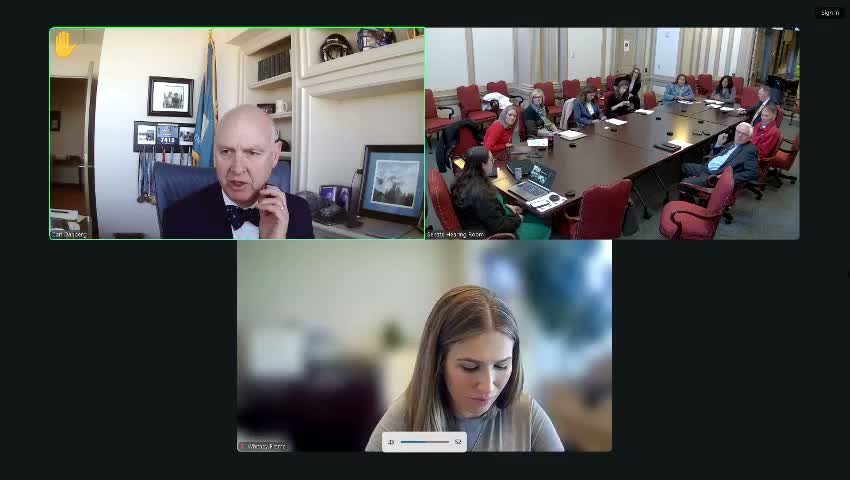
Court representatives told the task force New Castle County now schedules concentrated retail-theft trial calendars—"theft week"—to limit repeated court appearances by retailers. "We've consolidated cases for both jury trial and non jury trial onto 3 days, 1 week a month," a court speaker said, explaining the county runs multiple jury and non-jury calendars during that period.
Court staff described the structure: jury calendars run on two days, with non-jury trials held across three calendars on another day; the county's trial volume requires multiple calendars and makes a single retailer appearance day infeasible. Court representatives said retailers' appearances have increased since the change but that consolidation reduces the unpredictability and frequency of required appearances.
Judicial and court staff remarks stressed that most shoplifting cases resolve when the state provides timely discovery and witnesses are present, because many matters are largely resolved on video evidence. "If the state's witness doesn't show or the discovery hasn't been provided, that's when the case either gets dismissed or continued," a court official said.
Court representatives acknowledged that consolidation helps larger retailers but does not fully solve burdens on small, mom-and-pop stores that may have a single staff person. Judges said constitutional confrontation requirements mean witnesses generally must be physically present; the courts suggested minimizing vendors' time in court through advanced case readiness and plea discussions when appropriate.
The task force asked the courts to follow how improved DSP evidence flows (Axon uploads and centralized investigative work) affect plea rates and dismissals; members requested updates in the coming months to assess whether the new court scheduling and DSP unit produce measurable improvements for retailers.
Court staff described the structure: jury calendars run on two days, with non-jury trials held across three calendars on another day; the county's trial volume requires multiple calendars and makes a single retailer appearance day infeasible. Court representatives said retailers' appearances have increased since the change but that consolidation reduces the unpredictability and frequency of required appearances.
Judicial and court staff remarks stressed that most shoplifting cases resolve when the state provides timely discovery and witnesses are present, because many matters are largely resolved on video evidence. "If the state's witness doesn't show or the discovery hasn't been provided, that's when the case either gets dismissed or continued," a court official said.
Court representatives acknowledged that consolidation helps larger retailers but does not fully solve burdens on small, mom-and-pop stores that may have a single staff person. Judges said constitutional confrontation requirements mean witnesses generally must be physically present; the courts suggested minimizing vendors' time in court through advanced case readiness and plea discussions when appropriate.
The task force asked the courts to follow how improved DSP evidence flows (Axon uploads and centralized investigative work) affect plea rates and dismissals; members requested updates in the coming months to assess whether the new court scheduling and DSP unit produce measurable improvements for retailers.
Don't Miss a Word: See the Full Meeting!
Go beyond summaries. Unlock every video, transcript, and key insight with a Founder Membership.
✓
Get instant access to full meeting videos
✓
Search and clip any phrase from complete transcripts
✓
Receive AI-powered summaries & custom alerts
✓
Enjoy lifetime, unrestricted access to government data
30-day money-back guarantee
