Senate committee hears 'Ryan's Law' to let terminally ill patients continue medical cannabis in hospitals; bill held for medical society review
January 21, 2026 | 2026 Legislature DE, Legislative, Delaware
This article was created by AI summarizing key points discussed. AI makes mistakes, so for full details and context, please refer to the video of the full meeting. Please report any errors so we can fix them. Report an error »
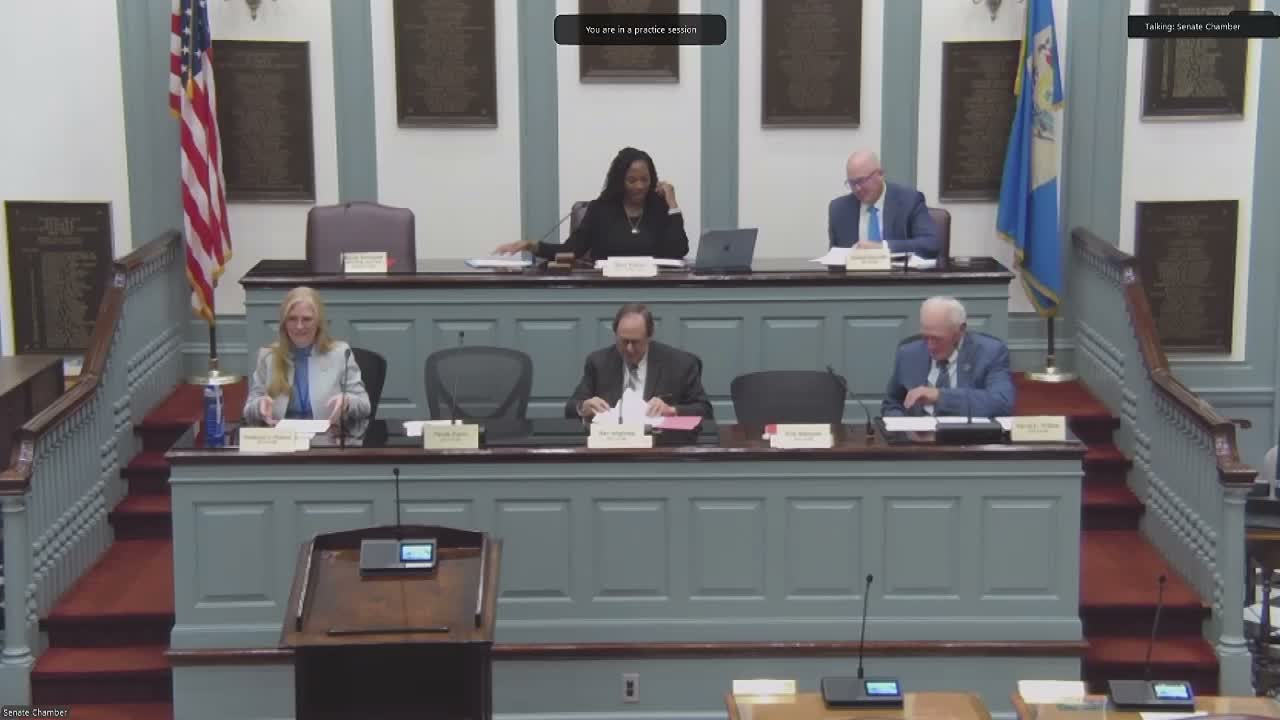
Senate Bill 226, called "Ryan's Law," was introduced to the Health and Social Services Committee as a measure to let terminally ill patients who already hold valid medical marijuana cards continue using their medication while admitted to hospitals.
Senator Hansen, a sponsor, told the committee the bill grew out of a family's experience in which a hospitalized patient named Ryan became much more alert and able to communicate after switching from heavy sedating medications to medical cannabis. "He was medicated, pretty heavily with medications that left him kind of sedated and not really able to communicate," Hansen said, describing the family's request that hospitals allow continuation of in-home medical cannabis for patients nearing end of life.
The bill limits the authorization to patients diagnosed as terminally ill and already enrolled in the state's medical cannabis program. Under the bill language described to the committee, patients and their caregivers would be responsible for storage and administration of the medication and must inform hospital staff when they are using it. Hospitals would retain discretion to develop their own policies, prohibit use if it would negatively impact patient care, and may pause participation if federal scrutiny or liability concerns arise. "Key safeguards were included in the bill that helped to satisfy those concerns that we raised such as liability protections, the ability of hospital systems to discontinue participation if there is federal scrutiny and discretion to prohibit use when medical marijuana could negatively impact a patient's care," said Christina Bryan, vice president of external affairs at the Delaware Health Care Association, which expressed support.
Committee members pressed on practical and clinical issues. Senator Poore asked whether patients would self-administer and who bears liability; Hansen replied the patient/family stores and administers the cannabis and hospitals may revoke permission where contraindications exist. Senator Siegfried flagged chain-of-custody and product-quality concerns and urged consultation with physicians and medical societies before advancing the bill.
Senator Hoffner, a co-prime, spoke from personal experience supporting the measure as a palliative alternative to stronger opioids for symptom control late in life.
After public testimony and member questions, Chair Senator Pinkney said she would hold the bill and not circulate it until she had spoken with the medical society; she said she would recirculate it afterward. No committee vote on final passage or a recommendation occurred during this meeting.
The committee did not establish a timeline for reconsideration. The next procedural step indicated on record is for the chair to consult with the medical society and then recirculate the bill to members.
Senator Hansen, a sponsor, told the committee the bill grew out of a family's experience in which a hospitalized patient named Ryan became much more alert and able to communicate after switching from heavy sedating medications to medical cannabis. "He was medicated, pretty heavily with medications that left him kind of sedated and not really able to communicate," Hansen said, describing the family's request that hospitals allow continuation of in-home medical cannabis for patients nearing end of life.
The bill limits the authorization to patients diagnosed as terminally ill and already enrolled in the state's medical cannabis program. Under the bill language described to the committee, patients and their caregivers would be responsible for storage and administration of the medication and must inform hospital staff when they are using it. Hospitals would retain discretion to develop their own policies, prohibit use if it would negatively impact patient care, and may pause participation if federal scrutiny or liability concerns arise. "Key safeguards were included in the bill that helped to satisfy those concerns that we raised such as liability protections, the ability of hospital systems to discontinue participation if there is federal scrutiny and discretion to prohibit use when medical marijuana could negatively impact a patient's care," said Christina Bryan, vice president of external affairs at the Delaware Health Care Association, which expressed support.
Committee members pressed on practical and clinical issues. Senator Poore asked whether patients would self-administer and who bears liability; Hansen replied the patient/family stores and administers the cannabis and hospitals may revoke permission where contraindications exist. Senator Siegfried flagged chain-of-custody and product-quality concerns and urged consultation with physicians and medical societies before advancing the bill.
Senator Hoffner, a co-prime, spoke from personal experience supporting the measure as a palliative alternative to stronger opioids for symptom control late in life.
After public testimony and member questions, Chair Senator Pinkney said she would hold the bill and not circulate it until she had spoken with the medical society; she said she would recirculate it afterward. No committee vote on final passage or a recommendation occurred during this meeting.
The committee did not establish a timeline for reconsideration. The next procedural step indicated on record is for the chair to consult with the medical society and then recirculate the bill to members.
View the Full Meeting & All Its Details
This article offers just a summary. Unlock complete video, transcripts, and insights as a Founder Member.
✓
Watch full, unedited meeting videos
✓
Search every word spoken in unlimited transcripts
✓
AI summaries & real-time alerts (all government levels)
✓
Permanent access to expanding government content
30-day money-back guarantee
