Attendance advocates outline chronic absenteeism definitions, root causes and school‑level strategies
February 15, 2025 | Coos Bay SD 9, School Districts, Oregon
This article was created by AI summarizing key points discussed. AI makes mistakes, so for full details and context, please refer to the video of the full meeting. Please report any errors so we can fix them. Report an error »
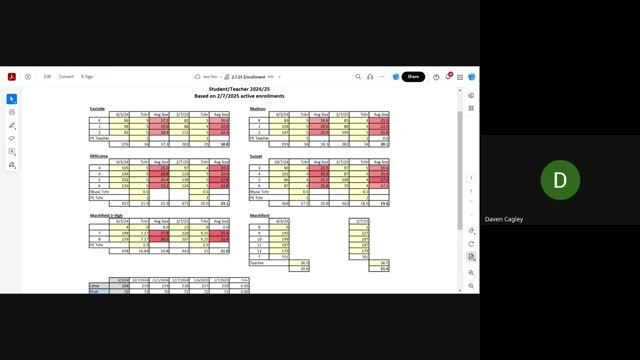
A member of the district’s attendance team presented a districtwide briefing on attendance metrics, root causes of chronic absenteeism and local interventions. The presenter explained the differences among average daily attendance (a school‑level, day‑by‑day measure), truancy (legal compliance and unexcused absences) and chronic absenteeism (an individual student measure defined as missing 10% or more of school days).
Key points and data
• Definitions: Chronic absenteeism = missing 10% or more of the school year (roughly 17–18 days on a 170‑day calendar). Severe chronic absenteeism = missing 20% or more. Regular attenders miss fewer than 10% of school days.
• Current data: At midyear the presenter said no school had reached 70% regular attenders districtwide; attendance advocates described modest gains at some sites but noted that attendance is among the hardest measures to move after COVID‑era declines.
• Root causes: Health and mental‑health issues, poverty and housing instability, transportation problems, family caregiving responsibilities, lack of awareness of attendance impact on academics, school climate factors (bullying, connectedness), disciplinary practices (suspensions count toward chronic absenteeism) and disengagement.
Interventions and local practices
• Attendance advocates and staff: The district has named attendance advocates at each level — for example, Chad Briscoe at the high school, Jimmy Keller at the junior high, and Anne Rodriguez for grades 3–6 — who do personalized outreach, connect families to resources and coordinate school teams.
• School‑level strategies: Examples included early morning reporting of attendance, weekly attendance huddles, incentives (weekly drawings, recognition and small rewards), targeted interventions for students near the 90% threshold, and community partnerships (ARC and other local agencies) for family support.
• Destinations (alternative education): The presenter highlighted Destinations’ improvement in regular attenders under current leadership and noted the program’s small‑group model, flexible pacing for credits and strong staff‑student relationships as drivers of its success; the program still has a wait list.
District systems work
The presenter said the district is shifting from person‑driven practices to systemized attendance teams, particularly in K–6, so practices do not depend on a single staff member. The district participates in a regional attendance collaborative and is drawing on state TOP (Tribal Opportunities Program) tools for culturally responsive outreach to American Indian/Alaska Native families.
Ending
Board members thanked attendance staff and asked for continued progress updates. Administration said it will continue building attendance teams, collect and share quarterly data, and return with targeted actions that show which interventions are moving the needle.
Key points and data
• Definitions: Chronic absenteeism = missing 10% or more of the school year (roughly 17–18 days on a 170‑day calendar). Severe chronic absenteeism = missing 20% or more. Regular attenders miss fewer than 10% of school days.
• Current data: At midyear the presenter said no school had reached 70% regular attenders districtwide; attendance advocates described modest gains at some sites but noted that attendance is among the hardest measures to move after COVID‑era declines.
• Root causes: Health and mental‑health issues, poverty and housing instability, transportation problems, family caregiving responsibilities, lack of awareness of attendance impact on academics, school climate factors (bullying, connectedness), disciplinary practices (suspensions count toward chronic absenteeism) and disengagement.
Interventions and local practices
• Attendance advocates and staff: The district has named attendance advocates at each level — for example, Chad Briscoe at the high school, Jimmy Keller at the junior high, and Anne Rodriguez for grades 3–6 — who do personalized outreach, connect families to resources and coordinate school teams.
• School‑level strategies: Examples included early morning reporting of attendance, weekly attendance huddles, incentives (weekly drawings, recognition and small rewards), targeted interventions for students near the 90% threshold, and community partnerships (ARC and other local agencies) for family support.
• Destinations (alternative education): The presenter highlighted Destinations’ improvement in regular attenders under current leadership and noted the program’s small‑group model, flexible pacing for credits and strong staff‑student relationships as drivers of its success; the program still has a wait list.
District systems work
The presenter said the district is shifting from person‑driven practices to systemized attendance teams, particularly in K–6, so practices do not depend on a single staff member. The district participates in a regional attendance collaborative and is drawing on state TOP (Tribal Opportunities Program) tools for culturally responsive outreach to American Indian/Alaska Native families.
Ending
Board members thanked attendance staff and asked for continued progress updates. Administration said it will continue building attendance teams, collect and share quarterly data, and return with targeted actions that show which interventions are moving the needle.
View the Full Meeting & All Its Details
This article offers just a summary. Unlock complete video, transcripts, and insights as a Founder Member.
✓
Watch full, unedited meeting videos
✓
Search every word spoken in unlimited transcripts
✓
AI summaries & real-time alerts (all government levels)
✓
Permanent access to expanding government content
30-day money-back guarantee
