Denver council approves Cornavaca Park maintenance‑facility plan after heated debate over RISE bond allocations
January 12, 2026 | Denver (Consolidated County and City), Colorado
This article was created by AI summarizing key points discussed. AI makes mistakes, so for full details and context, please refer to the video of the full meeting. Please report any errors so we can fix them. Report an error »
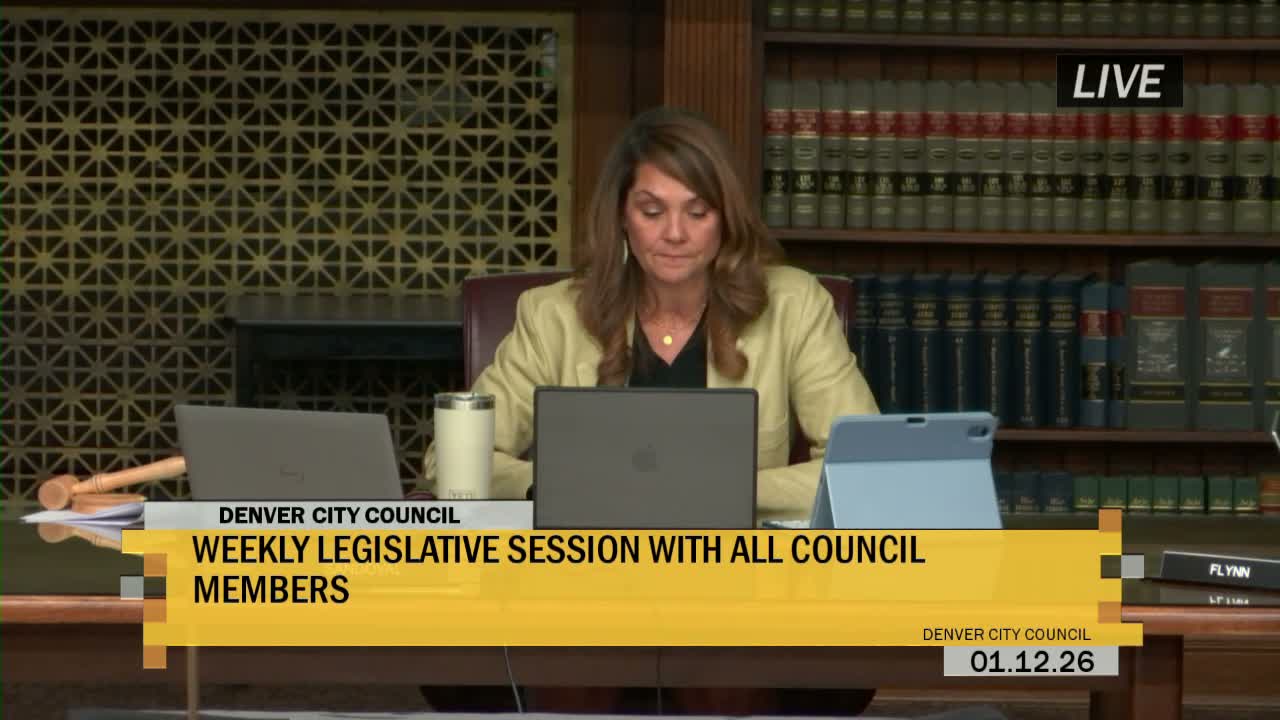
Denver City Council approved a park building plan for a new maintenance, equipment and storage facility at Cornavaca Park on Jan. 12, 2026, after an extended public hearing and weeks of preparatory staff work.
Parks and Recreation Executive Director Joel Clark described the project as an approximately 11,000‑square‑foot operations and maintenance headquarters that exceeds the city’s 3,000‑square‑foot threshold for council review. Clark said the building will replace an off‑site Park Avenue facility the department must vacate and will serve as a headquarters for multiple maintenance districts, offering offices, training space and secured equipment storage.
“Because it is zoned OSA and the building footprint exceeds the threshold, this plan required public hearing and council approval,” Clark said during the staff presentation.
The hearing focused less on the technical design than on how the 2021 RISE general obligation bond was scoped and how the project’s budget relates to a paired satellite shop elsewhere in the city. Public commenter Scott Gilmore, who identified himself as a longtime parks and recreation deputy/ex‑staffer, told council that RISE‑era project worksheets and online dashboards showed $15.8 million for two maintenance shops and warned that the Cornavaca plan as proposed would effectively move about $5.4 million of that funding away from District 11 to District 1.
“In the bond documents it was $15,800,000 for two maintenance shops — and approving this plan as presented removes $5,400,000 out of District 11 and puts it in District 1,” Scott Gilmore said.
Parks staff and finance officials said that the dashboard’s default division of bundled projects during early scoping is not the same as a final allocation of dollars. Tristan, director for community behavioral health at DDPHE and not involved in Parks funding, was not part of this exchange; Parks staff explained that bundles are a common budgeting step used when projects have not been fully scoped. "There was no diversion of funds here," Joel Clark said, adding that the bundle’s default split is a placeholder and that construction contracts and final budget approvals will come through the appropriate procurement tracks.
Councilmembers pressed Parks on several points: how the department defined headquarters versus satellite facilities; whether the islands of funding in early bond spreadsheets matched voter expectations; and how Parks would ensure equitable maintenance levels across districts. Parks operations lead Jill Kaufman described internal criteria the department uses — principally irrigated acres and operational drive‑time — to size headquarters and satellites and said the department would return documentation requested by council.
Councilmember Gilmore moved to postpone the bill to March 16, 2026, citing a need for more written documentation and additional community outreach; Councilmember Parady seconded. Supporters of the postponement said clarified paperwork and local meetings in affected neighborhoods were necessary to maintain trust. Opponents said the bundle language in the RISE bond allows the department to refine scope and that delaying the project would not change the underlying need to replace an outgrown facility.
The postponement motion failed on roll call, 1–11. Council then voted on Council Bill 25‑17‑04; the final roll call recorded 11 ayes and one no, and the bill passed.
Council members and Parks staff said next steps include returning with construction contract documents (the Cornavaca construction contract is expected to come to council), continued outreach to neighborhoods, and follow‑up materials showing how the bond bundle was scoped and how final allocations were determined.
“This is not a vote to close off conversation,” Councilmember Parady said during the debate, urging that staff provide the historical bond scoping documents and any clarifying records. Parks staff committed to providing the requested materials and to scheduling neighborhood engagement ahead of major construction steps.
The council’s action authorizes the park building plan to proceed through the city’s procurement and permitting tracks; implementation will involve additional council review where the construction contract exceeds council thresholds.
Parks and Recreation Executive Director Joel Clark described the project as an approximately 11,000‑square‑foot operations and maintenance headquarters that exceeds the city’s 3,000‑square‑foot threshold for council review. Clark said the building will replace an off‑site Park Avenue facility the department must vacate and will serve as a headquarters for multiple maintenance districts, offering offices, training space and secured equipment storage.
“Because it is zoned OSA and the building footprint exceeds the threshold, this plan required public hearing and council approval,” Clark said during the staff presentation.
The hearing focused less on the technical design than on how the 2021 RISE general obligation bond was scoped and how the project’s budget relates to a paired satellite shop elsewhere in the city. Public commenter Scott Gilmore, who identified himself as a longtime parks and recreation deputy/ex‑staffer, told council that RISE‑era project worksheets and online dashboards showed $15.8 million for two maintenance shops and warned that the Cornavaca plan as proposed would effectively move about $5.4 million of that funding away from District 11 to District 1.
“In the bond documents it was $15,800,000 for two maintenance shops — and approving this plan as presented removes $5,400,000 out of District 11 and puts it in District 1,” Scott Gilmore said.
Parks staff and finance officials said that the dashboard’s default division of bundled projects during early scoping is not the same as a final allocation of dollars. Tristan, director for community behavioral health at DDPHE and not involved in Parks funding, was not part of this exchange; Parks staff explained that bundles are a common budgeting step used when projects have not been fully scoped. "There was no diversion of funds here," Joel Clark said, adding that the bundle’s default split is a placeholder and that construction contracts and final budget approvals will come through the appropriate procurement tracks.
Councilmembers pressed Parks on several points: how the department defined headquarters versus satellite facilities; whether the islands of funding in early bond spreadsheets matched voter expectations; and how Parks would ensure equitable maintenance levels across districts. Parks operations lead Jill Kaufman described internal criteria the department uses — principally irrigated acres and operational drive‑time — to size headquarters and satellites and said the department would return documentation requested by council.
Councilmember Gilmore moved to postpone the bill to March 16, 2026, citing a need for more written documentation and additional community outreach; Councilmember Parady seconded. Supporters of the postponement said clarified paperwork and local meetings in affected neighborhoods were necessary to maintain trust. Opponents said the bundle language in the RISE bond allows the department to refine scope and that delaying the project would not change the underlying need to replace an outgrown facility.
The postponement motion failed on roll call, 1–11. Council then voted on Council Bill 25‑17‑04; the final roll call recorded 11 ayes and one no, and the bill passed.
Council members and Parks staff said next steps include returning with construction contract documents (the Cornavaca construction contract is expected to come to council), continued outreach to neighborhoods, and follow‑up materials showing how the bond bundle was scoped and how final allocations were determined.
“This is not a vote to close off conversation,” Councilmember Parady said during the debate, urging that staff provide the historical bond scoping documents and any clarifying records. Parks staff committed to providing the requested materials and to scheduling neighborhood engagement ahead of major construction steps.
The council’s action authorizes the park building plan to proceed through the city’s procurement and permitting tracks; implementation will involve additional council review where the construction contract exceeds council thresholds.
View the Full Meeting & All Its Details
This article offers just a summary. Unlock complete video, transcripts, and insights as a Founder Member.
✓
Watch full, unedited meeting videos
✓
Search every word spoken in unlimited transcripts
✓
AI summaries & real-time alerts (all government levels)
✓
Permanent access to expanding government content
30-day money-back guarantee
