Denver committee hears draft ordinance to bar identity‑concealing masks by enforcement officers
January 12, 2026 | Denver (Consolidated County and City), Colorado
This article was created by AI summarizing key points discussed. AI makes mistakes, so for full details and context, please refer to the video of the full meeting. Please report any errors so we can fix them. Report an error »
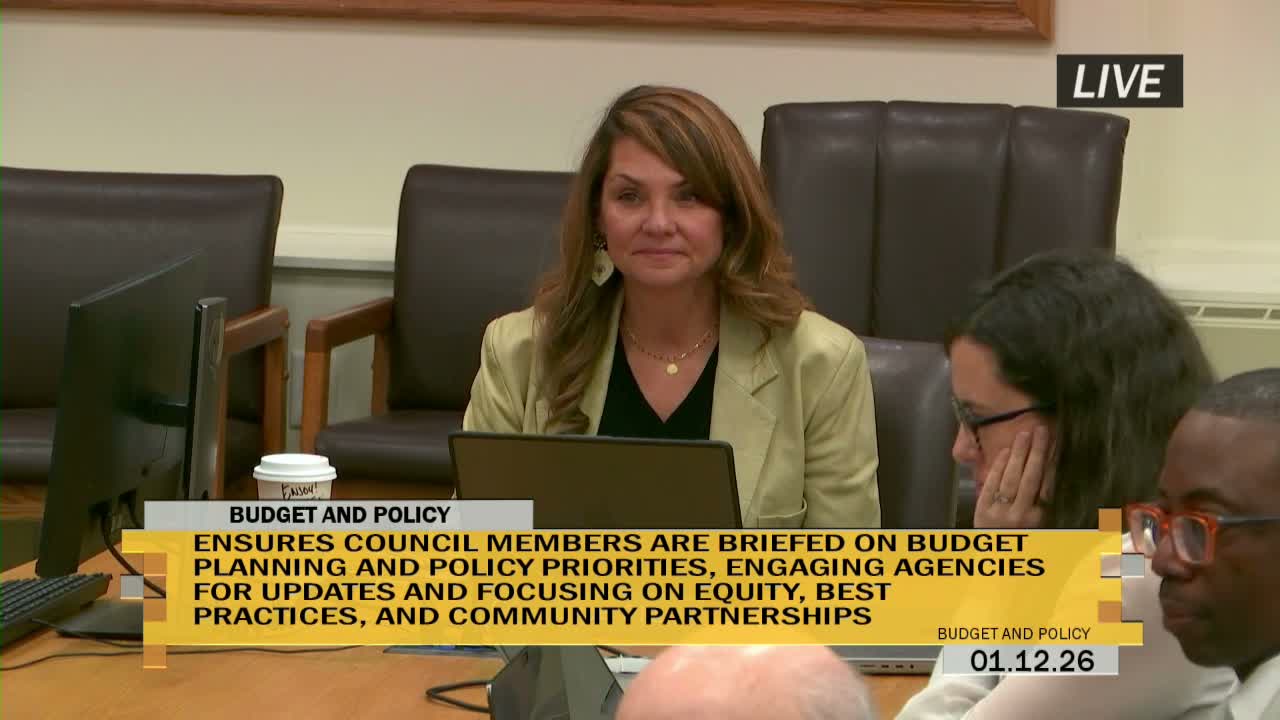
Councilmembers on the Denver City Council’s Budget & Policy Committee on Dec. 23, 2025 heard a presentation on a proposed ordinance that would bar law enforcement from wearing facial coverings that conceal identity while detaining, arresting or physically restraining people and inside city facilities.
The presenter, identified in the transcript as Councilwoman Flug Avidra, said the proposal is rooted in constitutional and moral concerns and aims to balance safety with public accountability. “This policy begins from a place of clarity, not hostility,” she said, arguing that concealment can “undermine due process, escalates fear, increases the risk of impersonation, and erodes public trust.”
Deputy Legislative Counsel Jonathan Griffin advised the committee that broad coverage—applying the rule to all law enforcement officers—“is usually safer” from a legal standpoint and noted similar measures are being litigated in California. Committee members pressed staff on whether federal agents could claim exemptions and on how the city would enforce the rule if federal personnel ignored it.
City counsel and committee members said Denver Police Department (DPD) would be the unit tasked with enforcing the municipal ordinance if it becomes law; enforcement options discussed included issuing citations or post‑incident citations rather than immediate arrests. City attorneys said municipal court and city attorneys would handle municipal citations rather than the district attorney’s office.
The draft includes exemptions meant to preserve necessary tactical and safety functions for officers, such as SWAT or Emergency Response Unit operations and medical protective gear; staff said the exemptions were developed in consultation with DPD and the sheriff’s office. Councilmembers recommended adding clearer badging and visible identification requirements to reduce impersonation and community confusion.
No formal action or vote was taken. Staff said they will continue stakeholder outreach with DPD, the sheriff’s office, the mayor’s office and state partners through January–February and will return to council with a revised draft ordinance and departmental briefings before scheduling readings on the council floor.
The presenter, identified in the transcript as Councilwoman Flug Avidra, said the proposal is rooted in constitutional and moral concerns and aims to balance safety with public accountability. “This policy begins from a place of clarity, not hostility,” she said, arguing that concealment can “undermine due process, escalates fear, increases the risk of impersonation, and erodes public trust.”
Deputy Legislative Counsel Jonathan Griffin advised the committee that broad coverage—applying the rule to all law enforcement officers—“is usually safer” from a legal standpoint and noted similar measures are being litigated in California. Committee members pressed staff on whether federal agents could claim exemptions and on how the city would enforce the rule if federal personnel ignored it.
City counsel and committee members said Denver Police Department (DPD) would be the unit tasked with enforcing the municipal ordinance if it becomes law; enforcement options discussed included issuing citations or post‑incident citations rather than immediate arrests. City attorneys said municipal court and city attorneys would handle municipal citations rather than the district attorney’s office.
The draft includes exemptions meant to preserve necessary tactical and safety functions for officers, such as SWAT or Emergency Response Unit operations and medical protective gear; staff said the exemptions were developed in consultation with DPD and the sheriff’s office. Councilmembers recommended adding clearer badging and visible identification requirements to reduce impersonation and community confusion.
No formal action or vote was taken. Staff said they will continue stakeholder outreach with DPD, the sheriff’s office, the mayor’s office and state partners through January–February and will return to council with a revised draft ordinance and departmental briefings before scheduling readings on the council floor.
View the Full Meeting & All Its Details
This article offers just a summary. Unlock complete video, transcripts, and insights as a Founder Member.
✓
Watch full, unedited meeting videos
✓
Search every word spoken in unlimited transcripts
✓
AI summaries & real-time alerts (all government levels)
✓
Permanent access to expanding government content
30-day money-back guarantee
