Denver OHR proposes Rule 10 edits, shifts care‑hours eligibility to 12 months and aligns with state and federal law
January 20, 2026 | Denver (Consolidated County and City), Colorado
This article was created by AI summarizing key points discussed. AI makes mistakes, so for full details and context, please refer to the video of the full meeting. Please report any errors so we can fix them. Report an error »
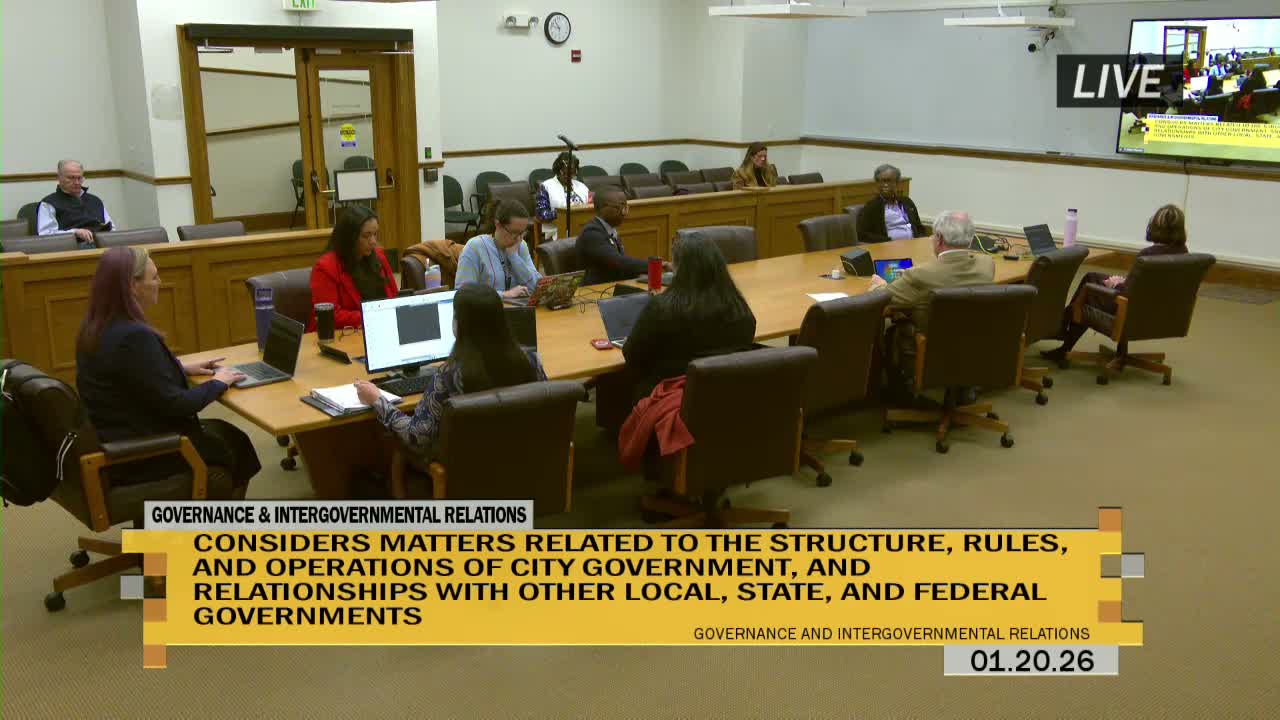
The Office of Human Resources on Tuesday presented proposed edits to Rule 10, the city’s career‑service paid‑leave rule, including a change that ties use of the city’s paid family benefit—renamed “care hours”—to 12 months of service and the federal Family and Medical Leave Act (FMLA).
Heather Britton, director of benefits, wellness and leave, told the Governance and Intergovernmental Relations Committee that several edits are administrative and intended to match state and federal requirements. “So all I’ll do today is just provide you all with an overview of the changes that we made to rule 10,” Britton said. She said OHR removed a prior requirement that domestic partners show a shared living expense to qualify for leave so the rule matches the Colorado Healthy Families and Workplaces Act.
The administration described multiple substantive edits. OHR said it renamed “Care Bank” to “care hours,” clarified that care hours are available on an employee’s anniversary date rather than under a probationary schedule, and removed probationary eligibility so employees must complete 12 months of service to use care hours. Britton said the change means employees must qualify under federal FMLA (or the Colorado Family Care Act, “FCA,” where applicable) to access care hours.
The presentation also expanded bereavement coverage and other definitions. Britton said the city removed duplicative in‑law listings and added nieces and nephews and miscarriage to the immediate‑family definition so bereavement leave explicitly covers miscarriage and the death of a sibling’s child. The rules also were updated to allow PTO for employees caring for family when a child’s school or place of care is closed for inclement weather or loss of utilities, and to allow PTO for evacuation of a residence due to those events.
OHR said the city adjusted comp‑time payouts (paying out earlier in January rather than in April) and updated paid‑military‑leave language to align with the Uniformed Services Employment and Reemployment Rights Act (USERRA). Officials also clarified that use of care hours in a week does not prevent an employee from working additional hours and receiving overtime if applicable; a prior interpretation limited weekly hours to 40 when care hours were used.
Britton presented utilization figures showing rising leave cases overall: she reported about 2,800 leave cases in 2022 and said the city finished 2025 with 3,600 leave cases. She also said the first year care hours existed there were 128 employees who used care hours with less than one year of service, declining to 98 in 2024 and 46 in 2025 to date. “So that is one benefit that employees will no longer be able to use” if they have less than one year of service, Britton said.
Council members pressed OHR for precise draft language and more data. Council Member Paradis said she was “worried that we may be unintentionally narrowing” Denver’s former “significant personal bond” standard by tracking FMLA/FCA language; Britton and Marilyn Carroll, manager of leave and accommodations, said the Colorado Family Care Act (FCA, passed in 2013) is broad and that OHR still reviews requests for personal‑bond leaves with supporting documentation. Paradis asked to see the exact rule text in the draft so the council could assess whether the city’s prior, broader standard is preserved in practice.
Councilman Matoras questioned the shift from six‑month to 12‑month eligibility in light of variable probation periods across departments and asked whether the downward trend in use under one year (128 → 98 → 46) reflected hiring patterns or other factors. OHR replied that probation lengths are set in job descriptions and vary by role, that some positions already have a 12‑month probation, and that ADA protections and donated leave remain available for employees with medical needs.
Council Member Kevin Flynn asked staff to add average hours, ranges and maximums to the utilization chart; Britton said OHR could provide that information.
No formal vote or motion on Rule 10 changes was recorded in the committee discussion; the chair moved to consent items and adjourned the meeting after questions. The committee requested the exact draft language and additional data follow‑up from OHR before any decision on rule adoption.
Heather Britton, director of benefits, wellness and leave, told the Governance and Intergovernmental Relations Committee that several edits are administrative and intended to match state and federal requirements. “So all I’ll do today is just provide you all with an overview of the changes that we made to rule 10,” Britton said. She said OHR removed a prior requirement that domestic partners show a shared living expense to qualify for leave so the rule matches the Colorado Healthy Families and Workplaces Act.
The administration described multiple substantive edits. OHR said it renamed “Care Bank” to “care hours,” clarified that care hours are available on an employee’s anniversary date rather than under a probationary schedule, and removed probationary eligibility so employees must complete 12 months of service to use care hours. Britton said the change means employees must qualify under federal FMLA (or the Colorado Family Care Act, “FCA,” where applicable) to access care hours.
The presentation also expanded bereavement coverage and other definitions. Britton said the city removed duplicative in‑law listings and added nieces and nephews and miscarriage to the immediate‑family definition so bereavement leave explicitly covers miscarriage and the death of a sibling’s child. The rules also were updated to allow PTO for employees caring for family when a child’s school or place of care is closed for inclement weather or loss of utilities, and to allow PTO for evacuation of a residence due to those events.
OHR said the city adjusted comp‑time payouts (paying out earlier in January rather than in April) and updated paid‑military‑leave language to align with the Uniformed Services Employment and Reemployment Rights Act (USERRA). Officials also clarified that use of care hours in a week does not prevent an employee from working additional hours and receiving overtime if applicable; a prior interpretation limited weekly hours to 40 when care hours were used.
Britton presented utilization figures showing rising leave cases overall: she reported about 2,800 leave cases in 2022 and said the city finished 2025 with 3,600 leave cases. She also said the first year care hours existed there were 128 employees who used care hours with less than one year of service, declining to 98 in 2024 and 46 in 2025 to date. “So that is one benefit that employees will no longer be able to use” if they have less than one year of service, Britton said.
Council members pressed OHR for precise draft language and more data. Council Member Paradis said she was “worried that we may be unintentionally narrowing” Denver’s former “significant personal bond” standard by tracking FMLA/FCA language; Britton and Marilyn Carroll, manager of leave and accommodations, said the Colorado Family Care Act (FCA, passed in 2013) is broad and that OHR still reviews requests for personal‑bond leaves with supporting documentation. Paradis asked to see the exact rule text in the draft so the council could assess whether the city’s prior, broader standard is preserved in practice.
Councilman Matoras questioned the shift from six‑month to 12‑month eligibility in light of variable probation periods across departments and asked whether the downward trend in use under one year (128 → 98 → 46) reflected hiring patterns or other factors. OHR replied that probation lengths are set in job descriptions and vary by role, that some positions already have a 12‑month probation, and that ADA protections and donated leave remain available for employees with medical needs.
Council Member Kevin Flynn asked staff to add average hours, ranges and maximums to the utilization chart; Britton said OHR could provide that information.
No formal vote or motion on Rule 10 changes was recorded in the committee discussion; the chair moved to consent items and adjourned the meeting after questions. The committee requested the exact draft language and additional data follow‑up from OHR before any decision on rule adoption.
Don't Miss a Word: See the Full Meeting!
Go beyond summaries. Unlock every video, transcript, and key insight with a Founder Membership.
✓
Get instant access to full meeting videos
✓
Search and clip any phrase from complete transcripts
✓
Receive AI-powered summaries & custom alerts
✓
Enjoy lifetime, unrestricted access to government data
30-day money-back guarantee
