Residents, service providers clash over proposed West 71st Street shelter
January 20, 2026 | Loveland City, Larimer County, Colorado
This article was created by AI summarizing key points discussed. AI makes mistakes, so for full details and context, please refer to the video of the full meeting. Please report any errors so we can fix them. Report an error »
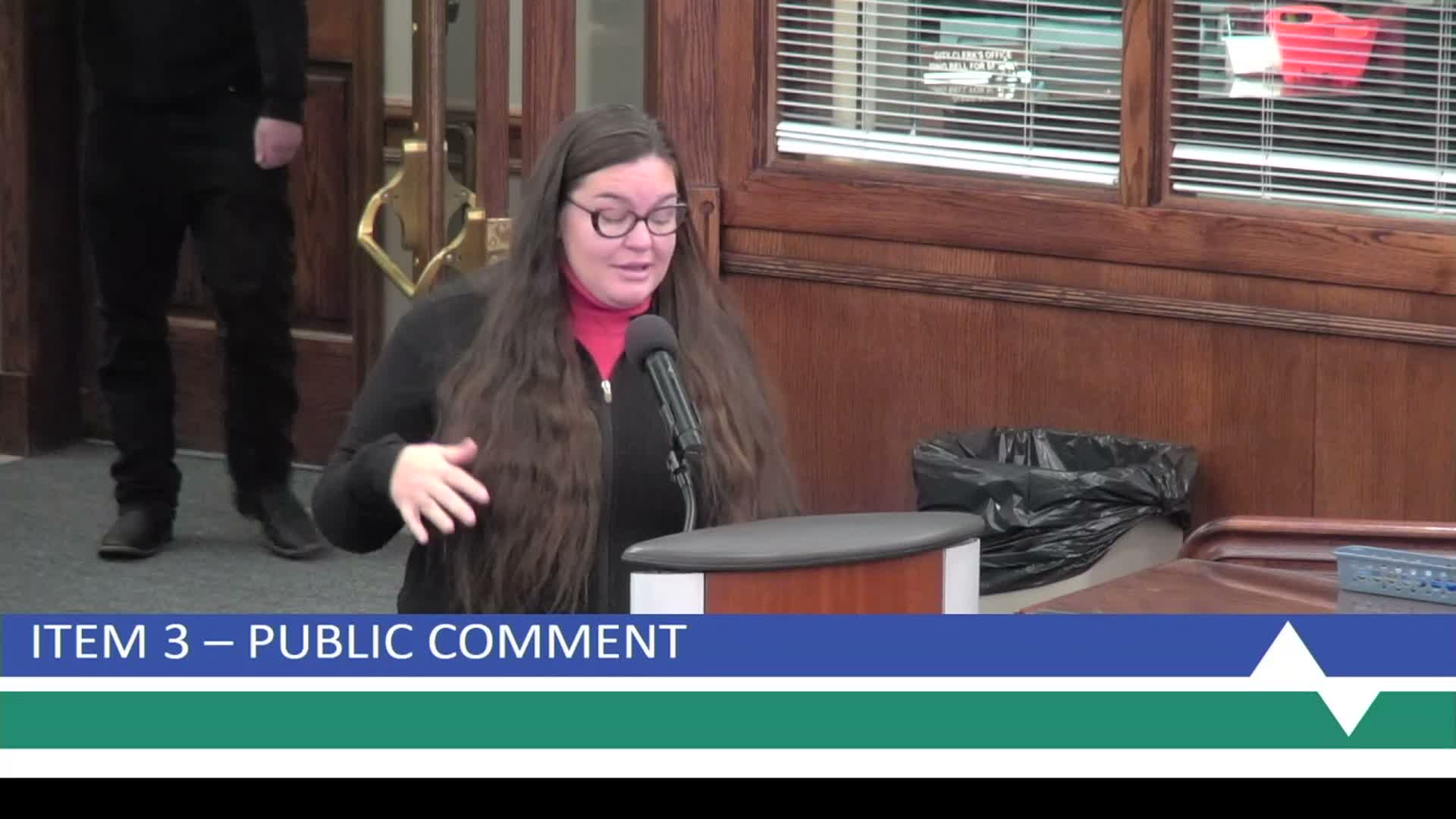
Loveland residents and service providers filled the public comment period Tuesday as council considered a proposed community support center with overnight housing at a site on West 71st Street. Supporters urged the city to partner with experienced nonprofits and adopt a housing-first approach; opponents worried the chosen location would harm nearby businesses and neighborhoods.
Elizabeth Falkenberg, a Ward 3 resident, told the council “homelessness is not a political issue. It’s a human and community issue,” and urged the city to pursue “a partnership with an experienced nonprofit operator” that would provide professional staffing, clear rules and wraparound services. “A well run community support center with overnight housing is not a risk to Loveland. It’s an investment in safe dignity and long term stability in our entire community,” she said.
Business owners and neighbors pushed back. Kate Swanson, a Ward 1 property and restaurant owner, said she opposed the shelter at West 71st Street, recounting problems her business faced near a shelter in Fort Collins — “drug paraphernalia, harassment, breaking and entering” — that she said forced a store closure. “We are really concerned… the safety of our employees,” Swanson said.
Speakers described different program models under consideration. Megan Eliezer and Alex (last name not provided), both Ward residents, contrasted two nonprofits that have applied to run the facility: Bridge House (described in testimony as a work-first model) and Crucial Care (a medical, housing-first model with triage and street outreach). Eliezer said the housing-first approach used by Crucial Care could better address medical and substance-use needs.
Other commenters raised broader questions about cost and effectiveness. Tara Tully said she interviewed people living on the streets and asked whether a $2.8 million investment would “enable a whole culture of people in the wrong direction,” urging policies that “empower independence.” Coral, who said she works in behavioral health, cautioned that sheltering alone does not solve homelessness and highlighted services such as mailboxes, clothing and internet access as critical supports.
City staff and council did not take a final vote on site purchase or operator selection during the public-comment period. Council acknowledged the range of opinions and asked staff to continue outreach and analysis; several council members invited commenters to provide follow-up information by email or to meet for further discussion. The record shows council heard extensive public testimony and will weigh site, service model and operational accountability before any conditional purchase advances.
Elizabeth Falkenberg, a Ward 3 resident, told the council “homelessness is not a political issue. It’s a human and community issue,” and urged the city to pursue “a partnership with an experienced nonprofit operator” that would provide professional staffing, clear rules and wraparound services. “A well run community support center with overnight housing is not a risk to Loveland. It’s an investment in safe dignity and long term stability in our entire community,” she said.
Business owners and neighbors pushed back. Kate Swanson, a Ward 1 property and restaurant owner, said she opposed the shelter at West 71st Street, recounting problems her business faced near a shelter in Fort Collins — “drug paraphernalia, harassment, breaking and entering” — that she said forced a store closure. “We are really concerned… the safety of our employees,” Swanson said.
Speakers described different program models under consideration. Megan Eliezer and Alex (last name not provided), both Ward residents, contrasted two nonprofits that have applied to run the facility: Bridge House (described in testimony as a work-first model) and Crucial Care (a medical, housing-first model with triage and street outreach). Eliezer said the housing-first approach used by Crucial Care could better address medical and substance-use needs.
Other commenters raised broader questions about cost and effectiveness. Tara Tully said she interviewed people living on the streets and asked whether a $2.8 million investment would “enable a whole culture of people in the wrong direction,” urging policies that “empower independence.” Coral, who said she works in behavioral health, cautioned that sheltering alone does not solve homelessness and highlighted services such as mailboxes, clothing and internet access as critical supports.
City staff and council did not take a final vote on site purchase or operator selection during the public-comment period. Council acknowledged the range of opinions and asked staff to continue outreach and analysis; several council members invited commenters to provide follow-up information by email or to meet for further discussion. The record shows council heard extensive public testimony and will weigh site, service model and operational accountability before any conditional purchase advances.
View the Full Meeting & All Its Details
This article offers just a summary. Unlock complete video, transcripts, and insights as a Founder Member.
✓
Watch full, unedited meeting videos
✓
Search every word spoken in unlimited transcripts
✓
AI summaries & real-time alerts (all government levels)
✓
Permanent access to expanding government content
30-day money-back guarantee
