Castle Rock tightens boards and commissions rules, sets residency preference for Public Art Commission and 20% attendance cap
January 20, 2026 | Castle Rock, Douglas County, Colorado
This article was created by AI summarizing key points discussed. AI makes mistakes, so for full details and context, please refer to the video of the full meeting. Please report any errors so we can fix them. Report an error »
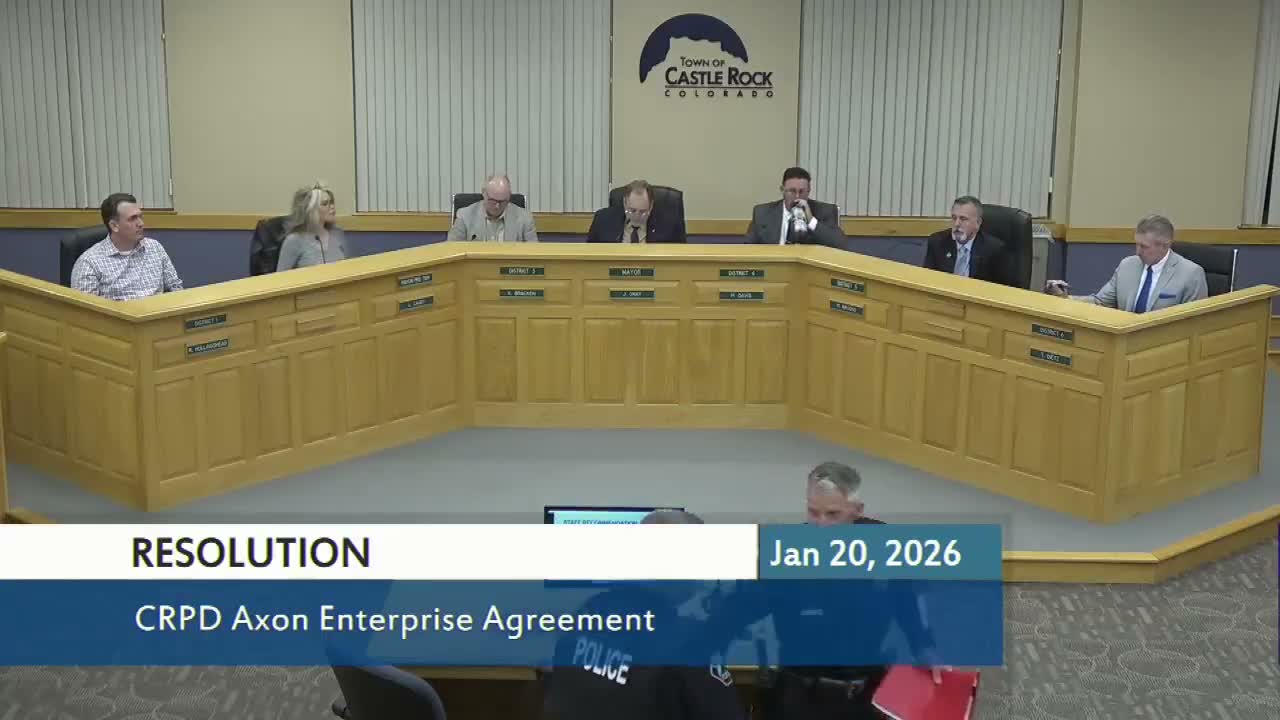
Council members adopted a set of changes to town code governing board and commission appointments, attendance, terms and remote participation after an extended debate about balancing resident preference with the need for subject-matter expertise.
Staff proposed amending code to give preference to town residents for appointments and to standardize unexcused absence handling; the original draft had a 15% unexcused threshold and allowed staff to categorize absences. After council discussion the body removed the staff arbiter and set a flat 20% maximum absence threshold over a 12‑month period (council members argued this avoids the need for staff to adjudicate "excused" vs "unexcused"). Councilmember Brooks argued for a clear, written policy and cautioned against ad-hoc remote participation. Several commission members and the public spoke in favor of flexibility: Jen Perry and Casey Neill of the Public Art Commission said limiting nonresident appointments and remote participation would dramatically shrink a small volunteer pool and impair the commission's ongoing projects.
Council agreed to a targeted residency preference for the Public Art Commission (preference for Castle Rock residents, but allowing qualified near-border volunteers to be considered), authorized the Castle Rock Water Commission to adopt a remote-attendance policy (remote participation would be allowed only after the council approves that policy), and directed staff to study a more comprehensive code-of-conduct for boards and commissions and report back. The ordinance, as amended, passed on first reading unanimously.
The changes take effect for subsequent appointment cycles and aim to balance local representation with the operational needs of working commissions.
Staff proposed amending code to give preference to town residents for appointments and to standardize unexcused absence handling; the original draft had a 15% unexcused threshold and allowed staff to categorize absences. After council discussion the body removed the staff arbiter and set a flat 20% maximum absence threshold over a 12‑month period (council members argued this avoids the need for staff to adjudicate "excused" vs "unexcused"). Councilmember Brooks argued for a clear, written policy and cautioned against ad-hoc remote participation. Several commission members and the public spoke in favor of flexibility: Jen Perry and Casey Neill of the Public Art Commission said limiting nonresident appointments and remote participation would dramatically shrink a small volunteer pool and impair the commission's ongoing projects.
Council agreed to a targeted residency preference for the Public Art Commission (preference for Castle Rock residents, but allowing qualified near-border volunteers to be considered), authorized the Castle Rock Water Commission to adopt a remote-attendance policy (remote participation would be allowed only after the council approves that policy), and directed staff to study a more comprehensive code-of-conduct for boards and commissions and report back. The ordinance, as amended, passed on first reading unanimously.
The changes take effect for subsequent appointment cycles and aim to balance local representation with the operational needs of working commissions.
View the Full Meeting & All Its Details
This article offers just a summary. Unlock complete video, transcripts, and insights as a Founder Member.
✓
Watch full, unedited meeting videos
✓
Search every word spoken in unlimited transcripts
✓
AI summaries & real-time alerts (all government levels)
✓
Permanent access to expanding government content
30-day money-back guarantee
