Department releases first‑year Foundations of Reading results; statewide pass rate 46% prompts tiered support plan for teacher programs
January 19, 2026 | Education, Iowa Department of (IDOE), Executive, Iowa
This article was created by AI summarizing key points discussed. AI makes mistakes, so for full details and context, please refer to the video of the full meeting. Please report any errors so we can fix them. Report an error »
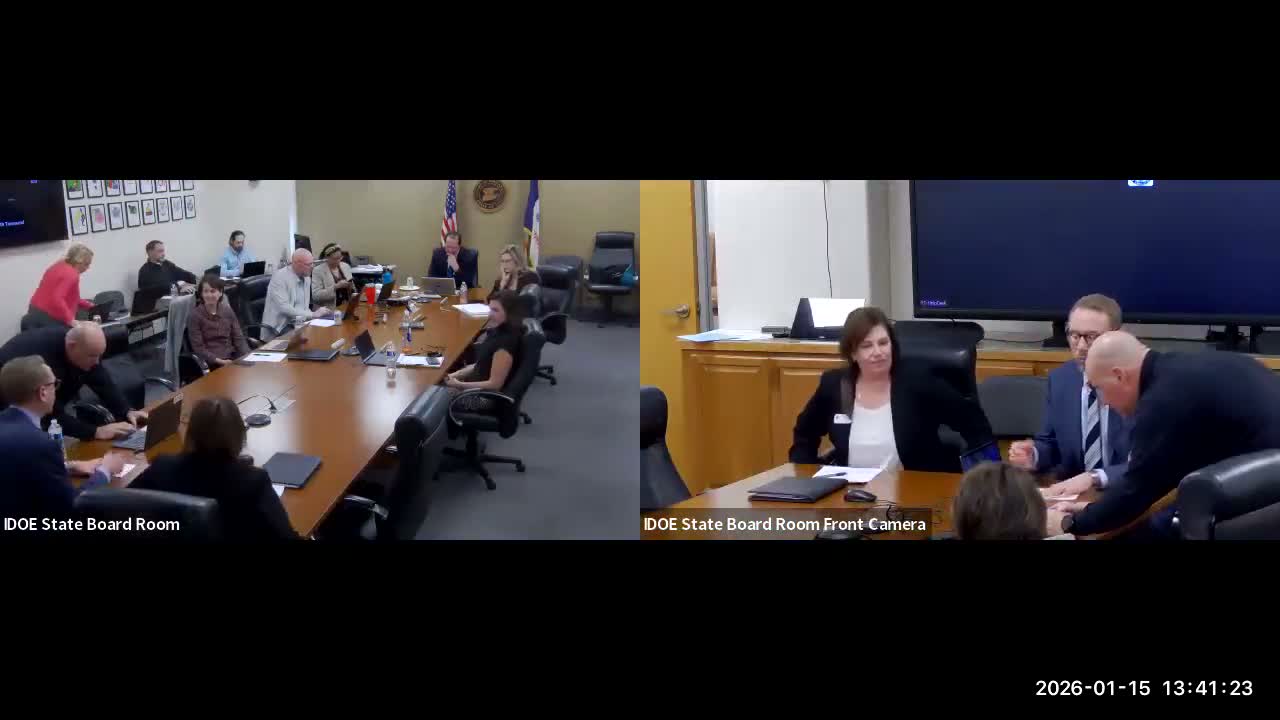
The Iowa Department of Education presented first‑year results for the Foundations of Reading (FORT) assessment and a structured continuous‑improvement framework on Jan. 14. The partial testing window (Jan. 2–July 31) included about 633 unique teacher‑candidates and produced a statewide pass rate of 46% at Iowa’s cut score of 240.
Department staff said Iowa’s statute requires certain teacher candidates to take the FORT assessment but does not make passing a condition for licensure; the department framed the test as a diagnostic instrument to improve literacy preparation. Based on program pass rates, the department assigned three tiers of support:
- Intensive (<=35% pass rate): required activities include a department data‑analysis and action‑plan document, an independent curriculum review, faculty qualifications review, required LETRS training for literacy faculty, department‑approved remediation courses for candidates, monthly peer‑group training and regular monitoring.
- Targeted (36–46%): programs must complete the data‑analysis/action plan, curriculum review and faculty review and secure LETRS training, with recommended but not required monthly peer‑group training.
- Standard (>46%): ongoing continuous improvement is recommended, with particular attention to programs under 70% or those with fewer than 10 candidates; programs are strongly encouraged to submit the analysis/action plan.
Department officials said the first year’s pass rate is a baseline influenced by implementation timing: many candidates tested before revised program curricula and faculty training had fully taken effect. The department reported that several programs have already implemented remediation and training and that some programs’ pass rates have increased markedly in subsequent months.
The board asked about retest counting (department said the best attempt is used for institutional reporting), the role and timeline for LETRS training (department will require literacy faculty not yet trained to enroll and is funding participation), and individualized department support via assigned program managers and external reviewers.
The department plans to publish program‑level reports, provide spreadsheets with breakdowns by objective and subcontent, and work with institutions to implement the action plans and curriculum reviews described.
Department staff said Iowa’s statute requires certain teacher candidates to take the FORT assessment but does not make passing a condition for licensure; the department framed the test as a diagnostic instrument to improve literacy preparation. Based on program pass rates, the department assigned three tiers of support:
- Intensive (<=35% pass rate): required activities include a department data‑analysis and action‑plan document, an independent curriculum review, faculty qualifications review, required LETRS training for literacy faculty, department‑approved remediation courses for candidates, monthly peer‑group training and regular monitoring.
- Targeted (36–46%): programs must complete the data‑analysis/action plan, curriculum review and faculty review and secure LETRS training, with recommended but not required monthly peer‑group training.
- Standard (>46%): ongoing continuous improvement is recommended, with particular attention to programs under 70% or those with fewer than 10 candidates; programs are strongly encouraged to submit the analysis/action plan.
Department officials said the first year’s pass rate is a baseline influenced by implementation timing: many candidates tested before revised program curricula and faculty training had fully taken effect. The department reported that several programs have already implemented remediation and training and that some programs’ pass rates have increased markedly in subsequent months.
The board asked about retest counting (department said the best attempt is used for institutional reporting), the role and timeline for LETRS training (department will require literacy faculty not yet trained to enroll and is funding participation), and individualized department support via assigned program managers and external reviewers.
The department plans to publish program‑level reports, provide spreadsheets with breakdowns by objective and subcontent, and work with institutions to implement the action plans and curriculum reviews described.
View the Full Meeting & All Its Details
This article offers just a summary. Unlock complete video, transcripts, and insights as a Founder Member.
✓
Watch full, unedited meeting videos
✓
Search every word spoken in unlimited transcripts
✓
AI summaries & real-time alerts (all government levels)
✓
Permanent access to expanding government content
30-day money-back guarantee
