Bangor City grant reviewers reconcile scores, flag legal questions and plan follow-up vote
January 21, 2026 | Bangor City, Penobscot County, Maine
This article was created by AI summarizing key points discussed. AI makes mistakes, so for full details and context, please refer to the video of the full meeting. Please report any errors so we can fix them. Report an error »
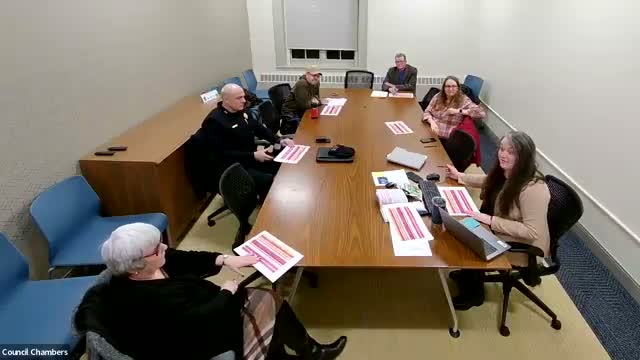
Members of the Bangor City grant review committee spent their meeting reconciling scorers’ averages for more than two dozen opioid‑settlement and related grant applications, debated a proposal to reduce one high‑scoring award for city‑only recipients, and asked city legal staff to review several applications before the panel finalizes its recommendation to city council.
The committee began with a spreadsheet that averaged each reviewer’s scores and used color coding to highlight large discrepancies and where funding would fall if the current ranking were adopted. The organizer told the group the plan was to take each application in turn, have one scoring reviewer summarize the project, and then reach a consensus score to become the committee’s formal recommendation.
Discussion quickly turned to whether certain applicants should be recommended for funding. One recurring theme was whether public health entities that previously received funding should appear on the list for additional awards. A committee member said, “I think we’re also not the final decision maker. We’re making recommendations, and so there will likely be more comment,” noting that the panel’s role is to recommend to council rather than make final awards.
On the meeting’s highest‑ranked application (Adoptive and Foster Families of Maine / KSRI), members raised a geographic eligibility concern: the proposal described serving both Bangor and Penobscot County but did not request county funding for the county portion. Reviewers debated whether to fund only the Bangor share or to split the award. One member moved to cut the ask in half for Bangor‑only recipients; while no formal recorded roll‑call vote took place, several reviewers expressed agreement and the organizer said Scott and Shelley should recommend how to apply any split when the committee finalizes its list.
Committee members flagged several other items for legal review before making final recommendations. Notable flags included:
- An out‑of‑state‑registered provider (described in the packet as having no Maine base) whose eligibility under the program’s requirement for “Maine‑based organizations providing services in the City of Bangor” needed confirmation. Members asked legal staff to confirm whether the applicant met the program’s jurisdictional requirement.
- A proposal described as a syringe‑return or syringe‑rebate pilot that would pay small incentives for returning used syringes; several members raised safety and permissibility questions and asked that legal staff assess whether that activity is an allowable use of these funds.
- Several applications that rolled requested awards into wider organizational operating budgets (for example, household goods distribution or general operating support) where the group requested clarity about whether funds could be restricted to the target population and documented as such.
On substance and scoring, members repeatedly discussed two process tensions: (1) strict adherence to the rubric produced higher scores for well‑formatted applications even when reviewers had local concerns about feasibility or duplication of services; and (2) reviewers with local operational experience sometimes ranked applicants differently than reviewers who strictly scored on the written rubric. Several reviewers said they would keep averages unless applications had large discrepancies, in which case they favored discussing the items in more depth.
The committee also discussed specific dollar requests in the packet: for example, the Bangor Area Homeless Shelter requested $10,000 to expand naloxone distribution and emergency shelter connections; another applicant asked $25,000 for reintegration and harm‑reduction supports. Multiple applicants requested scholarship funding or transportation support; reviewers repeatedly noted missing or unclear budget line items, limited data to justify impact, or sustainability plans that relied on continued external funding.
Next steps: the organizer said she will enter the committee’s consensus scores into the spreadsheet, re‑rank projects, show the “blue line” that indicates who would be funded under the totals, and circulate the re‑ranked list. The group agreed to ask city legal staff to review flagged applications for permissibility and to reconvene for a formal vote and final recommendation to council during the first week of February (dates to be circulated).
The committee did not make final award decisions at this meeting; it agreed on consensus scores for many applications and on a set of follow‑up tasks (legal review, re‑ranking and a final meeting) that must be completed before a recommendation is submitted to the council.
The committee began with a spreadsheet that averaged each reviewer’s scores and used color coding to highlight large discrepancies and where funding would fall if the current ranking were adopted. The organizer told the group the plan was to take each application in turn, have one scoring reviewer summarize the project, and then reach a consensus score to become the committee’s formal recommendation.
Discussion quickly turned to whether certain applicants should be recommended for funding. One recurring theme was whether public health entities that previously received funding should appear on the list for additional awards. A committee member said, “I think we’re also not the final decision maker. We’re making recommendations, and so there will likely be more comment,” noting that the panel’s role is to recommend to council rather than make final awards.
On the meeting’s highest‑ranked application (Adoptive and Foster Families of Maine / KSRI), members raised a geographic eligibility concern: the proposal described serving both Bangor and Penobscot County but did not request county funding for the county portion. Reviewers debated whether to fund only the Bangor share or to split the award. One member moved to cut the ask in half for Bangor‑only recipients; while no formal recorded roll‑call vote took place, several reviewers expressed agreement and the organizer said Scott and Shelley should recommend how to apply any split when the committee finalizes its list.
Committee members flagged several other items for legal review before making final recommendations. Notable flags included:
- An out‑of‑state‑registered provider (described in the packet as having no Maine base) whose eligibility under the program’s requirement for “Maine‑based organizations providing services in the City of Bangor” needed confirmation. Members asked legal staff to confirm whether the applicant met the program’s jurisdictional requirement.
- A proposal described as a syringe‑return or syringe‑rebate pilot that would pay small incentives for returning used syringes; several members raised safety and permissibility questions and asked that legal staff assess whether that activity is an allowable use of these funds.
- Several applications that rolled requested awards into wider organizational operating budgets (for example, household goods distribution or general operating support) where the group requested clarity about whether funds could be restricted to the target population and documented as such.
On substance and scoring, members repeatedly discussed two process tensions: (1) strict adherence to the rubric produced higher scores for well‑formatted applications even when reviewers had local concerns about feasibility or duplication of services; and (2) reviewers with local operational experience sometimes ranked applicants differently than reviewers who strictly scored on the written rubric. Several reviewers said they would keep averages unless applications had large discrepancies, in which case they favored discussing the items in more depth.
The committee also discussed specific dollar requests in the packet: for example, the Bangor Area Homeless Shelter requested $10,000 to expand naloxone distribution and emergency shelter connections; another applicant asked $25,000 for reintegration and harm‑reduction supports. Multiple applicants requested scholarship funding or transportation support; reviewers repeatedly noted missing or unclear budget line items, limited data to justify impact, or sustainability plans that relied on continued external funding.
Next steps: the organizer said she will enter the committee’s consensus scores into the spreadsheet, re‑rank projects, show the “blue line” that indicates who would be funded under the totals, and circulate the re‑ranked list. The group agreed to ask city legal staff to review flagged applications for permissibility and to reconvene for a formal vote and final recommendation to council during the first week of February (dates to be circulated).
The committee did not make final award decisions at this meeting; it agreed on consensus scores for many applications and on a set of follow‑up tasks (legal review, re‑ranking and a final meeting) that must be completed before a recommendation is submitted to the council.
Don't Miss a Word: See the Full Meeting!
Go beyond summaries. Unlock every video, transcript, and key insight with a Founder Membership.
✓
Get instant access to full meeting videos
✓
Search and clip any phrase from complete transcripts
✓
Receive AI-powered summaries & custom alerts
✓
Enjoy lifetime, unrestricted access to government data
30-day money-back guarantee
