Senate Judiciary debates bill to require visible officer identification, limit disguises and weigh federal preemption
January 21, 2026 | Judiciary, SENATE, Committees, Legislative , Vermont
This article was created by AI summarizing key points discussed. AI makes mistakes, so for full details and context, please refer to the video of the full meeting. Please report any errors so we can fix them. Report an error »
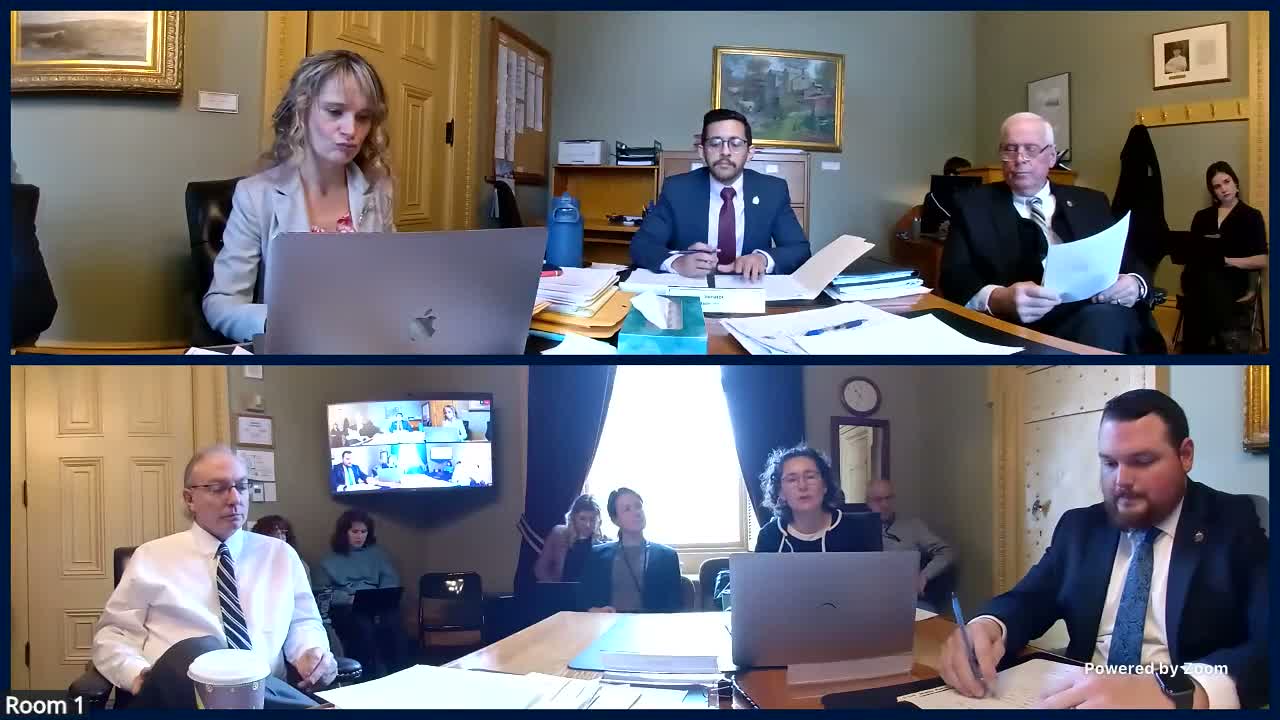
The Senate Judiciary committee spent its Jan. 20 session marking up a bill that would require law‑enforcement officers to display identifying information and restrict the use of masks or personal disguises while on duty.
Speaker 2, a committee participant identified in the transcript as Speaker 2, opened by summarizing two out‑of‑state models the committee has been examining — one from California and one from New York — and reported the California law is not being enforced while a federal court considers a preliminary‑injunction request. "Because of the federal government challenge, the parties agreed not to enforce it until the court rules on the preliminary injunction motion," Speaker 2 said.
The committee focused on several fault lines. One legal concern — raised by Speaker 2 and discussed with reference to constitutional testimony — is potential preemption under the Supremacy Clause and whether the draft could be read to discriminate against federal officers. "One of the core issues from a federal perspective is supremacy clause immunity," Speaker 2 said, noting questions about intergovernmental immunity if the law treats federal officers differently from state or local officers.
Members also debated exceptions that would let officers conceal their identity for undercover or drug‑task‑force operations. Speaker 4 warned that an exception for "active undercover drug‑related operation[s]" could be broadly construed by federal actors and urged tightening the language; "there's an exception for law enforcement officers who participate in active undercover drug related operation or assignments. They may use personal disguise when necessary," Speaker 4 said. Speaker 2 suggested potential drafting fixes such as requiring judicial approval or limiting the exception to officers embedded in state task forces.
A separate, practical question was whether the offense should be criminal or civil. Judiciary counsel told the committee that using the word "fine" in the draft would create a criminal offense; the members discussed rewriting the language to make a civil penalty explicit if that was their intent. "If you want it to be civil, then you have to say it," Speaker 2 said. Some members argued a criminal sanction could carry more weight and trigger misconduct proceedings, while others worried criminalization might make the bill harder to enact or enforce.
On enforcement detail, Speaker 2 outlined how the Vermont Criminal Justice Council can be triggered by felonies, certain misdemeanors, or willful failure to comply with a state‑required policy; the committee discussed cross‑referencing that process so noncompliance with a statewide LEAB (Law Enforcement Advisory Board) policy could lead to misconduct review.
The committee also wrestled with precise identification requirements. Speaker 1 favored requiring an officer's name and agency on the uniform, while Speaker 2 recommended always requiring agency plus either the officer's name or a unique number (badge or radio). "Name and agency is the most useful way to go about it," Speaker 1 said, while Speaker 2 cautioned against letting any one of the three (name, badge number, or agency) suffice by itself.
Members considered interactions with federal regulation requiring immigration officers to identify themselves at the time of an arrest "as soon as it is practical, unless unsafe to do so." Speaker 2 noted that the federal language is regulatory (not a statute) and primarily concerns the time of arrest, and said that a visible, on‑uniform identification requirement would still apply at other times.
Other drafting topics included the cold‑weather exception, the effective dates for the statute versus LEAB policy development (some members favored immediate effect for the prohibition and a later date for LEAB policy work), and the penalty amount in the draft (the bill as written contained a $1,000 cap, which counsel said would read as criminal unless reworded).
Speaker 2 and others also reviewed whether to add narrowly tailored legislative findings to help withstand litigation under the Tenth Amendment; members cautioned that broad findings can provoke resistance and be used in court.
The committee did not take a formal vote during the session. Members asked staff to circulate revised language addressing the exceptions, identification details, and the civil/criminal drafting choice and planned to reconvene for further markup.
Next steps: staff will rework draft language on exceptions and penalties and re‑circulate the bill text for the committee to review at a subsequent markup session.
Speaker 2, a committee participant identified in the transcript as Speaker 2, opened by summarizing two out‑of‑state models the committee has been examining — one from California and one from New York — and reported the California law is not being enforced while a federal court considers a preliminary‑injunction request. "Because of the federal government challenge, the parties agreed not to enforce it until the court rules on the preliminary injunction motion," Speaker 2 said.
The committee focused on several fault lines. One legal concern — raised by Speaker 2 and discussed with reference to constitutional testimony — is potential preemption under the Supremacy Clause and whether the draft could be read to discriminate against federal officers. "One of the core issues from a federal perspective is supremacy clause immunity," Speaker 2 said, noting questions about intergovernmental immunity if the law treats federal officers differently from state or local officers.
Members also debated exceptions that would let officers conceal their identity for undercover or drug‑task‑force operations. Speaker 4 warned that an exception for "active undercover drug‑related operation[s]" could be broadly construed by federal actors and urged tightening the language; "there's an exception for law enforcement officers who participate in active undercover drug related operation or assignments. They may use personal disguise when necessary," Speaker 4 said. Speaker 2 suggested potential drafting fixes such as requiring judicial approval or limiting the exception to officers embedded in state task forces.
A separate, practical question was whether the offense should be criminal or civil. Judiciary counsel told the committee that using the word "fine" in the draft would create a criminal offense; the members discussed rewriting the language to make a civil penalty explicit if that was their intent. "If you want it to be civil, then you have to say it," Speaker 2 said. Some members argued a criminal sanction could carry more weight and trigger misconduct proceedings, while others worried criminalization might make the bill harder to enact or enforce.
On enforcement detail, Speaker 2 outlined how the Vermont Criminal Justice Council can be triggered by felonies, certain misdemeanors, or willful failure to comply with a state‑required policy; the committee discussed cross‑referencing that process so noncompliance with a statewide LEAB (Law Enforcement Advisory Board) policy could lead to misconduct review.
The committee also wrestled with precise identification requirements. Speaker 1 favored requiring an officer's name and agency on the uniform, while Speaker 2 recommended always requiring agency plus either the officer's name or a unique number (badge or radio). "Name and agency is the most useful way to go about it," Speaker 1 said, while Speaker 2 cautioned against letting any one of the three (name, badge number, or agency) suffice by itself.
Members considered interactions with federal regulation requiring immigration officers to identify themselves at the time of an arrest "as soon as it is practical, unless unsafe to do so." Speaker 2 noted that the federal language is regulatory (not a statute) and primarily concerns the time of arrest, and said that a visible, on‑uniform identification requirement would still apply at other times.
Other drafting topics included the cold‑weather exception, the effective dates for the statute versus LEAB policy development (some members favored immediate effect for the prohibition and a later date for LEAB policy work), and the penalty amount in the draft (the bill as written contained a $1,000 cap, which counsel said would read as criminal unless reworded).
Speaker 2 and others also reviewed whether to add narrowly tailored legislative findings to help withstand litigation under the Tenth Amendment; members cautioned that broad findings can provoke resistance and be used in court.
The committee did not take a formal vote during the session. Members asked staff to circulate revised language addressing the exceptions, identification details, and the civil/criminal drafting choice and planned to reconvene for further markup.
Next steps: staff will rework draft language on exceptions and penalties and re‑circulate the bill text for the committee to review at a subsequent markup session.
View the Full Meeting & All Its Details
This article offers just a summary. Unlock complete video, transcripts, and insights as a Founder Member.
✓
Watch full, unedited meeting videos
✓
Search every word spoken in unlimited transcripts
✓
AI summaries & real-time alerts (all government levels)
✓
Permanent access to expanding government content
30-day money-back guarantee
