Committee reviews changes to alcohol licensing, tasting limits and distribution caps
January 17, 2026 | Government Operations & Military Affairs, HOUSE OF REPRESENTATIVES, Committees, Legislative , Vermont
This article was created by AI summarizing key points discussed. AI makes mistakes, so for full details and context, please refer to the video of the full meeting. Please report any errors so we can fix them. Report an error »
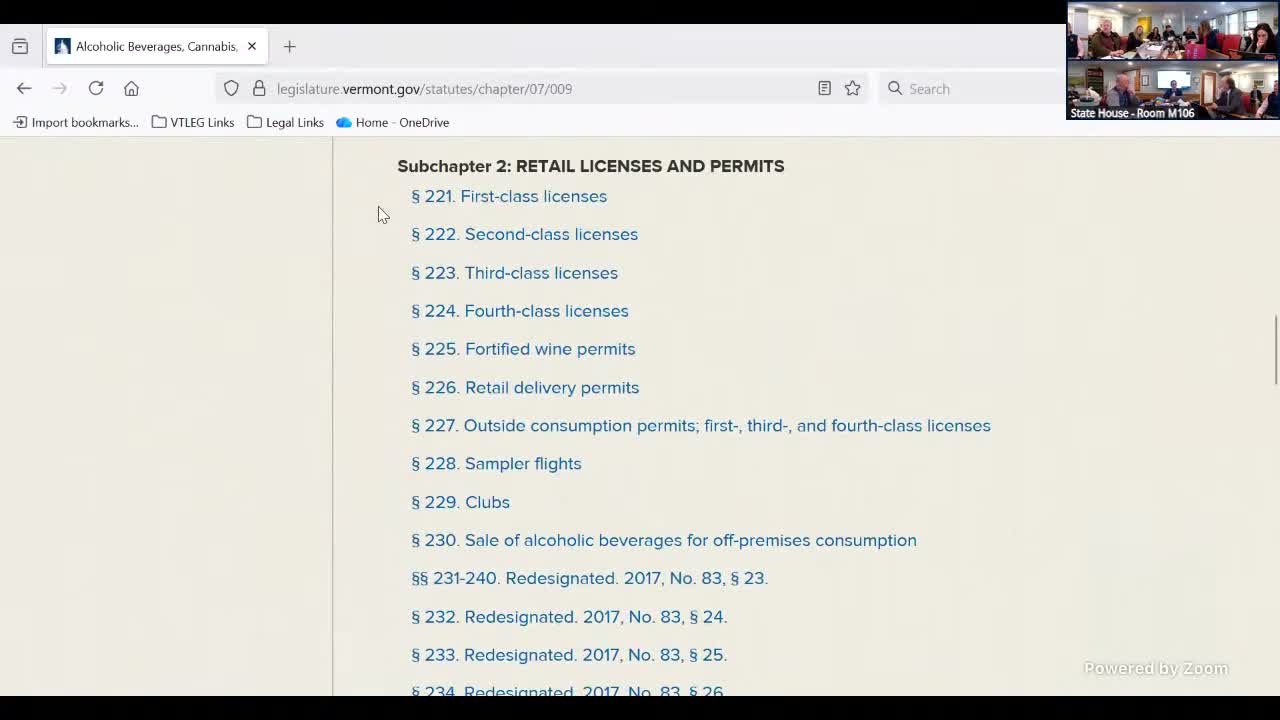
Legislative counsel walked the Government Operations & Military Affairs committee through a package of Title 7 bills on Jan. 16 that would revise licensing categories, tasting‑service limits and certain distribution rules.
Counsel described the class structure under Vermont law — first‑class licenses for on‑premises consumption (restaurants and bars), second‑class for off‑premises retail (supermarkets, gas stations), third‑class for spirits/fortified wines subject to the state’s control model, and fourth‑class licenses for manufacturer tasting rooms.
On H 647, counsel said the bill would amend fourth‑class tasting limits: current tasting sizes at farmers’ markets and tasting rooms would be adjusted and new aggregate limits would appear in the proposed language (for example, proposed tasting-room aggregates of malt beverages, vinous beverages/ready‑to‑drink spirits, and a small spirits allotment).
H 655 includes miscellaneous Title 7 amendments: it would change the Board of Liquor and Lottery staggered term lengths, remove a sunset on curbside/delivery provisions (originally created during the COVID response) and align special‑event permit approvals with local control commissioners. Counsel also noted the bill strikes a certified‑check‑only payment requirement and defaults to general fee‑payment language, but said he would check whether that change affects departmental rulemaking authority.
Counsel also reviewed a separate proposal (H 672) to permit malt‑beverage manufacturers to distribute directly to first‑ and second‑class licensees up to an aggregate cap of 5,000 barrels annually. "That's 5,000 total," counsel said, noting it is an annual aggregate cap rather than a per‑flavor or per‑location limit.
Members asked clarifying questions about fortified‑wine definitions, the effect of removing the certified‑check requirement, and how the proposals interact with Vermont’s three‑tier distribution model. Counsel offered to provide charts and further materials on beverage categories and distribution exceptions for follow‑up.
No formal committee action or votes were recorded during the presentation.
Counsel described the class structure under Vermont law — first‑class licenses for on‑premises consumption (restaurants and bars), second‑class for off‑premises retail (supermarkets, gas stations), third‑class for spirits/fortified wines subject to the state’s control model, and fourth‑class licenses for manufacturer tasting rooms.
On H 647, counsel said the bill would amend fourth‑class tasting limits: current tasting sizes at farmers’ markets and tasting rooms would be adjusted and new aggregate limits would appear in the proposed language (for example, proposed tasting-room aggregates of malt beverages, vinous beverages/ready‑to‑drink spirits, and a small spirits allotment).
H 655 includes miscellaneous Title 7 amendments: it would change the Board of Liquor and Lottery staggered term lengths, remove a sunset on curbside/delivery provisions (originally created during the COVID response) and align special‑event permit approvals with local control commissioners. Counsel also noted the bill strikes a certified‑check‑only payment requirement and defaults to general fee‑payment language, but said he would check whether that change affects departmental rulemaking authority.
Counsel also reviewed a separate proposal (H 672) to permit malt‑beverage manufacturers to distribute directly to first‑ and second‑class licensees up to an aggregate cap of 5,000 barrels annually. "That's 5,000 total," counsel said, noting it is an annual aggregate cap rather than a per‑flavor or per‑location limit.
Members asked clarifying questions about fortified‑wine definitions, the effect of removing the certified‑check requirement, and how the proposals interact with Vermont’s three‑tier distribution model. Counsel offered to provide charts and further materials on beverage categories and distribution exceptions for follow‑up.
No formal committee action or votes were recorded during the presentation.
Don't Miss a Word: See the Full Meeting!
Go beyond summaries. Unlock every video, transcript, and key insight with a Founder Membership.
✓
Get instant access to full meeting videos
✓
Search and clip any phrase from complete transcripts
✓
Receive AI-powered summaries & custom alerts
✓
Enjoy lifetime, unrestricted access to government data
30-day money-back guarantee
