Supporters call UCAPA a preventive tool; critics warn the child-abduction bill could be weaponized against survivors
January 21, 2026 | Children and Family Law, House of Representatives, Committees , Legislative, New Hampshire
This article was created by AI summarizing key points discussed. AI makes mistakes, so for full details and context, please refer to the video of the full meeting. Please report any errors so we can fix them. Report an error »
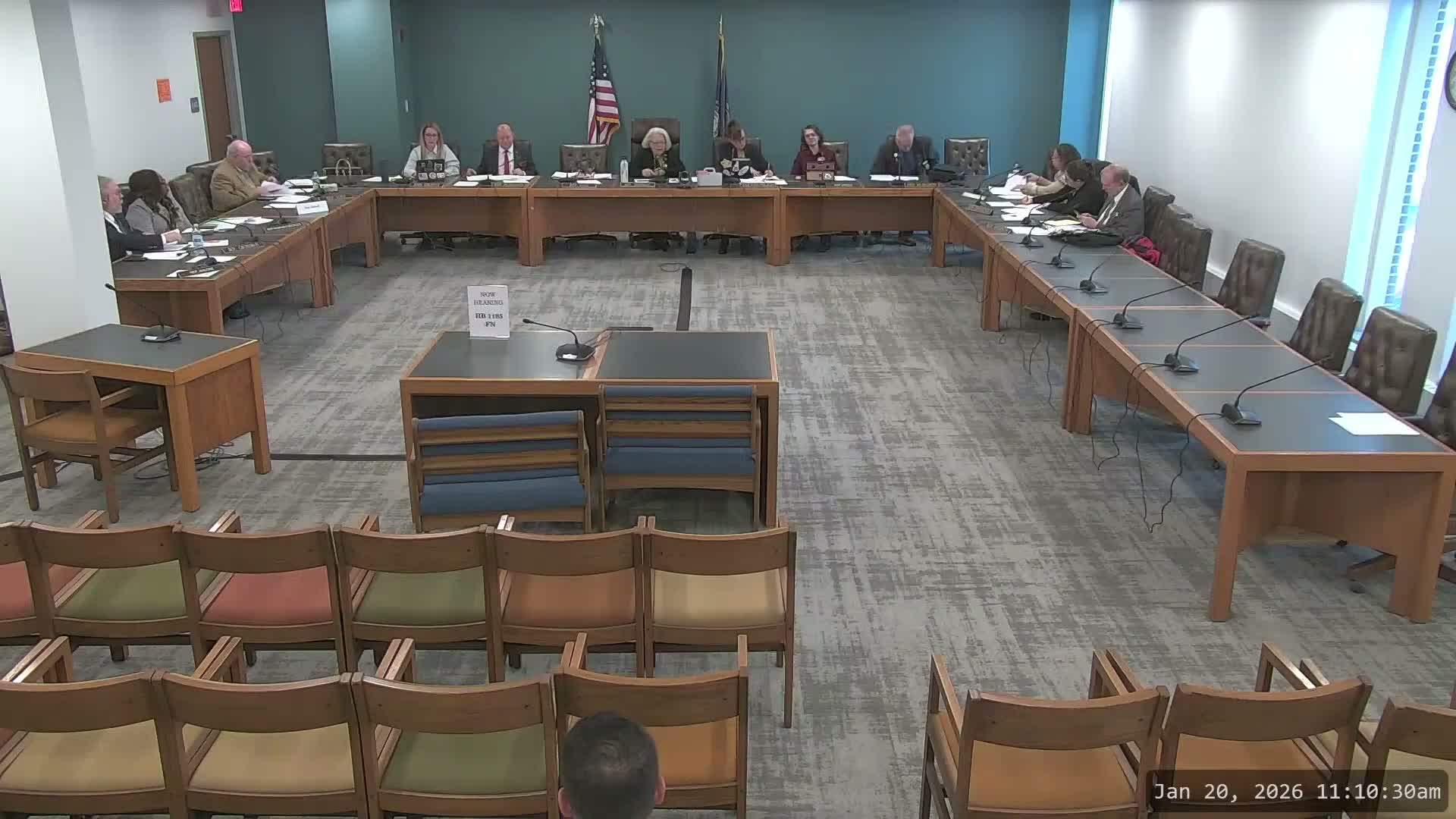
The Children and Family Law Committee heard more than two hours of testimony on House Bill 1710, which would adopt the Uniform Child Abduction Prevention Act (UCAPA) and give courts preventive authority when a "credible risk of abduction" exists.
Representative Jay Markel, sponsor of HB 1710, described the bill as a model-based, customizable statute drafted by the Uniform Law Commission and intended to give courts evidence-based tools—travel restrictions, passport alerts and targeted relief—before a child is removed from a jurisdiction. Markel told the committee that "some of the things that a court shall consider" include prior attempts, threats, and steps such as purchasing tickets or liquidating assets.
Attorney James Scully, a recently appointed Uniform Law Commission commissioner, urged passage, saying the act "provides clear evidence-based guidance on the warning signs and risk factors" and fills a gap left when the Hague Convention or custody statutes are insufficient.
But witnesses and several committee members raised sharp cautions. Mary Krueger of New Hampshire Legal Assistance said she "cautiously support[s]" the bill but flagged "red flags" about complexity, potential harm to families and the need to reference the ULC comments to guide courts. Representative Betty Gay said the draft risks "punishment prior to the commission of a crime," lacks notice and due-process protections in some sections, and could be used by abusive parents to control victims. "This bill sounds like the action it authorizes is for the state to take possession of the child," Gay said.
Members pressed the sponsor on the bill's standard, "credible risk of abduction," and whether it should be clarified against established burdens of proof. Representative Sher asked whether a preponderance- or clear-and-convincing-evidence standard would be clearer; Markel said preponderance could be appropriate but clear-and-convincing might create too high a hurdle. Markel and Scully were asked to provide materials showing how the law has operated in the roughly 21 states that have enacted similar statutes and to supply Hague-convention status for common destination countries.
Why it matters: Supporters say UCAPA gives courts tools to stop abductions before they happen; critics say broadly worded preventive measures risk being misused against domestic-violence survivors or as a substitute for custody proceedings. Committee members asked for practical examples and state experiences before deciding whether to recommend passage or study.
Next steps: The committee closed public testimony and asked witnesses to email comparative materials and clarifications. No vote was taken at this hearing.
Representative Jay Markel, sponsor of HB 1710, described the bill as a model-based, customizable statute drafted by the Uniform Law Commission and intended to give courts evidence-based tools—travel restrictions, passport alerts and targeted relief—before a child is removed from a jurisdiction. Markel told the committee that "some of the things that a court shall consider" include prior attempts, threats, and steps such as purchasing tickets or liquidating assets.
Attorney James Scully, a recently appointed Uniform Law Commission commissioner, urged passage, saying the act "provides clear evidence-based guidance on the warning signs and risk factors" and fills a gap left when the Hague Convention or custody statutes are insufficient.
But witnesses and several committee members raised sharp cautions. Mary Krueger of New Hampshire Legal Assistance said she "cautiously support[s]" the bill but flagged "red flags" about complexity, potential harm to families and the need to reference the ULC comments to guide courts. Representative Betty Gay said the draft risks "punishment prior to the commission of a crime," lacks notice and due-process protections in some sections, and could be used by abusive parents to control victims. "This bill sounds like the action it authorizes is for the state to take possession of the child," Gay said.
Members pressed the sponsor on the bill's standard, "credible risk of abduction," and whether it should be clarified against established burdens of proof. Representative Sher asked whether a preponderance- or clear-and-convincing-evidence standard would be clearer; Markel said preponderance could be appropriate but clear-and-convincing might create too high a hurdle. Markel and Scully were asked to provide materials showing how the law has operated in the roughly 21 states that have enacted similar statutes and to supply Hague-convention status for common destination countries.
Why it matters: Supporters say UCAPA gives courts tools to stop abductions before they happen; critics say broadly worded preventive measures risk being misused against domestic-violence survivors or as a substitute for custody proceedings. Committee members asked for practical examples and state experiences before deciding whether to recommend passage or study.
Next steps: The committee closed public testimony and asked witnesses to email comparative materials and clarifications. No vote was taken at this hearing.
Don't Miss a Word: See the Full Meeting!
Go beyond summaries. Unlock every video, transcript, and key insight with a Founder Membership.
✓
Get instant access to full meeting videos
✓
Search and clip any phrase from complete transcripts
✓
Receive AI-powered summaries & custom alerts
✓
Enjoy lifetime, unrestricted access to government data
30-day money-back guarantee
