Senate finance committee reviews retooled family caregiver tax credit (S.231)
January 21, 2026 | Finance, SENATE, Committees, Legislative , Vermont
This article was created by AI summarizing key points discussed. AI makes mistakes, so for full details and context, please refer to the video of the full meeting. Please report any errors so we can fix them. Report an error »
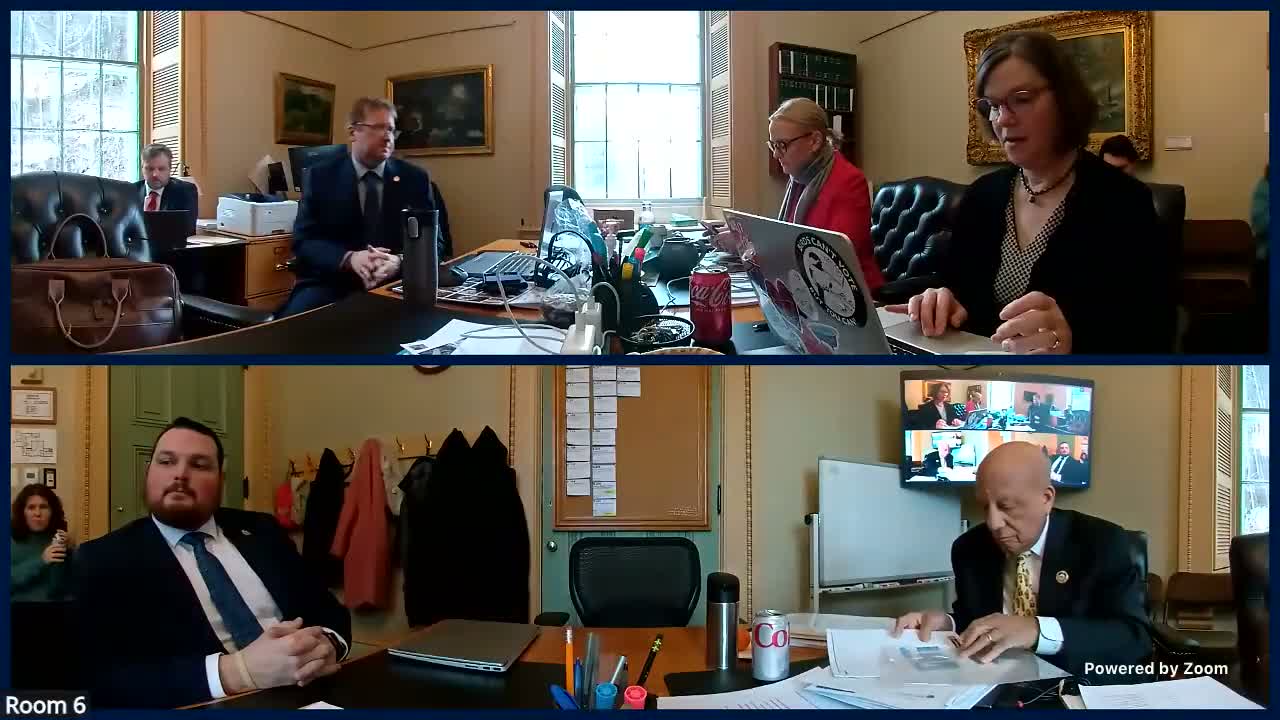
Senator Hardy and legislative counsel Kirby Keene presented S.231 to the Senate Finance Committee on Jan. 20, proposing a Vermont family caregiver tax credit to help people who provide unpaid care to relatives with long-term care needs. The bill would allow a taxpayer to claim 30% of qualifying caregiving expenses up to a $2,500 annual cap and includes an AGI phaseout beginning at $125,000 and ending at $175,000.
"This is the caregiver tax bill," Senator Hardy said, describing the measure as a revised, expense-based version of last year's unpaid-caregiver proposal that passed the Senate but was stripped from a House package. Kirby Keene, legislative counsel, told the committee the credit is drafted to be supplemental to the child dependent care credit and would not duplicate federal CDCC-covered expenses.
Keene read the drafted eligibility criteria: the person receiving care must be at least 14, related to the caregiver, have a medically diagnosed disability or health condition, not live in a residential care home, and require substantial assistance or supervision with activities of daily living such as bathing, dressing, eating or managing finances. Qualifying expenses listed in the draft include respite care, adult day care, counseling and support groups, caregiver training, travel costs related to care, assistive technologies and employer-verified lost wages or unpaid time off.
Keene said the bill provides for administrative safeguards: the commissioner of taxes may require substantiation for expense claims and deny credits or portions of credits lacking credible documentation. He emphasized the bill excludes any expenses already claimed under the child dependent care credit.
Hardy also described a linked property-tax provision that would allow households claiming the caregiver credit to exclude the income of the individual they care for (if that person has moved into the household) from household-income calculations used to determine eligibility for a property-tax credit or household exemption. "I tied them together to make it easier for the tax department to understand who's eligible," Hardy said.
Committee members asked how S.231 relates to other caregiver-focused proposals, including a narrower grant program for dementia caregivers. Members cautioned that running both programs could be excessive and discussed coordinating so that the Legislature would "go with the winner" if both measures advanced.
The bill drew reference to stakeholder support from groups that testified on the earlier proposal, including Alzheimer’s advocacy organizations and the Vermont Women's Commission. Hardy and Keene said they would solicit further testimony and noted how the drafting borrows some eligibility language from proposed federal legislation.
The committee did not take a vote; staff were directed to assemble interested witnesses and return the bill for additional input and possible amendment.
What happens next: committee staff will collect names of potential witnesses and circulate slide materials and reports referenced in the presentation; the committee did not vote on S.231 at this session.
"This is the caregiver tax bill," Senator Hardy said, describing the measure as a revised, expense-based version of last year's unpaid-caregiver proposal that passed the Senate but was stripped from a House package. Kirby Keene, legislative counsel, told the committee the credit is drafted to be supplemental to the child dependent care credit and would not duplicate federal CDCC-covered expenses.
Keene read the drafted eligibility criteria: the person receiving care must be at least 14, related to the caregiver, have a medically diagnosed disability or health condition, not live in a residential care home, and require substantial assistance or supervision with activities of daily living such as bathing, dressing, eating or managing finances. Qualifying expenses listed in the draft include respite care, adult day care, counseling and support groups, caregiver training, travel costs related to care, assistive technologies and employer-verified lost wages or unpaid time off.
Keene said the bill provides for administrative safeguards: the commissioner of taxes may require substantiation for expense claims and deny credits or portions of credits lacking credible documentation. He emphasized the bill excludes any expenses already claimed under the child dependent care credit.
Hardy also described a linked property-tax provision that would allow households claiming the caregiver credit to exclude the income of the individual they care for (if that person has moved into the household) from household-income calculations used to determine eligibility for a property-tax credit or household exemption. "I tied them together to make it easier for the tax department to understand who's eligible," Hardy said.
Committee members asked how S.231 relates to other caregiver-focused proposals, including a narrower grant program for dementia caregivers. Members cautioned that running both programs could be excessive and discussed coordinating so that the Legislature would "go with the winner" if both measures advanced.
The bill drew reference to stakeholder support from groups that testified on the earlier proposal, including Alzheimer’s advocacy organizations and the Vermont Women's Commission. Hardy and Keene said they would solicit further testimony and noted how the drafting borrows some eligibility language from proposed federal legislation.
The committee did not take a vote; staff were directed to assemble interested witnesses and return the bill for additional input and possible amendment.
What happens next: committee staff will collect names of potential witnesses and circulate slide materials and reports referenced in the presentation; the committee did not vote on S.231 at this session.
Don't Miss a Word: See the Full Meeting!
Go beyond summaries. Unlock every video, transcript, and key insight with a Founder Membership.
✓
Get instant access to full meeting videos
✓
Search and clip any phrase from complete transcripts
✓
Receive AI-powered summaries & custom alerts
✓
Enjoy lifetime, unrestricted access to government data
30-day money-back guarantee
