Council debates modernizing Findlay taxi code amid questions about ride‑hail coverage and legal risk
January 21, 2026 | Findlay City, Hancock County , Ohio
This article was created by AI summarizing key points discussed. AI makes mistakes, so for full details and context, please refer to the video of the full meeting. Please report any errors so we can fix them. Report an error »
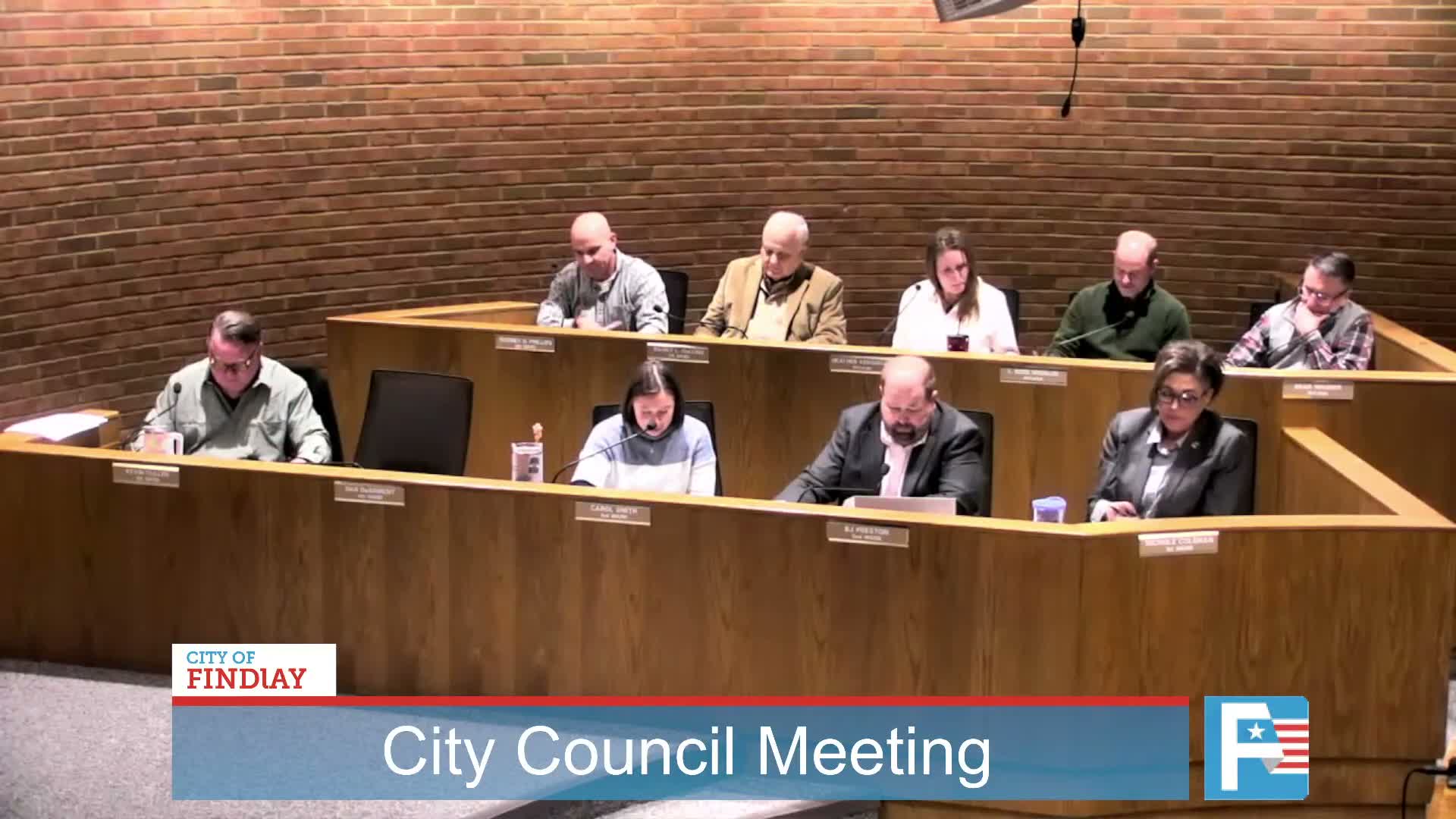
City council spent a substantial portion of its January meeting on a first reading of Ordinance 2026‑008, a proposed repeal and replacement of Findlay’s taxi/cab code intended to modernize licensing and safety requirements.
An unidentified councilmember asked whether the draft ordinance was intended to encompass drivers for ride‑hail companies such as Uber and Lyft, noting that similar city ordinances nationwide have faced litigation. "Some of the language feels like we're targeting specifically Uber and Lyft drivers, and the language feels a little bit like it may include them. Is that the intention?" the member asked.
Director of Law Feigner responded that the ordinance’s definitions were expanded "to try to cover everything that's out there in our in our modern day," and that the goal was to bring licensing into the 21st century so that anyone providing these services would be required to go through consistent annual licensing, background checks and insurance verification. He said he would check pending case law and follow up with council on any legal exposure.
Other councilmembers emphasized security and consumer protections—background checks, insurance requirements and consistency with existing licensing (for example, vending and solicitor licenses)—while also warning that the ordinance should avoid creating a disproportionate regulatory burden. "I like the fact that we want to be able to ... know that they have insurance and know that they're not a felon," one councilmember said, while another urged that the law director review national case law so the city is not exposed to avoidable lawsuits.
What happens next: The ordinance received its first reading and generated robust policy and legal questions. The law director committed to researching pending litigation and to advising council; no final vote on Ordinance 2026‑008 was taken at this meeting.
Why it matters: Updating the taxi code could change licensing and operational requirements for traditional taxi companies and modern ride‑hail services alike. Council’s legal review will determine how broadly the ordinance applies and whether the city’s approach needs revision to avoid legal challenge.
An unidentified councilmember asked whether the draft ordinance was intended to encompass drivers for ride‑hail companies such as Uber and Lyft, noting that similar city ordinances nationwide have faced litigation. "Some of the language feels like we're targeting specifically Uber and Lyft drivers, and the language feels a little bit like it may include them. Is that the intention?" the member asked.
Director of Law Feigner responded that the ordinance’s definitions were expanded "to try to cover everything that's out there in our in our modern day," and that the goal was to bring licensing into the 21st century so that anyone providing these services would be required to go through consistent annual licensing, background checks and insurance verification. He said he would check pending case law and follow up with council on any legal exposure.
Other councilmembers emphasized security and consumer protections—background checks, insurance requirements and consistency with existing licensing (for example, vending and solicitor licenses)—while also warning that the ordinance should avoid creating a disproportionate regulatory burden. "I like the fact that we want to be able to ... know that they have insurance and know that they're not a felon," one councilmember said, while another urged that the law director review national case law so the city is not exposed to avoidable lawsuits.
What happens next: The ordinance received its first reading and generated robust policy and legal questions. The law director committed to researching pending litigation and to advising council; no final vote on Ordinance 2026‑008 was taken at this meeting.
Why it matters: Updating the taxi code could change licensing and operational requirements for traditional taxi companies and modern ride‑hail services alike. Council’s legal review will determine how broadly the ordinance applies and whether the city’s approach needs revision to avoid legal challenge.
View the Full Meeting & All Its Details
This article offers just a summary. Unlock complete video, transcripts, and insights as a Founder Member.
✓
Watch full, unedited meeting videos
✓
Search every word spoken in unlimited transcripts
✓
AI summaries & real-time alerts (all government levels)
✓
Permanent access to expanding government content
30-day money-back guarantee
