Senate Finance examines income-tax structure and trade-offs for replacing property tax revenue
January 21, 2026 | Finance, SENATE, Committees, Legislative , Vermont
This article was created by AI summarizing key points discussed. AI makes mistakes, so for full details and context, please refer to the video of the full meeting. Please report any errors so we can fix them. Report an error »
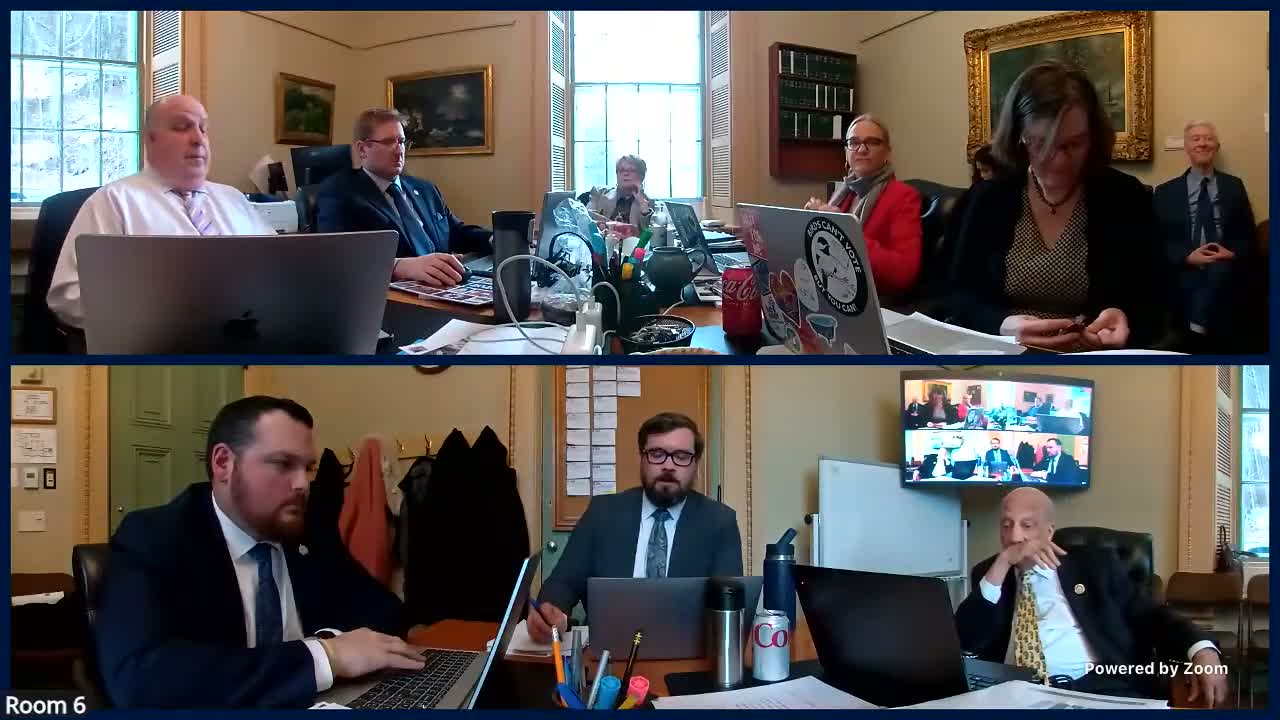
The committee received a fiscal briefing on state income taxes, comparing the scale of personal income tax receipts and homestead property-tax revenue and flagging the practical challenges of using income-tax changes to replace property-tax levies.
Fiscal staff reported a projected net homestead education-property revenue of about $720 million for FY27 and noted that personal income tax receipts are roughly $1.4 billion under the consensus forecast. Staff said replacing property-tax revenue entirely through the income tax would imply a large increase in income-tax yield or material changes to bracket structure. "If this was purely additive...that's essentially a 50% increase in revenues overall in personal income tax," a fiscal analyst said.
Committee members discussed the stability of property tax revenue compared with income tax volatility, and raised concerns about behavioral responses if top rates increased substantially (for example, migration or changes in income reporting). Members cited mixed evidence from other states — California and Massachusetts were discussed as contrasting examples — and requested more modeling on potential behavioral effects and distributional outcomes.
Fiscal staff also explained Vermont’s starting point for taxable income (federal AGI with state additions/subtractions), the state-specific standard deduction and bracket structure (top marginal rate of 8.75% for joint filers at around $300,000 AGI). Members asked for material overlaying recent federal tax changes with state-level impacts and requested the ten-year tax study and prior tax-expenditure reports for context.
The committee did not vote on any tax-rate change; members asked staff to provide more detailed modeling and historical comparisons before advancing specific proposals.
Fiscal staff reported a projected net homestead education-property revenue of about $720 million for FY27 and noted that personal income tax receipts are roughly $1.4 billion under the consensus forecast. Staff said replacing property-tax revenue entirely through the income tax would imply a large increase in income-tax yield or material changes to bracket structure. "If this was purely additive...that's essentially a 50% increase in revenues overall in personal income tax," a fiscal analyst said.
Committee members discussed the stability of property tax revenue compared with income tax volatility, and raised concerns about behavioral responses if top rates increased substantially (for example, migration or changes in income reporting). Members cited mixed evidence from other states — California and Massachusetts were discussed as contrasting examples — and requested more modeling on potential behavioral effects and distributional outcomes.
Fiscal staff also explained Vermont’s starting point for taxable income (federal AGI with state additions/subtractions), the state-specific standard deduction and bracket structure (top marginal rate of 8.75% for joint filers at around $300,000 AGI). Members asked for material overlaying recent federal tax changes with state-level impacts and requested the ten-year tax study and prior tax-expenditure reports for context.
The committee did not vote on any tax-rate change; members asked staff to provide more detailed modeling and historical comparisons before advancing specific proposals.
View the Full Meeting & All Its Details
This article offers just a summary. Unlock complete video, transcripts, and insights as a Founder Member.
✓
Watch full, unedited meeting videos
✓
Search every word spoken in unlimited transcripts
✓
AI summaries & real-time alerts (all government levels)
✓
Permanent access to expanding government content
30-day money-back guarantee
