Private firm urges clearer law to let schools use performance contracts for energy and air-quality upgrades
January 17, 2026 | Education, HOUSE OF REPRESENTATIVES, Committees, Legislative , Vermont
This article was created by AI summarizing key points discussed. AI makes mistakes, so for full details and context, please refer to the video of the full meeting. Please report any errors so we can fix them. Report an error »
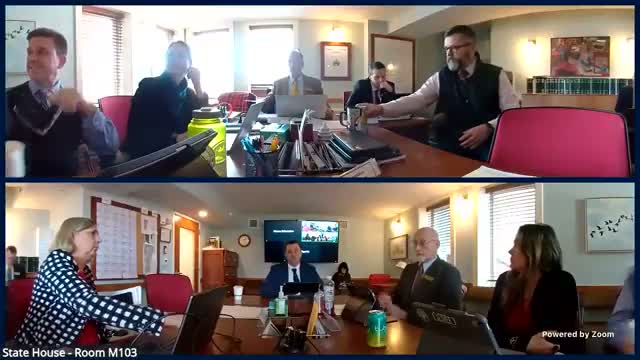
Eric Lafayette, vice president of Energy Efficient Investments, testified to the House Education Committee on Jan. 16 that energy performance contracts let school districts finance facility upgrades by using guaranteed energy savings to pay for work.
Lafayette described a delivery model in which his firm performs investment-grade audits, recommends energy cost measures and guarantees savings over multi-year contracts. "We quantify those and then we guarantee an energy savings associated with that measure over a period of time," he said.
Why it matters: Lafayette said the model can help districts access grants and rebates, reduce utility bills and fund upgrades with limited upfront capital. He cited a phased ventilation renovation at Springfield High School that added centralized ERVs and MERV-13 filtration; Lafayette said the district reported about a 30% reduction in student sick days and roughly a 10% decrease in energy bills after installing energy recovery and advanced controls.
Details and examples: Lafayette described a Rochester project that installed a pellet boiler and new infrastructure with a total cost of $1,200,000, securing $250,000 in federal and state grants and $115,000 in ESSER funds; after incentives the district share was about $572,000. He said guaranteed annual savings for that project were $40,000 and the district structured a $450,000 lease whose annual payment matched projected savings.
On measurement: Lafayette said contractors include measurement-and-verification (M&V) services and ongoing analytics; he estimated an M&V verification report typically costs between $500 and $2,500 depending on school size and complexity.
Limits and policy request: Lafayette cautioned that the schools most in need — those with little or no existing ventilation — often lack baseline energy savings that make a performance contract feasible. He asked the committee to clarify statutory language so performance contracting can apply to additions (not only renovations) and proposed that indoor-air-quality metrics be an eligible basis for measuring value. Lafayette said his firm would provide draft statutory language for the committee to consider.
Committee response and next steps: Committee members asked technical questions about guarantees, leases and M&V costs; Lafayette responded that contractors generally absorb the early development cost, include M&V in project budgets, and that equipment can be owned by the district at lease end. The committee thanked Lafayette and indicated staff would review any proposed language.
The committee did not take formal action on Lafayette’s proposals during the session; he offered to provide draft language and the committee said it would review whether statutory changes belong to this committee’s jurisdiction.
Lafayette described a delivery model in which his firm performs investment-grade audits, recommends energy cost measures and guarantees savings over multi-year contracts. "We quantify those and then we guarantee an energy savings associated with that measure over a period of time," he said.
Why it matters: Lafayette said the model can help districts access grants and rebates, reduce utility bills and fund upgrades with limited upfront capital. He cited a phased ventilation renovation at Springfield High School that added centralized ERVs and MERV-13 filtration; Lafayette said the district reported about a 30% reduction in student sick days and roughly a 10% decrease in energy bills after installing energy recovery and advanced controls.
Details and examples: Lafayette described a Rochester project that installed a pellet boiler and new infrastructure with a total cost of $1,200,000, securing $250,000 in federal and state grants and $115,000 in ESSER funds; after incentives the district share was about $572,000. He said guaranteed annual savings for that project were $40,000 and the district structured a $450,000 lease whose annual payment matched projected savings.
On measurement: Lafayette said contractors include measurement-and-verification (M&V) services and ongoing analytics; he estimated an M&V verification report typically costs between $500 and $2,500 depending on school size and complexity.
Limits and policy request: Lafayette cautioned that the schools most in need — those with little or no existing ventilation — often lack baseline energy savings that make a performance contract feasible. He asked the committee to clarify statutory language so performance contracting can apply to additions (not only renovations) and proposed that indoor-air-quality metrics be an eligible basis for measuring value. Lafayette said his firm would provide draft statutory language for the committee to consider.
Committee response and next steps: Committee members asked technical questions about guarantees, leases and M&V costs; Lafayette responded that contractors generally absorb the early development cost, include M&V in project budgets, and that equipment can be owned by the district at lease end. The committee thanked Lafayette and indicated staff would review any proposed language.
The committee did not take formal action on Lafayette’s proposals during the session; he offered to provide draft language and the committee said it would review whether statutory changes belong to this committee’s jurisdiction.
View the Full Meeting & All Its Details
This article offers just a summary. Unlock complete video, transcripts, and insights as a Founder Member.
✓
Watch full, unedited meeting videos
✓
Search every word spoken in unlimited transcripts
✓
AI summaries & real-time alerts (all government levels)
✓
Permanent access to expanding government content
30-day money-back guarantee
