Senate Health & Welfare reviews bill to bar AI from delivering therapy in Vermont
January 17, 2026 | Health & Welfare, SENATE, Committees, Legislative , Vermont
This article was created by AI summarizing key points discussed. AI makes mistakes, so for full details and context, please refer to the video of the full meeting. Please report any errors so we can fix them. Report an error »
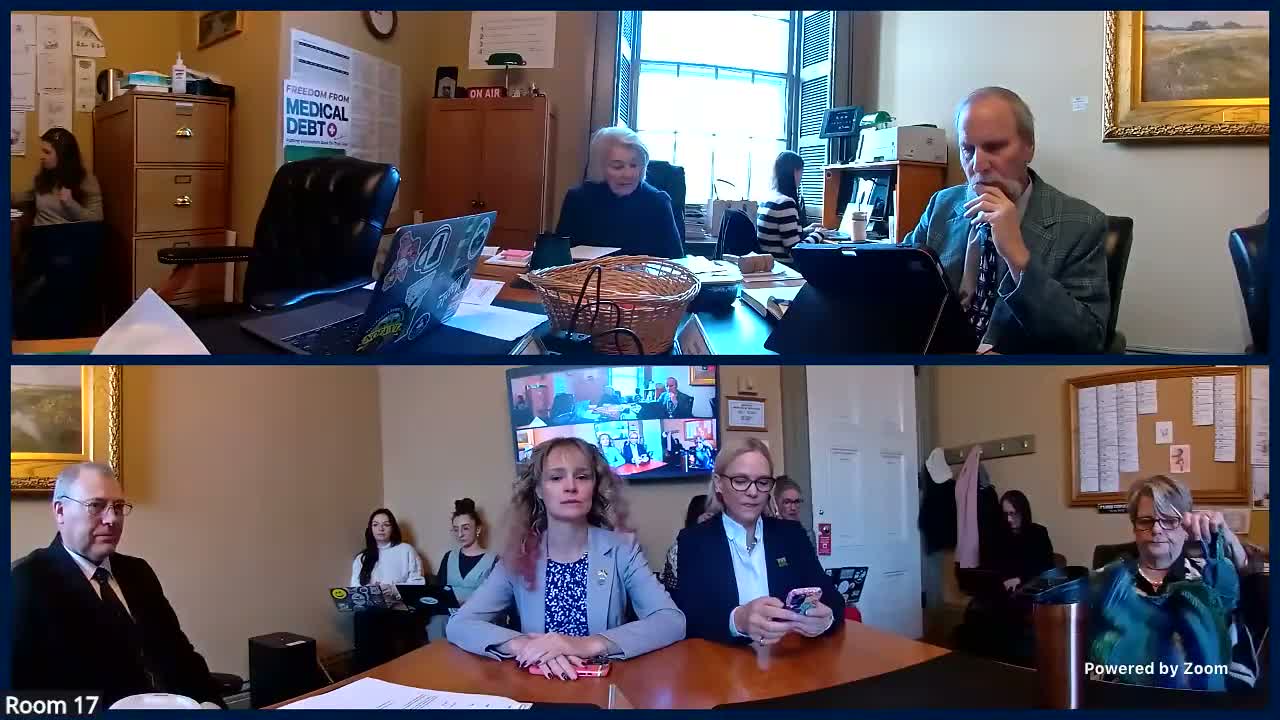
A Senate Health & Welfare Committee hearing on Jan. 16 reviewed S.241, a proposal that would bar any person or entity from offering, providing or advertising mental‑health services in Vermont that use artificial intelligence.
The bill, sponsors said, grew out of concerns raised by the National Association of Social Work about instances where AI responses have affirmed or escalated harm for people in crisis. "There have been instances where people have been talking to AI, particularly around feeling suicidal," a committee sponsor said, arguing that AI can give affirmative responses without human judgment.
Tina of the Office of Legislative Council summarized the draft for the committee, saying the bill would prohibit AI from making therapeutic decisions, issuing direct therapeutic communications, generating treatment plans or detecting or interpreting emotions. She said two narrow exceptions are in the draft: AI may be used for transcription and reporting of client conversations with informed consent, and for administrative support if a licensed professional reviews and takes responsibility for any AI outputs.
Counsel also said the bill uses two enforcement tracks. The Attorney General would have authority under the Consumer Protection Act to pursue entities that offer or advertise prohibited services, while the Office of Professional Regulation would handle licensure-based enforcement of mental‑health professionals. Committee members noted the bill includes standard consumer‑protection penalty language.
Members questioned whether the prohibition would be limited to youth; sponsors clarified it would cover all services but emphasized youth vulnerability because of brain development. Lawmakers also raised the practical question of whether clinicians could use AI tools for background research or literature searches; counsel said that use would likely be allowed if the clinician remained responsible for therapeutic decisions and did not substitute AI judgment for professional judgment.
Medical‑practice stakeholders flagged implementation issues. "UpToDate, which a lot of practitioners use to get scientific medical information, now has an AI function," Stephanie Winters, deputy director of the Vermont Medical Society, told the committee, asking the panel to ensure the bill does not inadvertently bar clinicians from using evidence tools to inform care.
The committee asked counsel to return with drafting fixes and said it would hear practitioner testimony and stakeholder comments before taking further action.
The bill, sponsors said, grew out of concerns raised by the National Association of Social Work about instances where AI responses have affirmed or escalated harm for people in crisis. "There have been instances where people have been talking to AI, particularly around feeling suicidal," a committee sponsor said, arguing that AI can give affirmative responses without human judgment.
Tina of the Office of Legislative Council summarized the draft for the committee, saying the bill would prohibit AI from making therapeutic decisions, issuing direct therapeutic communications, generating treatment plans or detecting or interpreting emotions. She said two narrow exceptions are in the draft: AI may be used for transcription and reporting of client conversations with informed consent, and for administrative support if a licensed professional reviews and takes responsibility for any AI outputs.
Counsel also said the bill uses two enforcement tracks. The Attorney General would have authority under the Consumer Protection Act to pursue entities that offer or advertise prohibited services, while the Office of Professional Regulation would handle licensure-based enforcement of mental‑health professionals. Committee members noted the bill includes standard consumer‑protection penalty language.
Members questioned whether the prohibition would be limited to youth; sponsors clarified it would cover all services but emphasized youth vulnerability because of brain development. Lawmakers also raised the practical question of whether clinicians could use AI tools for background research or literature searches; counsel said that use would likely be allowed if the clinician remained responsible for therapeutic decisions and did not substitute AI judgment for professional judgment.
Medical‑practice stakeholders flagged implementation issues. "UpToDate, which a lot of practitioners use to get scientific medical information, now has an AI function," Stephanie Winters, deputy director of the Vermont Medical Society, told the committee, asking the panel to ensure the bill does not inadvertently bar clinicians from using evidence tools to inform care.
The committee asked counsel to return with drafting fixes and said it would hear practitioner testimony and stakeholder comments before taking further action.
View the Full Meeting & All Its Details
This article offers just a summary. Unlock complete video, transcripts, and insights as a Founder Member.
✓
Watch full, unedited meeting videos
✓
Search every word spoken in unlimited transcripts
✓
AI summaries & real-time alerts (all government levels)
✓
Permanent access to expanding government content
30-day money-back guarantee
