Sedgwick County commissioners ask staff to prepare white paper opposing proposed 3% assessed-value cap
January 17, 2026 | Sedgwick County, Kansas
This article was created by AI summarizing key points discussed. AI makes mistakes, so for full details and context, please refer to the video of the full meeting. Please report any errors so we can fix them. Report an error »
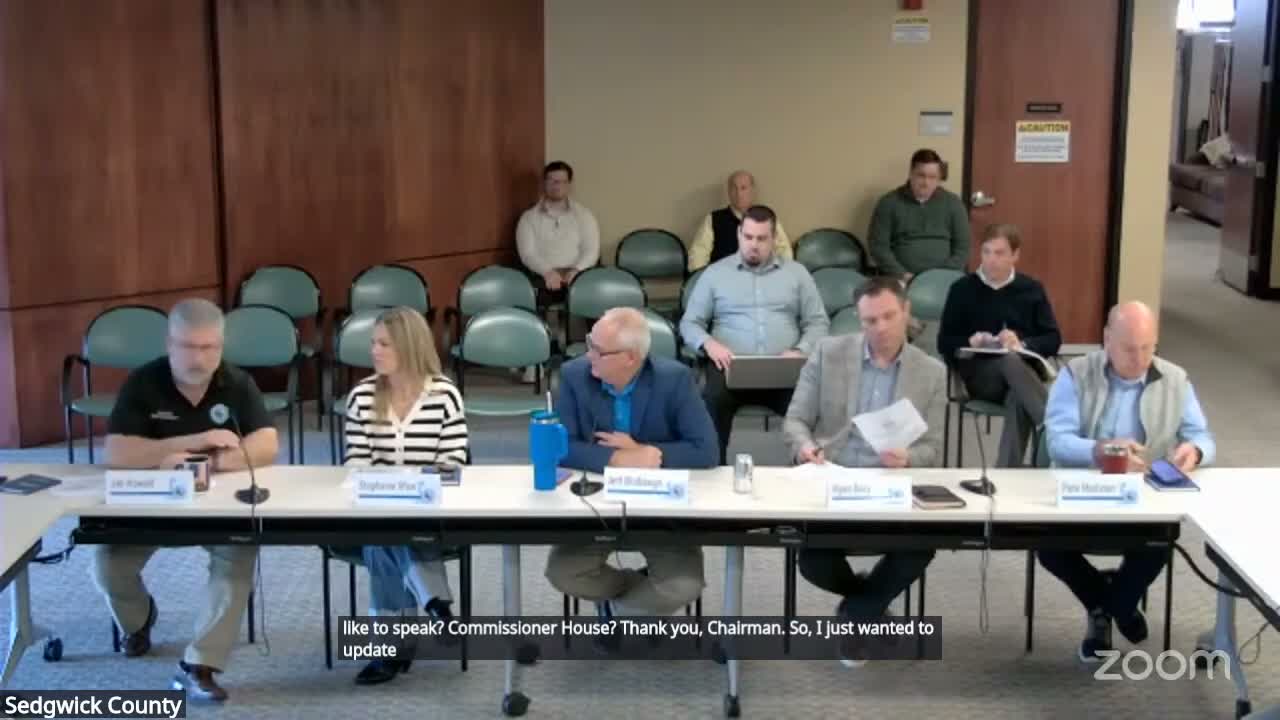
Commissioners at a Sedgwick County agenda read on Wednesday asked staff to prepare a concise white paper using county appraisal data to explain how a proposed constitutional amendment that would cap assessed-value growth at 3% (referred to in the discussion as Senate Concurrent Resolution 1616) could affect local revenues and tax incidence.
Commissioner Howell said he listened to three days of testimony on the measure and worried the proposal would allow different assessment rates across parcels within the same property classification, undermining the constitutional terms ‘uniform and equal.’ He said the change could shift tax burdens among property owners within the same class and warned it might force the county to raise its mill levy to maintain service levels. "If this passed in its current form, I would speculate Sedgwick County would have around a 6 mill increase immediately in our next budget cycle to simply fund our current government level," Howell said.
Howell asked the county appraiser Deanna to produce historical Sedgwick County assessment data so staff can rerun spreadsheets and verify the effect locally. He said staff member Lindsay will verify the math and that Jason Watkins could disseminate the final white paper to state legislators if the commission approves it. The commission asked staff to include an example showing what a 6‑mill change would cost the owner of a $100,000 home and to keep the white paper concise with attachments for deeper analysis.
Other commissioners and staff raised related concerns: that the amendment as drafted would apply across all property types (residential, commercial, agricultural), that statutory details could permit lower caps or exemptions, and that resetting assessed values to an earlier base year (discussed as 2022 in the meeting) could return taxable values to a prior level while requiring a higher mill levy to preserve revenue. Those dynamics, commissioners said, could make headline caps appear to limit growth but leave taxpayers with similar or higher bills after levy adjustments.
The commission reached informal consensus to place the item on the legislative agenda for final approval of the white paper and to brief legislative staff in advance. No formal vote on policy was taken during the agenda read; the action requested is staff work to produce the white paper and related impact calculations for commission consideration at the upcoming meeting.
What happens next: staff will gather Sedgwick County appraisal data, run the numeric scenarios requested by commissioners (including the 6‑mill example), and present the draft white paper to the commission for approval before distribution to state lawmakers.
Commissioner Howell said he listened to three days of testimony on the measure and worried the proposal would allow different assessment rates across parcels within the same property classification, undermining the constitutional terms ‘uniform and equal.’ He said the change could shift tax burdens among property owners within the same class and warned it might force the county to raise its mill levy to maintain service levels. "If this passed in its current form, I would speculate Sedgwick County would have around a 6 mill increase immediately in our next budget cycle to simply fund our current government level," Howell said.
Howell asked the county appraiser Deanna to produce historical Sedgwick County assessment data so staff can rerun spreadsheets and verify the effect locally. He said staff member Lindsay will verify the math and that Jason Watkins could disseminate the final white paper to state legislators if the commission approves it. The commission asked staff to include an example showing what a 6‑mill change would cost the owner of a $100,000 home and to keep the white paper concise with attachments for deeper analysis.
Other commissioners and staff raised related concerns: that the amendment as drafted would apply across all property types (residential, commercial, agricultural), that statutory details could permit lower caps or exemptions, and that resetting assessed values to an earlier base year (discussed as 2022 in the meeting) could return taxable values to a prior level while requiring a higher mill levy to preserve revenue. Those dynamics, commissioners said, could make headline caps appear to limit growth but leave taxpayers with similar or higher bills after levy adjustments.
The commission reached informal consensus to place the item on the legislative agenda for final approval of the white paper and to brief legislative staff in advance. No formal vote on policy was taken during the agenda read; the action requested is staff work to produce the white paper and related impact calculations for commission consideration at the upcoming meeting.
What happens next: staff will gather Sedgwick County appraisal data, run the numeric scenarios requested by commissioners (including the 6‑mill example), and present the draft white paper to the commission for approval before distribution to state lawmakers.
View the Full Meeting & All Its Details
This article offers just a summary. Unlock complete video, transcripts, and insights as a Founder Member.
✓
Watch full, unedited meeting videos
✓
Search every word spoken in unlimited transcripts
✓
AI summaries & real-time alerts (all government levels)
✓
Permanent access to expanding government content
30-day money-back guarantee
