Vermont Interfaith Action tells House Human Services how state extreme-cold shelter program is triggered and limited
January 17, 2026 | Human Services, HOUSE OF REPRESENTATIVES, Committees, Legislative , Vermont
This article was created by AI summarizing key points discussed. AI makes mistakes, so for full details and context, please refer to the video of the full meeting. Please report any errors so we can fix them. Report an error »
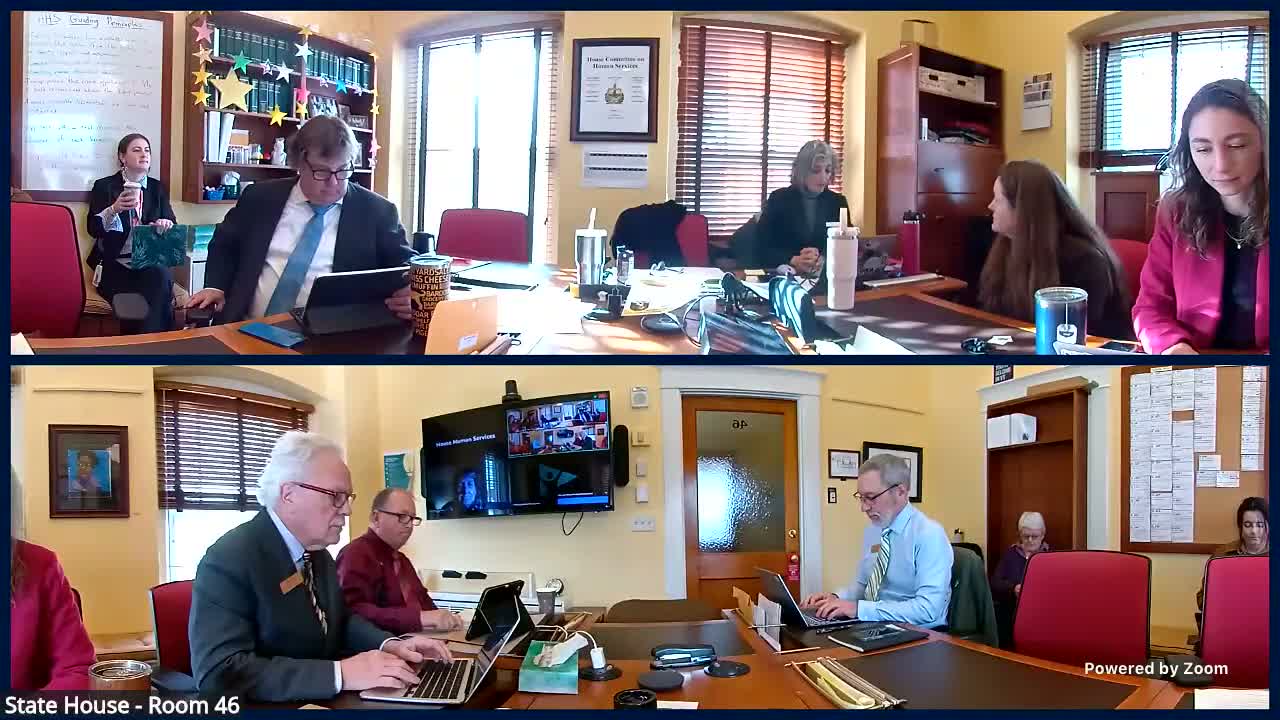
Melissa Battag, executive director of Vermont Interfaith Action, told the House Committee on Human Services on Jan. 16 that VIA administers Vermont's extreme cold weather shelter program and that its primary goal is to prevent loss of life among people living outdoors.
Battag described a protocol that begins with daily weather monitoring and checks with shelter providers. "No 1 should be left outside when weather conditions pose a serious and foreseeable risk to human safety," she said. VIA assesses temperature, wind chill, precipitation and duration to decide whether to activate emergency provisions and then sends activation notices to approved shelter sites, DCF staff and 2-1-1 operators.
The program uses two operational triggers, Battag said. A mandatory activation is set at negative 10 degrees Fahrenheit, including wind chill, sustained for four hours during the night; an optional activation can be issued at 0 degrees Fahrenheit, including wind chill, sustained for four hours, and approved sites may elect to operate on those optional nights and be reimbursed by the state. "If it's negative 10 or below, it's a mandatory, and so they should be operating," Battag said. "If they choose to operate [at 0°F], the state will reimburse."
Committee members pressed for details about capacity and public access to information. Battag estimated that six regional shelter networks are operating under the state-funded program and that total bed capacity across those sites is "over 200" (she cited roughly 209 if every site were open at full capacity and noted the number could be slightly higher). She offered to provide the committee with a location-by-location bed list and noted that DCF posts guidance under the Office of Economic Opportunity (OEO) program pages and that callers can reach 2-1-1 for current shelter status.
Lawmakers raised operational limits: many sites rely on volunteers or seasonal staff, making staffing unpredictable; some communities lack capacity to opt in at the 0°F threshold even if funding were available. Battag said VIA provides technical assistance to help sites manage bed availability, extended hours and overflow options, but that physical capacity and volunteer availability remain constraints. She also acknowledged that while the program has "prevented harm and saved lives," it is not a substitute for long-term housing.
The committee said it will follow up with requests for a list of the six participating regions and bed counts for each site and discussed making the DCF information easier to find online. The hearing continued with testimony from a Montpelier shelter volunteer about local operations.
Battag described a protocol that begins with daily weather monitoring and checks with shelter providers. "No 1 should be left outside when weather conditions pose a serious and foreseeable risk to human safety," she said. VIA assesses temperature, wind chill, precipitation and duration to decide whether to activate emergency provisions and then sends activation notices to approved shelter sites, DCF staff and 2-1-1 operators.
The program uses two operational triggers, Battag said. A mandatory activation is set at negative 10 degrees Fahrenheit, including wind chill, sustained for four hours during the night; an optional activation can be issued at 0 degrees Fahrenheit, including wind chill, sustained for four hours, and approved sites may elect to operate on those optional nights and be reimbursed by the state. "If it's negative 10 or below, it's a mandatory, and so they should be operating," Battag said. "If they choose to operate [at 0°F], the state will reimburse."
Committee members pressed for details about capacity and public access to information. Battag estimated that six regional shelter networks are operating under the state-funded program and that total bed capacity across those sites is "over 200" (she cited roughly 209 if every site were open at full capacity and noted the number could be slightly higher). She offered to provide the committee with a location-by-location bed list and noted that DCF posts guidance under the Office of Economic Opportunity (OEO) program pages and that callers can reach 2-1-1 for current shelter status.
Lawmakers raised operational limits: many sites rely on volunteers or seasonal staff, making staffing unpredictable; some communities lack capacity to opt in at the 0°F threshold even if funding were available. Battag said VIA provides technical assistance to help sites manage bed availability, extended hours and overflow options, but that physical capacity and volunteer availability remain constraints. She also acknowledged that while the program has "prevented harm and saved lives," it is not a substitute for long-term housing.
The committee said it will follow up with requests for a list of the six participating regions and bed counts for each site and discussed making the DCF information easier to find online. The hearing continued with testimony from a Montpelier shelter volunteer about local operations.
View the Full Meeting & All Its Details
This article offers just a summary. Unlock complete video, transcripts, and insights as a Founder Member.
✓
Watch full, unedited meeting videos
✓
Search every word spoken in unlimited transcripts
✓
AI summaries & real-time alerts (all government levels)
✓
Permanent access to expanding government content
30-day money-back guarantee
