Montpelier volunteers say rotating church shelters cost more, strain volunteers and meet serious medical needs
January 17, 2026 | Human Services, HOUSE OF REPRESENTATIVES, Committees, Legislative , Vermont
This article was created by AI summarizing key points discussed. AI makes mistakes, so for full details and context, please refer to the video of the full meeting. Please report any errors so we can fix them. Report an error »
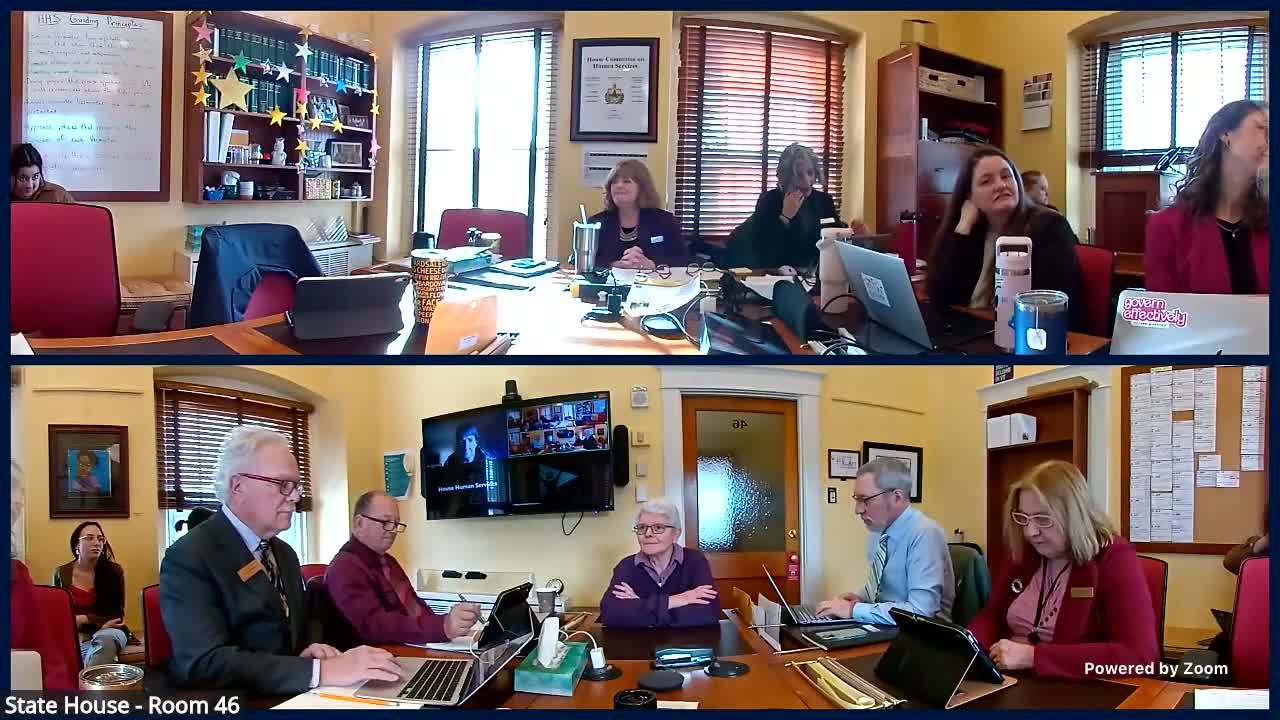
Bethann Mayer, who coordinates Montpelier's rotating emergency cold-weather shelters, described to the House Committee on Human Services how congregations and community partners have stood up nightly shelters to fill gaps this winter.
Mayer said the Montpelier network has relied on volunteers who take four-hour shifts and that the operation moved between three churches to provide continuous overnight coverage. "We were sheltering 40 people" on some nights last season when a seasonal overnight shelter also operated, she said. This winter Montpelier reported operating 18 nights through December and January with eight nights eligible for state reimbursement.
Mayer described acute medical and support needs among guests: a woman in her second trimester of pregnancy, people with colostomy bags and one guest with severe frost-related burns to his hands who has required daily wound care. She said many guests face severe alcohol use disorders and therefore cannot be housed in hotels or programs with sobriety requirements.
On costs, Mayer told lawmakers the rotating-church model can cost "twice as much" as hotel vouchers. Committee members discussed the accounting: at $80 per hotel voucher for 15 people, the per-night hotel cost would be about $1,200; Mayer said coordinator stipends and operational tasks such as laundry, supplies and site setup add to the cost and that the program received some funding through HOP grants added to existing providers' awards.
Mayer said volunteers use online training offered through the statewide program and that Montpelier maintains a public site-status page at www.montpeliercoal.org so hospital case managers and others can check whether the shelter is operating. She urged the committee to consider investments in single-room occupancy and tailored in-building services to help people with substance use or neurodevelopmental differences who struggle in congregate settings.
The committee asked for clearer reimbursement rules and for documentation of which nights and sites are reimbursed; members acknowledged the strain on volunteers who cover unreimbursed nights and said they would seek more information from VIA and DCF.
Mayer said the Montpelier network has relied on volunteers who take four-hour shifts and that the operation moved between three churches to provide continuous overnight coverage. "We were sheltering 40 people" on some nights last season when a seasonal overnight shelter also operated, she said. This winter Montpelier reported operating 18 nights through December and January with eight nights eligible for state reimbursement.
Mayer described acute medical and support needs among guests: a woman in her second trimester of pregnancy, people with colostomy bags and one guest with severe frost-related burns to his hands who has required daily wound care. She said many guests face severe alcohol use disorders and therefore cannot be housed in hotels or programs with sobriety requirements.
On costs, Mayer told lawmakers the rotating-church model can cost "twice as much" as hotel vouchers. Committee members discussed the accounting: at $80 per hotel voucher for 15 people, the per-night hotel cost would be about $1,200; Mayer said coordinator stipends and operational tasks such as laundry, supplies and site setup add to the cost and that the program received some funding through HOP grants added to existing providers' awards.
Mayer said volunteers use online training offered through the statewide program and that Montpelier maintains a public site-status page at www.montpeliercoal.org so hospital case managers and others can check whether the shelter is operating. She urged the committee to consider investments in single-room occupancy and tailored in-building services to help people with substance use or neurodevelopmental differences who struggle in congregate settings.
The committee asked for clearer reimbursement rules and for documentation of which nights and sites are reimbursed; members acknowledged the strain on volunteers who cover unreimbursed nights and said they would seek more information from VIA and DCF.
View the Full Meeting & All Its Details
This article offers just a summary. Unlock complete video, transcripts, and insights as a Founder Member.
✓
Watch full, unedited meeting videos
✓
Search every word spoken in unlimited transcripts
✓
AI summaries & real-time alerts (all government levels)
✓
Permanent access to expanding government content
30-day money-back guarantee
