Intern outlines CTE educator pathways and Act 127 consolidation recommendation
January 17, 2026 | Commerce & Economic Development, HOUSE OF REPRESENTATIVES, Committees, Legislative , Vermont
This article was created by AI summarizing key points discussed. AI makes mistakes, so for full details and context, please refer to the video of the full meeting. Please report any errors so we can fix them. Report an error »
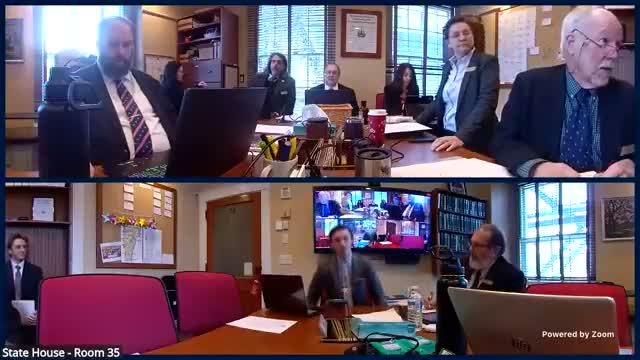
Bailey Davis, a legislative intern for the Vermont House Committee on Commerce & Economic Development, briefed members on requirements and policy options for career-and-technical-education (CTE) instructors on Jan. 16.
Davis said Vermont issues an apprenticeship license and relies on a licensure portfolio and Praxis Core for basic teaching skills. She told the committee that typical pathways include a high-school diploma plus roughly six years of paid work experience, an associate degree with about four years' experience, or a bachelor's degree with reduced experience requirements. "There's something called the apprenticeship license here in Vermont," Davis said, describing the route that allows industry practitioners to teach while completing professional development.
Davis summarized section 17 of Act 127 (2022), which authorized a study that recommended consolidating the current framework of 17 separate CTE governance structures into either a single statewide CTE district or several regional BOCES to centralize oversight, funding and standards. She said the proposal is intended to streamline administration and make resourcing more consistent across the state.
Committee members asked whether elevating licensure to master's- or doctorate-level credentials would increase pay or instead create barriers to entry. Davis cautioned that higher credential requirements can raise pay scales but also narrow the pool of eligible instructors. Members pressed for more precise timing and pathway information — including whether provisional or conditional certificates could be used to accelerate the supply of instructors — and Davis said she would follow up with more detailed comparisons from other states.
The exchange underscored two tensions in current policy discussions: how to raise compensation and professional recognition for CTE instructors while avoiding new barriers that could worsen the existing shortage of trades educators. The committee did not take formal action during the briefing; staff said they would return with additional research and state comparisons.
Davis said Vermont issues an apprenticeship license and relies on a licensure portfolio and Praxis Core for basic teaching skills. She told the committee that typical pathways include a high-school diploma plus roughly six years of paid work experience, an associate degree with about four years' experience, or a bachelor's degree with reduced experience requirements. "There's something called the apprenticeship license here in Vermont," Davis said, describing the route that allows industry practitioners to teach while completing professional development.
Davis summarized section 17 of Act 127 (2022), which authorized a study that recommended consolidating the current framework of 17 separate CTE governance structures into either a single statewide CTE district or several regional BOCES to centralize oversight, funding and standards. She said the proposal is intended to streamline administration and make resourcing more consistent across the state.
Committee members asked whether elevating licensure to master's- or doctorate-level credentials would increase pay or instead create barriers to entry. Davis cautioned that higher credential requirements can raise pay scales but also narrow the pool of eligible instructors. Members pressed for more precise timing and pathway information — including whether provisional or conditional certificates could be used to accelerate the supply of instructors — and Davis said she would follow up with more detailed comparisons from other states.
The exchange underscored two tensions in current policy discussions: how to raise compensation and professional recognition for CTE instructors while avoiding new barriers that could worsen the existing shortage of trades educators. The committee did not take formal action during the briefing; staff said they would return with additional research and state comparisons.
View the Full Meeting & All Its Details
This article offers just a summary. Unlock complete video, transcripts, and insights as a Founder Member.
✓
Watch full, unedited meeting videos
✓
Search every word spoken in unlimited transcripts
✓
AI summaries & real-time alerts (all government levels)
✓
Permanent access to expanding government content
30-day money-back guarantee
