Northwest Indiana legislators press data centers to cover generation costs as utilities face rate pressure
January 19, 2026 | LaPorte County, Indiana
This article was created by AI summarizing key points discussed. AI makes mistakes, so for full details and context, please refer to the video of the full meeting. Please report any errors so we can fix them. Report an error »
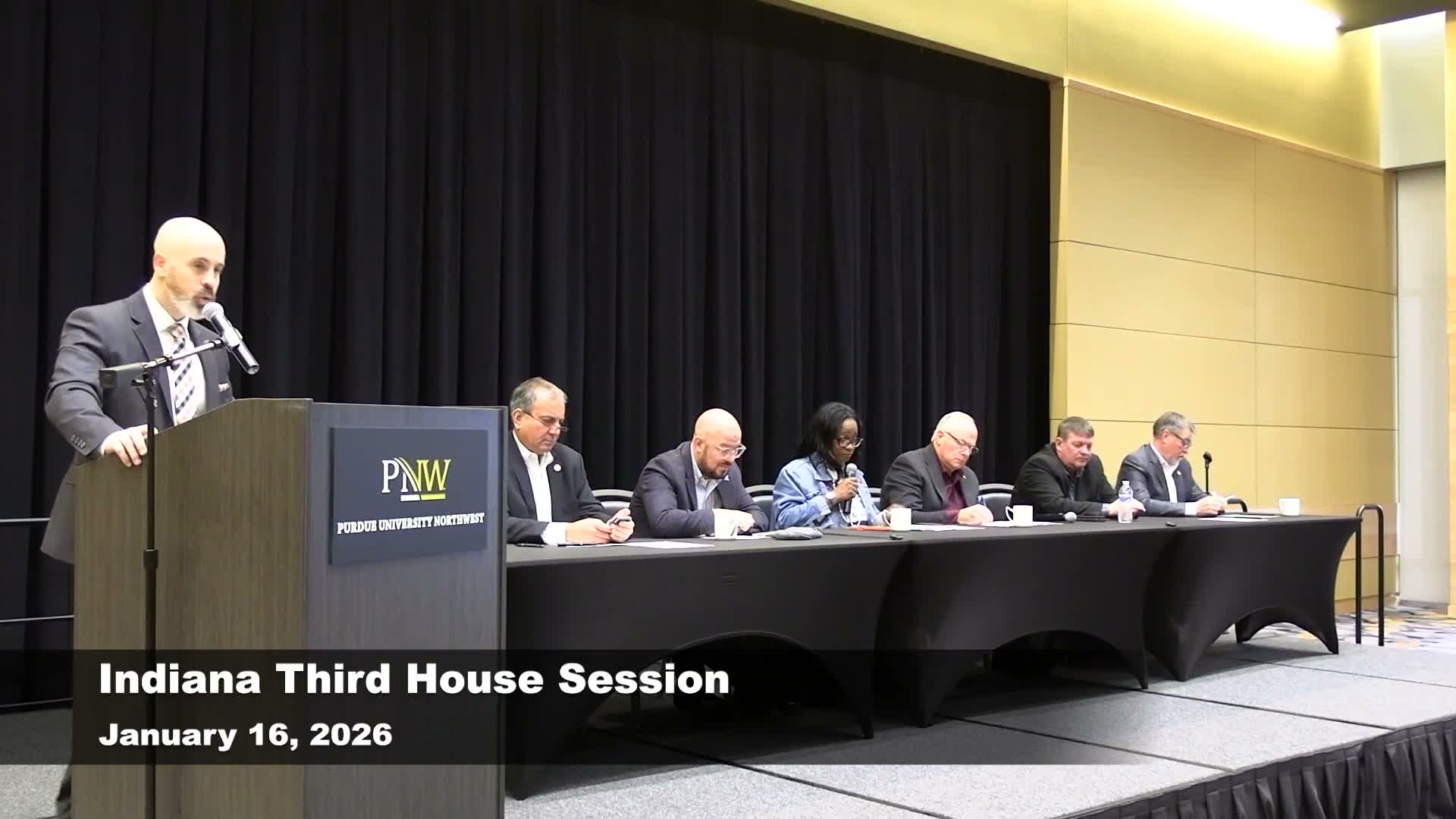
State and local officials urged steps to prevent residential ratepayers from shouldering rising electricity costs as data centers and other "mega users" expand in Northwest Indiana.
"We import almost 30% of the electric that Hoosiers use today," said State Representative Jim Pressell, arguing that new or expanded data centers should shoulder more of the upfront generation costs needed to serve them. Pressell and other panelists said the Legislature has already required large users to pay a large share of new generation and supported asking them to pay 100% of the incremental generation if necessary.
Panelists described utility and market pressures behind the proposal. Rep. Pressell and others noted proposals to create independent entities within utilities to isolate the cost of generation for industrial-scale users so residential customers would not face sudden rate spikes. "If we can get [mega users] to pay for a 100% of their generation, totally good with it," Pressell said.
Speakers also warned that federal efforts to keep coal-fired plants operating could backfire. "Mandating the coal-fired generation to stay open … it’s gonna cost utilities money to do that," Rep. Randy Novak said, noting scheduled retirements for plants including Wheatfield and Michigan City. Panelists said requiring uneconomic plants to remain online could increase costs that flow to ratepayers.
Local officials and utilities representatives said better planning and possible overbuilding of generation could reduce reliance on out-of-state imports (PJM/MISO) and stabilize prices. NIPSCO’s recent approach — creating a separate company to capture costs for mega users — was cited as an example some legislators are watching.
Next steps: legislators said they will continue to craft performance-based rate proposals and utility policy this session and monitor federal actions that could affect local rate outcomes.
"We import almost 30% of the electric that Hoosiers use today," said State Representative Jim Pressell, arguing that new or expanded data centers should shoulder more of the upfront generation costs needed to serve them. Pressell and other panelists said the Legislature has already required large users to pay a large share of new generation and supported asking them to pay 100% of the incremental generation if necessary.
Panelists described utility and market pressures behind the proposal. Rep. Pressell and others noted proposals to create independent entities within utilities to isolate the cost of generation for industrial-scale users so residential customers would not face sudden rate spikes. "If we can get [mega users] to pay for a 100% of their generation, totally good with it," Pressell said.
Speakers also warned that federal efforts to keep coal-fired plants operating could backfire. "Mandating the coal-fired generation to stay open … it’s gonna cost utilities money to do that," Rep. Randy Novak said, noting scheduled retirements for plants including Wheatfield and Michigan City. Panelists said requiring uneconomic plants to remain online could increase costs that flow to ratepayers.
Local officials and utilities representatives said better planning and possible overbuilding of generation could reduce reliance on out-of-state imports (PJM/MISO) and stabilize prices. NIPSCO’s recent approach — creating a separate company to capture costs for mega users — was cited as an example some legislators are watching.
Next steps: legislators said they will continue to craft performance-based rate proposals and utility policy this session and monitor federal actions that could affect local rate outcomes.
Don't Miss a Word: See the Full Meeting!
Go beyond summaries. Unlock every video, transcript, and key insight with a Founder Membership.
✓
Get instant access to full meeting videos
✓
Search and clip any phrase from complete transcripts
✓
Receive AI-powered summaries & custom alerts
✓
Enjoy lifetime, unrestricted access to government data
30-day money-back guarantee
