Montana biologist: beavers are 'restoration professionals' that can help heal degraded streams
January 19, 2026 | Missoula, Missoula County, Montana
This article was created by AI summarizing key points discussed. AI makes mistakes, so for full details and context, please refer to the video of the full meeting. Please report any errors so we can fix them. Report an error »
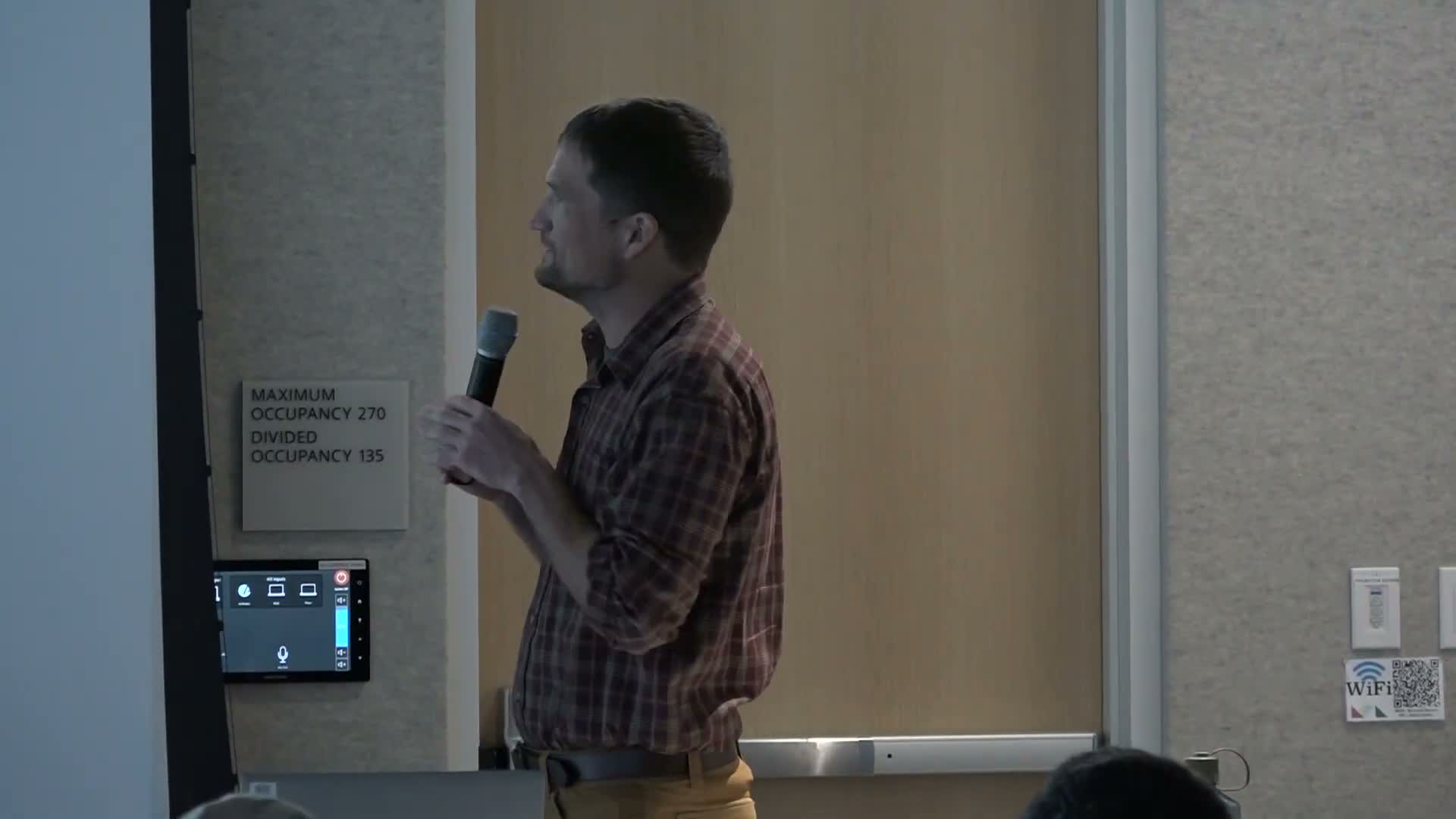
Tory Ritter, a nongame wildlife biologist with Montana Fish, Wildlife & Parks, told a Rattlesnake Creek Watershed Group audience that beavers are among the most effective natural agents for restoring floodplain and stream function.
"A stream without beavers, if it's within the range of where beavers should be but it doesn't have them, it's boring," Ritter said, arguing that beaver dams, lodges and channeling create "messiness and movement" that store water, improve groundwater recharge and raise water tables.
Ritter described the "beaver disturbance regime" — a suite of behaviors including dam building, tree-felling and tunneling — that produces side channels, backwaters and wetland niches. Those features, he said, reduce flood energy, help filter sediment and pollutants, create cooler, more complex habitats for amphibians, waterfowl and bats, and make riparian zones more fire- and drought-resilient.
He cautioned that beaver effects are context-dependent: in highly degraded streams or for some vulnerable fish species, beaver activity can worsen local conditions (for example, by siltation of critical spawning gravels). "We gotta be a little more careful with beavers when we're thinking about fish," he said.
Ritter also framed beavers as a scalable restoration tool. Using aerial imagery and a habitat-capacity model, he said Montana currently shows a small fraction of its potential beaver dam capacity; restoring beaver activity, along with conflict-management tools and strategic interventions, could speed recovery of incised systems and expand resilient wetland corridors across headwaters.
The talk emphasized practical restoration steps Ritter and collaborators promote — from mimicking beaver dams where needed to installing flow devices that allow beavers to remain while controlling pond levels — and stressed outreach and tolerance-building as essential complements to on-the-ground work.
Ritter invited local landowners and watershed residents to share observations from field visits to help refine site-level management.
"A stream without beavers, if it's within the range of where beavers should be but it doesn't have them, it's boring," Ritter said, arguing that beaver dams, lodges and channeling create "messiness and movement" that store water, improve groundwater recharge and raise water tables.
Ritter described the "beaver disturbance regime" — a suite of behaviors including dam building, tree-felling and tunneling — that produces side channels, backwaters and wetland niches. Those features, he said, reduce flood energy, help filter sediment and pollutants, create cooler, more complex habitats for amphibians, waterfowl and bats, and make riparian zones more fire- and drought-resilient.
He cautioned that beaver effects are context-dependent: in highly degraded streams or for some vulnerable fish species, beaver activity can worsen local conditions (for example, by siltation of critical spawning gravels). "We gotta be a little more careful with beavers when we're thinking about fish," he said.
Ritter also framed beavers as a scalable restoration tool. Using aerial imagery and a habitat-capacity model, he said Montana currently shows a small fraction of its potential beaver dam capacity; restoring beaver activity, along with conflict-management tools and strategic interventions, could speed recovery of incised systems and expand resilient wetland corridors across headwaters.
The talk emphasized practical restoration steps Ritter and collaborators promote — from mimicking beaver dams where needed to installing flow devices that allow beavers to remain while controlling pond levels — and stressed outreach and tolerance-building as essential complements to on-the-ground work.
Ritter invited local landowners and watershed residents to share observations from field visits to help refine site-level management.
View the Full Meeting & All Its Details
This article offers just a summary. Unlock complete video, transcripts, and insights as a Founder Member.
✓
Watch full, unedited meeting videos
✓
Search every word spoken in unlimited transcripts
✓
AI summaries & real-time alerts (all government levels)
✓
Permanent access to expanding government content
30-day money-back guarantee
