Staff explain suspension vs. expulsion at Lafayette Parish school board retreat; members raise concern about recent statute change
January 17, 2026 | Lafayette Parish, School Boards, Louisiana
This article was created by AI summarizing key points discussed. AI makes mistakes, so for full details and context, please refer to the video of the full meeting. Please report any errors so we can fix them. Report an error »
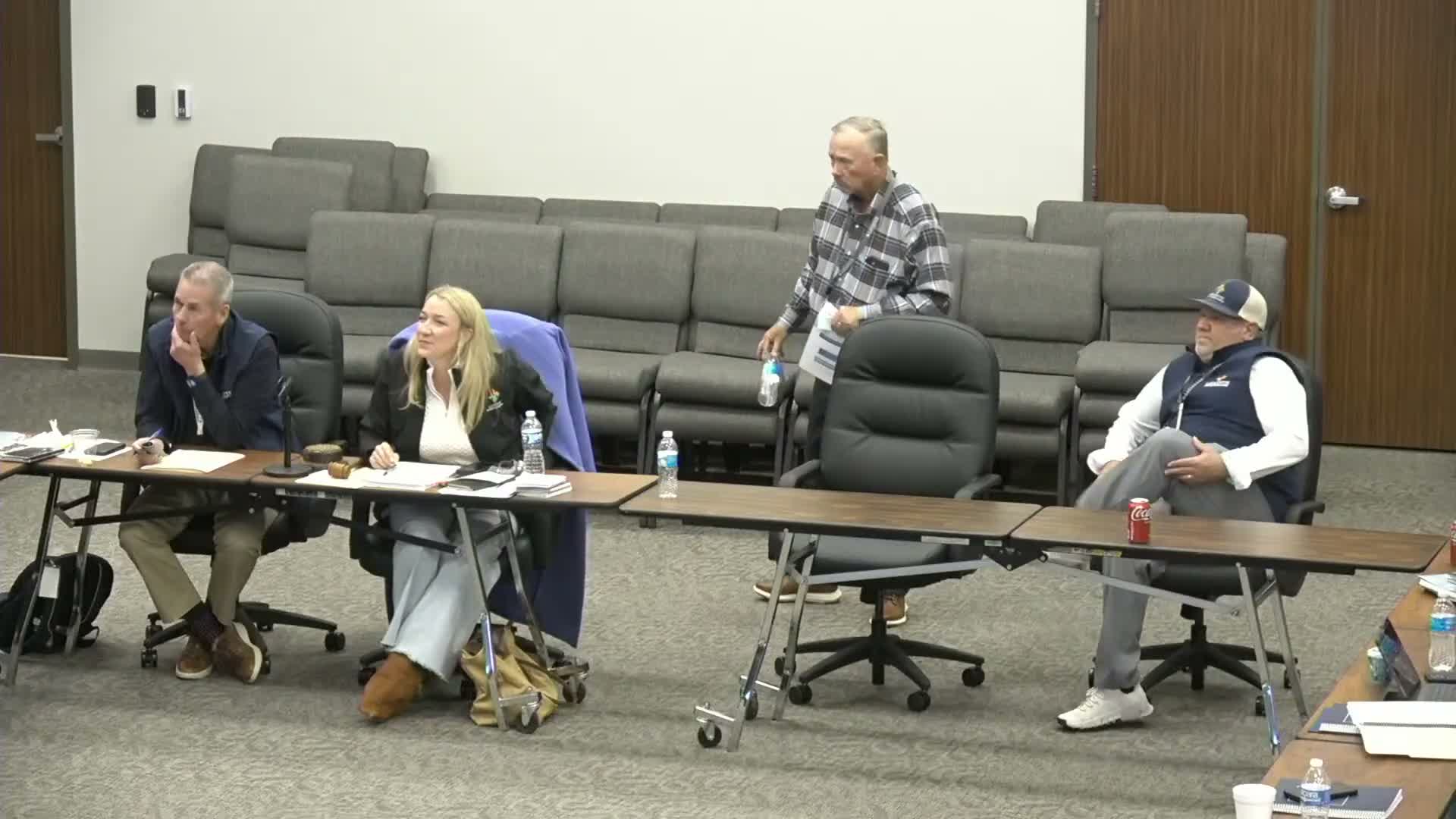
At a Lafayette Parish School Board retreat, district staff presented the procedural difference between long-term suspension and expulsion and explained how appeals work for each.
Miss Garner, a district staff member, told board members that "a long term suspension is anything that a child can be sent to an alternative site for 11 to 89 days. By statute, an expulsion is 90 days or over." She described long-term suspensions as arising from either accumulated discipline referrals or serious level-3 or level-4 offenses and said short out-of-school suspensions typically last one to three days.
The presentation stressed that appeal routes differ by length and type of removal. Miss Garner said parents can appeal short suspensions to the superintendent's designee; long-term suspensions go to a hearing officer (also the superintendent's designee) who hears evidence and issues a decision. For recommended expulsions, she said parents have the right to appeal to the board itself. "When a child is recommended for expulsion, the parent can appeal to you as the board," she said.
Board members and staff discussed a recent change in state law affecting expulsions. Miss Garner summarized the change as: "any student in grades 6 through 12, after they accumulate 3 out of school suspensions, other than for tardies and dress code, shall be recommended for expulsion." A board participant later said that the change had "propelled us into 600 recommended expulsions" compared with prior yearly counts around 150; that numeric figure was presented orally in the meeting transcript and was not supported by a citation in the record.
Miss Garner also said hearing officers may, based on evidence or circumstances, reduce a recommended expulsion to a long-term suspension (for example, to 45 days), noting such reductions preserve a parent's right to appeal to the board. She urged board members to review the student handbook language that spells out appeal rights; the district provides the handbook to parents and asks for a signature acknowledging receipt.
District staff and at least one board member characterized portions of the statutory change as overly broad and said the board had asked for reconsideration. No formal policy vote on changing district discipline policy was recorded in the transcript excerpt. Staff said they would provide requested materials to all board members so everyone has the same information.
Next steps recorded in the discussion include distributing supplemental materials to board members and continuing to review statutory and handbook language; the transcript does not record a formal vote to change policy. The remarks in the meeting attribute the counts and policy concerns to speakers in the session; the board's statements that expulsions rose by roughly 600 cases reflect the speakers' claim in the meeting transcript and are not independently cited in the record.
Miss Garner, a district staff member, told board members that "a long term suspension is anything that a child can be sent to an alternative site for 11 to 89 days. By statute, an expulsion is 90 days or over." She described long-term suspensions as arising from either accumulated discipline referrals or serious level-3 or level-4 offenses and said short out-of-school suspensions typically last one to three days.
The presentation stressed that appeal routes differ by length and type of removal. Miss Garner said parents can appeal short suspensions to the superintendent's designee; long-term suspensions go to a hearing officer (also the superintendent's designee) who hears evidence and issues a decision. For recommended expulsions, she said parents have the right to appeal to the board itself. "When a child is recommended for expulsion, the parent can appeal to you as the board," she said.
Board members and staff discussed a recent change in state law affecting expulsions. Miss Garner summarized the change as: "any student in grades 6 through 12, after they accumulate 3 out of school suspensions, other than for tardies and dress code, shall be recommended for expulsion." A board participant later said that the change had "propelled us into 600 recommended expulsions" compared with prior yearly counts around 150; that numeric figure was presented orally in the meeting transcript and was not supported by a citation in the record.
Miss Garner also said hearing officers may, based on evidence or circumstances, reduce a recommended expulsion to a long-term suspension (for example, to 45 days), noting such reductions preserve a parent's right to appeal to the board. She urged board members to review the student handbook language that spells out appeal rights; the district provides the handbook to parents and asks for a signature acknowledging receipt.
District staff and at least one board member characterized portions of the statutory change as overly broad and said the board had asked for reconsideration. No formal policy vote on changing district discipline policy was recorded in the transcript excerpt. Staff said they would provide requested materials to all board members so everyone has the same information.
Next steps recorded in the discussion include distributing supplemental materials to board members and continuing to review statutory and handbook language; the transcript does not record a formal vote to change policy. The remarks in the meeting attribute the counts and policy concerns to speakers in the session; the board's statements that expulsions rose by roughly 600 cases reflect the speakers' claim in the meeting transcript and are not independently cited in the record.
View the Full Meeting & All Its Details
This article offers just a summary. Unlock complete video, transcripts, and insights as a Founder Member.
✓
Watch full, unedited meeting videos
✓
Search every word spoken in unlimited transcripts
✓
AI summaries & real-time alerts (all government levels)
✓
Permanent access to expanding government content
30-day money-back guarantee
