Warren County sheriff reports roughly $3.3 million lost to ACH fraud, urges public to stop sharing case details
January 17, 2026 | Warren County, New York
This article was created by AI summarizing key points discussed. AI makes mistakes, so for full details and context, please refer to the video of the full meeting. Please report any errors so we can fix them. Report an error »
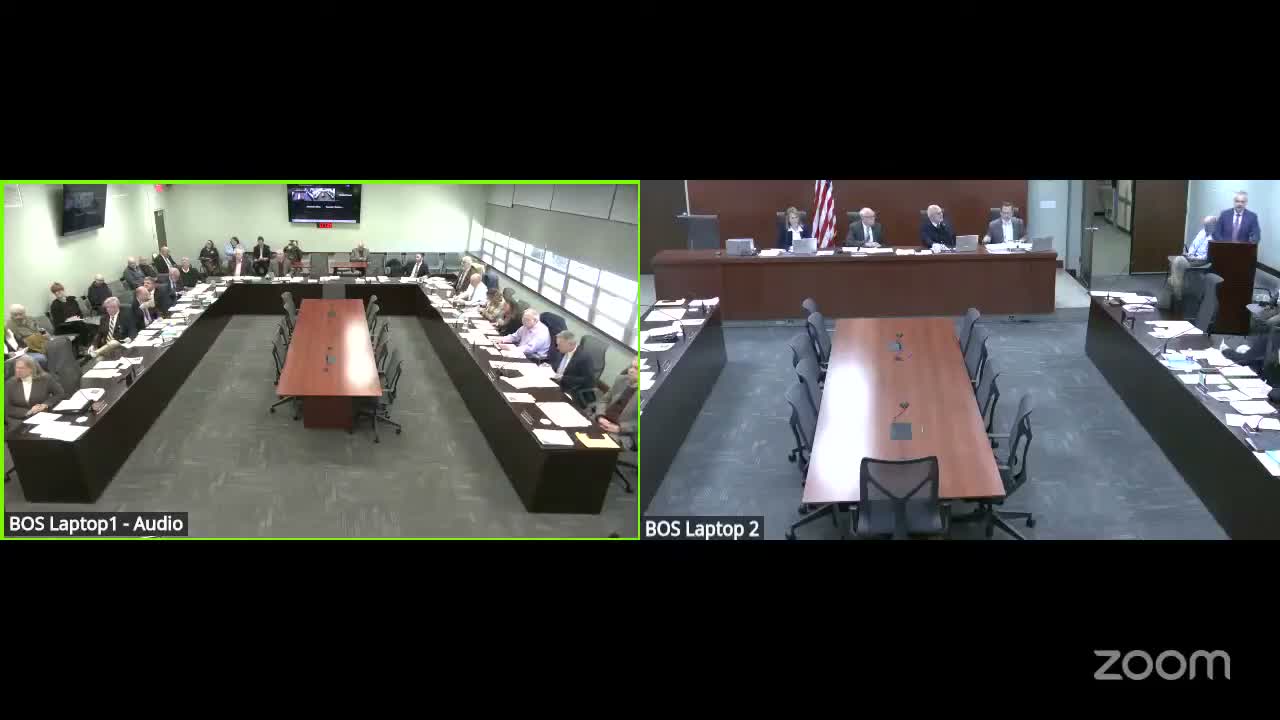
The Warren County sheriff told the Board of Supervisors on Jan. 16 that the county likely lost "approximately $3,300,000" in what he described as a basic ACH fraud rather than a sophisticated cyberintrusion and urged county staff and residents to stop sharing details of the investigation publicly.
"Please stop making public comments, stop sharing information," the sheriff said, asking stakeholders to let investigators be the source of any official releases. He said the case began with an unknown caller to the treasurer's office who was able to set up an ACH payment account. "The account was established, and payments were made. Pure and simple," he said.
The sheriff reported about $1,200,000 was recovered on Jan. 2 and said funds from approximately $2,100,000 have been identified, with some accounts frozen. He declined to provide further estimates of expected recoveries, calling that "irresponsible" while the probe is active. "We are optimistic that those funds will be returned to us," he said.
He said investigators are working with the New York State Police, the Secret Service, the FBI and other partners "to really build a strong criminal case" and that his office would pursue assets if necessary. He added that internal controls and policy gaps contributed to the loss: "The fact is that Warren County fumbled the ball. They fumbled the ball without policies in place to offer direction."
The sheriff also addressed a vendor fraud alert that has circulated publicly, saying the company identified in that alert had "absolutely nothing at all to do with this crime" and describing such alerts used as a deflection as "white noise." He asked that questions about the investigation be directed to him and said the sheriff's office will not comment further at this meeting.
Treasurer Christine Martin used her three‑minute public comment time to urge a collaborative approach and told the board she did not think the vendor fraud alert was "white noise." Martin said the alert concerned one of the county's largest vendors and "should send that should signal some concern," and she urged waiting for the state comptroller's independent review to identify control and communication breakdowns.
The board later approved a motion to go into executive session to discuss attorney‑client and potential litigation issues related to the matter.
"Please stop making public comments, stop sharing information," the sheriff said, asking stakeholders to let investigators be the source of any official releases. He said the case began with an unknown caller to the treasurer's office who was able to set up an ACH payment account. "The account was established, and payments were made. Pure and simple," he said.
The sheriff reported about $1,200,000 was recovered on Jan. 2 and said funds from approximately $2,100,000 have been identified, with some accounts frozen. He declined to provide further estimates of expected recoveries, calling that "irresponsible" while the probe is active. "We are optimistic that those funds will be returned to us," he said.
He said investigators are working with the New York State Police, the Secret Service, the FBI and other partners "to really build a strong criminal case" and that his office would pursue assets if necessary. He added that internal controls and policy gaps contributed to the loss: "The fact is that Warren County fumbled the ball. They fumbled the ball without policies in place to offer direction."
The sheriff also addressed a vendor fraud alert that has circulated publicly, saying the company identified in that alert had "absolutely nothing at all to do with this crime" and describing such alerts used as a deflection as "white noise." He asked that questions about the investigation be directed to him and said the sheriff's office will not comment further at this meeting.
Treasurer Christine Martin used her three‑minute public comment time to urge a collaborative approach and told the board she did not think the vendor fraud alert was "white noise." Martin said the alert concerned one of the county's largest vendors and "should send that should signal some concern," and she urged waiting for the state comptroller's independent review to identify control and communication breakdowns.
The board later approved a motion to go into executive session to discuss attorney‑client and potential litigation issues related to the matter.
Don't Miss a Word: See the Full Meeting!
Go beyond summaries. Unlock every video, transcript, and key insight with a Founder Membership.
✓
Get instant access to full meeting videos
✓
Search and clip any phrase from complete transcripts
✓
Receive AI-powered summaries & custom alerts
✓
Enjoy lifetime, unrestricted access to government data
30-day money-back guarantee
