House Rules Committee advances measure to overturn BLM mineral withdrawal in Minnesota
January 20, 2026 | Rules: House Committee, Standing Committees - House & Senate, Congressional Hearings Compilation, Legislative, Federal
This article was created by AI summarizing key points discussed. AI makes mistakes, so for full details and context, please refer to the video of the full meeting. Please report any errors so we can fix them. Report an error »
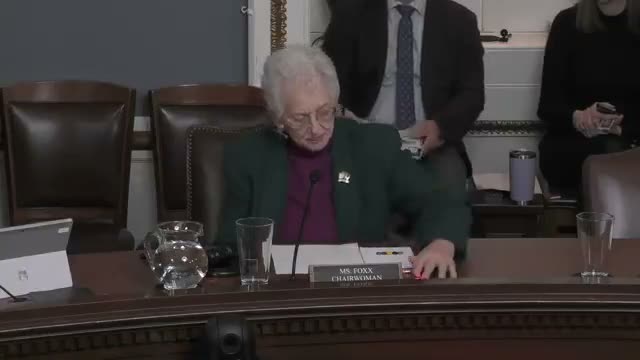
The House Rules Committee voted to report H.J. Res. 140, a Congressional Review Act resolution that would disapprove Public Land Order 79‑17, the 20‑year mineral withdrawal covering 225,504 acres in the Superior National Forest in northern Minnesota.
Representative Pete Stauber, who introduced the resolution to the committee, told members the withdrawal impedes U.S. access to critical minerals and jeopardizes national supply chains. "Demand for critical minerals is projected to skyrocket," Stauber said, citing a private study of future copper needs, and argued the Duluth Complex holds a strategic domestic reserve. He urged the committee to overturn the PLO so companies can pursue mining while complying with federal environmental and labor statutes.
Opponents, including a witness who identified herself as Miss Bridal, said the withdrawal protects the Boundary Waters Canoe Area Wilderness, the watershed and the outdoor economy that depends on it. "If the proposed mine were built in the watershed, the damage to the Boundary Waters from pollution would be certain and irreversible," she said, warning that the CRA resolution would set a precedent preventing future safeguards and inviting protracted litigation.
Members probed the limits of the PLO and the scope of possible mining. Stauber repeatedly said the CRA resolution "does not green light any mining" in the Boundary Waters or buffer zone and that any project would still be subject to NEPA, the Clean Water and Clean Air Acts, and the Endangered Species Act. Opponents countered that mining in the surrounding watershed still risks contamination of waterways that feed the Boundary Waters and that the CRA's mechanics could block future protective action.
The hearing included competing economic comparisons: Stauber cited an estimate of about 2,200 direct and indirect jobs from a single proposed mine and higher average mining wages; witnesses opposed cited estimates that outdoor recreation contributes roughly $13.5 billion annually to Minnesota's economy versus about $1.2 billion from extractive activity in the region.
The committee reported the resolution under a closed rule as part of a package of three measures. The Rules Committee’s final motion to report the rule passed on a recorded vote (committee tally reported as 8 yeas, 3 nays). The resolution now moves to the House floor under the procedure adopted by the committee.
The committee hearing record includes written testimony and submitted studies; chair and ranking‑member statements were submitted for the record and witnesses’ full statements will be available in committee files.
Representative Pete Stauber, who introduced the resolution to the committee, told members the withdrawal impedes U.S. access to critical minerals and jeopardizes national supply chains. "Demand for critical minerals is projected to skyrocket," Stauber said, citing a private study of future copper needs, and argued the Duluth Complex holds a strategic domestic reserve. He urged the committee to overturn the PLO so companies can pursue mining while complying with federal environmental and labor statutes.
Opponents, including a witness who identified herself as Miss Bridal, said the withdrawal protects the Boundary Waters Canoe Area Wilderness, the watershed and the outdoor economy that depends on it. "If the proposed mine were built in the watershed, the damage to the Boundary Waters from pollution would be certain and irreversible," she said, warning that the CRA resolution would set a precedent preventing future safeguards and inviting protracted litigation.
Members probed the limits of the PLO and the scope of possible mining. Stauber repeatedly said the CRA resolution "does not green light any mining" in the Boundary Waters or buffer zone and that any project would still be subject to NEPA, the Clean Water and Clean Air Acts, and the Endangered Species Act. Opponents countered that mining in the surrounding watershed still risks contamination of waterways that feed the Boundary Waters and that the CRA's mechanics could block future protective action.
The hearing included competing economic comparisons: Stauber cited an estimate of about 2,200 direct and indirect jobs from a single proposed mine and higher average mining wages; witnesses opposed cited estimates that outdoor recreation contributes roughly $13.5 billion annually to Minnesota's economy versus about $1.2 billion from extractive activity in the region.
The committee reported the resolution under a closed rule as part of a package of three measures. The Rules Committee’s final motion to report the rule passed on a recorded vote (committee tally reported as 8 yeas, 3 nays). The resolution now moves to the House floor under the procedure adopted by the committee.
The committee hearing record includes written testimony and submitted studies; chair and ranking‑member statements were submitted for the record and witnesses’ full statements will be available in committee files.
Don't Miss a Word: See the Full Meeting!
Go beyond summaries. Unlock every video, transcript, and key insight with a Founder Membership.
✓
Get instant access to full meeting videos
✓
Search and clip any phrase from complete transcripts
✓
Receive AI-powered summaries & custom alerts
✓
Enjoy lifetime, unrestricted access to government data
30-day money-back guarantee
