UN peacekeeping faces funding shortfalls and troop reductions, acting military adviser warns
January 20, 2026 | United Nations, International
This article was created by AI summarizing key points discussed. AI makes mistakes, so for full details and context, please refer to the video of the full meeting. Please report any errors so we can fix them. Report an error »
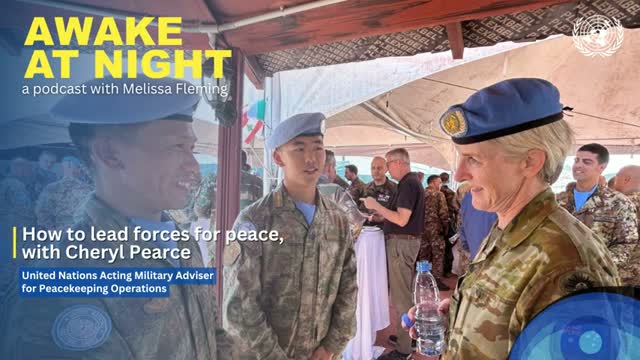
Lieutenant General Cheryl Pierce, the acting military adviser for United Nations peacekeeping operations, warned in a podcast interview that acute budget shortfalls and shrinking troop numbers are compromising the UN’s ability to deliver on mission mandates.
Pierce, who advises Under-Secretary-General Jean Pierre Lacroix, said the Department of Peace Operations oversees 11 peacekeeping missions and "we've got 68,000 peacekeepers across those 11 missions." She told host Melissa Fleming that "the current financial situation and the effect it's having on our peace operations" is a central concern and that "we do not have the cash to be able to continue the missions in this financial year."
The acting adviser said nine of the 11 missions are already affected by funding cuts, producing a "significant reduction in the amount of troops on the ground" and complicating efforts to meet mandates such as protection of civilians and enabling humanitarian access. Pierce described negotiations with troop-contributing countries to manage rapid drawdowns and rotations and to support those countries that have provided forces for decades.
Pierce listed 119 contributing countries and named some of the largest providers as Nepal, Rwanda, Bangladesh, India, China, Ethiopia and Tanzania, noting many are "losing hundreds and some thousands of peacekeepers." She framed participation as both "service and sacrifice" and said the UN depends on those member states’ continuing commitments.
Speaking about operational consequences, Pierce offered two frontline examples. She described the fall of Goma in the Democratic Republic of Congo, where peacekeepers were restricted from movement and some personnel spent extended periods at bases without rotation: "we had peacekeepers who were in mission for up to 18 months without a break, without even leaving their little base because they... couldn't move." She also described peacekeepers in UNIFIL in southern Lebanon sheltering for days in austere bunkers under indirect fire.
Pierce said the operating environment has grown more complex — with more armed groups, transnational criminal activity and emerging threats such as cyber — and that the combination of complexity and fewer forces raises risks for personnel and for communities the missions are meant to protect. She argued that peacekeeping remains "good value for money," enabling humanitarian effort and deterrence in fragile settings, and pointed to Cyprus as a case where presence helped avert renewed conflict.
In addition to budgetary and operational concerns, Pierce flagged misinformation as a rising threat to safety and mission effectiveness. She said negative narratives amplified on social media are shifting community attitudes where UN peacekeepers operate, eroding local support and requiring more effort to surface positive stories about peacekeepers' work.
Pierce said the Department of Peace Operations is pursuing options to adjust force posture if funding does not increase and is working with member states to manage the immediate consequences for troops and missions. She did not specify particular programmatic cuts or list timelines for changes.
The interview did not include a negotiated plan or a vote; Pierce described planning and coordination measures the department is taking as it confronts a cash shortage and shrinking force levels.
Pierce, who advises Under-Secretary-General Jean Pierre Lacroix, said the Department of Peace Operations oversees 11 peacekeeping missions and "we've got 68,000 peacekeepers across those 11 missions." She told host Melissa Fleming that "the current financial situation and the effect it's having on our peace operations" is a central concern and that "we do not have the cash to be able to continue the missions in this financial year."
The acting adviser said nine of the 11 missions are already affected by funding cuts, producing a "significant reduction in the amount of troops on the ground" and complicating efforts to meet mandates such as protection of civilians and enabling humanitarian access. Pierce described negotiations with troop-contributing countries to manage rapid drawdowns and rotations and to support those countries that have provided forces for decades.
Pierce listed 119 contributing countries and named some of the largest providers as Nepal, Rwanda, Bangladesh, India, China, Ethiopia and Tanzania, noting many are "losing hundreds and some thousands of peacekeepers." She framed participation as both "service and sacrifice" and said the UN depends on those member states’ continuing commitments.
Speaking about operational consequences, Pierce offered two frontline examples. She described the fall of Goma in the Democratic Republic of Congo, where peacekeepers were restricted from movement and some personnel spent extended periods at bases without rotation: "we had peacekeepers who were in mission for up to 18 months without a break, without even leaving their little base because they... couldn't move." She also described peacekeepers in UNIFIL in southern Lebanon sheltering for days in austere bunkers under indirect fire.
Pierce said the operating environment has grown more complex — with more armed groups, transnational criminal activity and emerging threats such as cyber — and that the combination of complexity and fewer forces raises risks for personnel and for communities the missions are meant to protect. She argued that peacekeeping remains "good value for money," enabling humanitarian effort and deterrence in fragile settings, and pointed to Cyprus as a case where presence helped avert renewed conflict.
In addition to budgetary and operational concerns, Pierce flagged misinformation as a rising threat to safety and mission effectiveness. She said negative narratives amplified on social media are shifting community attitudes where UN peacekeepers operate, eroding local support and requiring more effort to surface positive stories about peacekeepers' work.
Pierce said the Department of Peace Operations is pursuing options to adjust force posture if funding does not increase and is working with member states to manage the immediate consequences for troops and missions. She did not specify particular programmatic cuts or list timelines for changes.
The interview did not include a negotiated plan or a vote; Pierce described planning and coordination measures the department is taking as it confronts a cash shortage and shrinking force levels.
Don't Miss a Word: See the Full Meeting!
Go beyond summaries. Unlock every video, transcript, and key insight with a Founder Membership.
✓
Get instant access to full meeting videos
✓
Search and clip any phrase from complete transcripts
✓
Receive AI-powered summaries & custom alerts
✓
Enjoy lifetime, unrestricted access to government data
30-day money-back guarantee
