Lieutenant General Cheryl Pierce on a 35-year military career and breaking barriers in UN uniform
January 20, 2026 | United Nations, International
This article was created by AI summarizing key points discussed. AI makes mistakes, so for full details and context, please refer to the video of the full meeting. Please report any errors so we can fix them. Report an error »
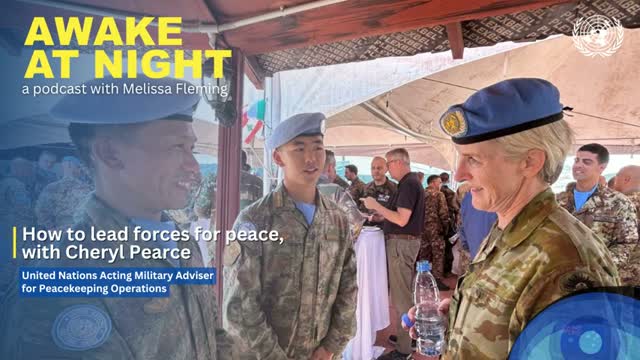
Lieutenant General Cheryl Pierce, the acting military adviser for United Nations peacekeeping operations and one of the highest-ranking women in uniform at the UN, told a podcast audience that her 35–40 year career was shaped by harsh early training, mentors who believed in her, and practical family trade-offs required to remain in uniform.
Reflecting on her first days in integrated training in Australia, Pierce said the early period was "really difficult" and recalled that "we lost half of the females in our officer training." She described training that applied the same physical tests to women and men and recounted rules and culture that made early years a test of resilience.
Pierce told the host Melissa Fleming that a pivotal moment came when a Regimental Sergeant Major, whom she described as a senior soldier and Vietnam veteran, "tipped my hat up and just said, I believe in you, Miss Macdonald," an endorsement she said sustained her through doubt and hard times. She later learned the RSM had died while she was a force commander in Cyprus and described reconnecting with his daughter.
Pierce described deployments that included Timor-Leste as a military observer, command of Australian forces in Afghanistan in 2016, and later leading a multinational force in Cyprus — roles she said were professionally purposeful and steep learning curves that prepared her for UN command. She noted the difficulty of being a parent while deployed: limited childcare options in earlier decades, the need to lean on friends and community to cover early-morning schedules, and instances when she took leave without pay to parent full time.
On work–life balance, Pierce said she has two daughters and a supportive husband, and she described the emotional realities of trying to be both a leader and a mother: "They didn't see those moments of chaos and tears and all the vulnerabilities you have." She said candid conversations helped bridge the gap between public leadership and private vulnerability.
Pierce also described personal routines that sustain her — running, goal-setting and finding calm by the water — and noted that she continues to set personal challenges such as marathons alongside a demanding professional role.
The interview is a personal account, not a policy statement; Pierce framed the anecdotes as lessons about mentorship, resilience and the practical supports needed to retain women in military careers.
Reflecting on her first days in integrated training in Australia, Pierce said the early period was "really difficult" and recalled that "we lost half of the females in our officer training." She described training that applied the same physical tests to women and men and recounted rules and culture that made early years a test of resilience.
Pierce told the host Melissa Fleming that a pivotal moment came when a Regimental Sergeant Major, whom she described as a senior soldier and Vietnam veteran, "tipped my hat up and just said, I believe in you, Miss Macdonald," an endorsement she said sustained her through doubt and hard times. She later learned the RSM had died while she was a force commander in Cyprus and described reconnecting with his daughter.
Pierce described deployments that included Timor-Leste as a military observer, command of Australian forces in Afghanistan in 2016, and later leading a multinational force in Cyprus — roles she said were professionally purposeful and steep learning curves that prepared her for UN command. She noted the difficulty of being a parent while deployed: limited childcare options in earlier decades, the need to lean on friends and community to cover early-morning schedules, and instances when she took leave without pay to parent full time.
On work–life balance, Pierce said she has two daughters and a supportive husband, and she described the emotional realities of trying to be both a leader and a mother: "They didn't see those moments of chaos and tears and all the vulnerabilities you have." She said candid conversations helped bridge the gap between public leadership and private vulnerability.
Pierce also described personal routines that sustain her — running, goal-setting and finding calm by the water — and noted that she continues to set personal challenges such as marathons alongside a demanding professional role.
The interview is a personal account, not a policy statement; Pierce framed the anecdotes as lessons about mentorship, resilience and the practical supports needed to retain women in military careers.
View the Full Meeting & All Its Details
This article offers just a summary. Unlock complete video, transcripts, and insights as a Founder Member.
✓
Watch full, unedited meeting videos
✓
Search every word spoken in unlimited transcripts
✓
AI summaries & real-time alerts (all government levels)
✓
Permanent access to expanding government content
30-day money-back guarantee
