Lawmakers debate banning neonic-treated seed, weighing environmental harm against farm risks
January 20, 2026 | Environment and Agriculture, House of Representatives, Committees , Legislative, New Hampshire
This article was created by AI summarizing key points discussed. AI makes mistakes, so for full details and context, please refer to the video of the full meeting. Please report any errors so we can fix them. Report an error »
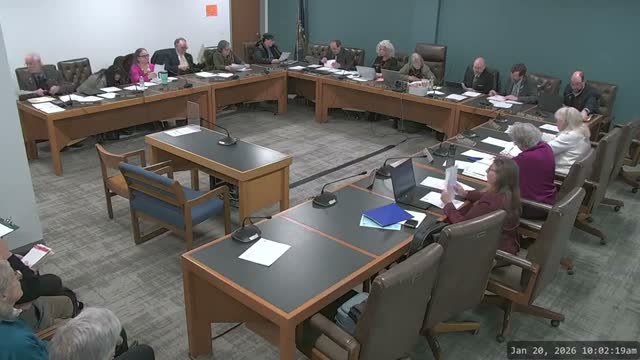
The House Environment and Agriculture Committee on Tuesday reopened debate on two related measures aimed at curbing neonicotinoid use in agriculture and other settings. Committee members and witnesses argued over environmental risks, agricultural impacts and whether regulatory agencies should write rules or the legislature should adopt a statutory ban.
Representative Peter Bixby, sponsor and longtime committee member, told colleagues the testimony the committee heard previously showed neonics harm multiple systems: “the neonics are damaging aquatic zooplankton that eat the cyanobacteria,” he said, tying the chemical’s runoff to harmful algal blooms and reduced soil health. Bixby and other supporters said restricting neonics would protect pollinators, soil arthropods and water quality without meaningfully reducing crop yields, citing evidence from Quebec and other places.
Industry and farm witnesses warned of unintended consequences. Klaus Busch, division seed manager for Nutrien Ag Solutions, said seed treatments target hard-to-reach, below-ground pests and that removing them would push growers toward broader, surface-applied insecticides. “If you take the seed treatments away, we're going to have a lot of off-target application of insecticides above the ground and below the ground in furrow,” Busch said, arguing that such substitutions could increase environmental exposure and threaten corn stands and dairy feed supplies.
Committee members discussed how the measures intersect with existing authorities. Chair cautioned the committee to consider RSA sections governing the Pesticide Control Board, and staff from the Division of Pesticide Control said the board is already working on neonics and could move through a 12–16 month rulemaking that might address many of the bill’s provisions. Several legislators proposed sending portions of the bills to the board for rulemaking while advancing a seed-coating ban through statute.
Several lawmakers urged narrow carve-outs if the committee pursues a ban, to allow limited uses by orchardists, foresters and situations where targeted, short-term protection is essential. Others pushed for a straight ban on treated seeds, arguing market changes in neighboring states (New York and Vermont) and Canada have made non-neonic seeds more available.
The committee did not vote on either bill in the work session. Members agreed to continue work on amendments, form subcommittees to refine drafting and consult the pesticide board and seed-industry stakeholders before returning with revised language.
Representative Peter Bixby, sponsor and longtime committee member, told colleagues the testimony the committee heard previously showed neonics harm multiple systems: “the neonics are damaging aquatic zooplankton that eat the cyanobacteria,” he said, tying the chemical’s runoff to harmful algal blooms and reduced soil health. Bixby and other supporters said restricting neonics would protect pollinators, soil arthropods and water quality without meaningfully reducing crop yields, citing evidence from Quebec and other places.
Industry and farm witnesses warned of unintended consequences. Klaus Busch, division seed manager for Nutrien Ag Solutions, said seed treatments target hard-to-reach, below-ground pests and that removing them would push growers toward broader, surface-applied insecticides. “If you take the seed treatments away, we're going to have a lot of off-target application of insecticides above the ground and below the ground in furrow,” Busch said, arguing that such substitutions could increase environmental exposure and threaten corn stands and dairy feed supplies.
Committee members discussed how the measures intersect with existing authorities. Chair cautioned the committee to consider RSA sections governing the Pesticide Control Board, and staff from the Division of Pesticide Control said the board is already working on neonics and could move through a 12–16 month rulemaking that might address many of the bill’s provisions. Several legislators proposed sending portions of the bills to the board for rulemaking while advancing a seed-coating ban through statute.
Several lawmakers urged narrow carve-outs if the committee pursues a ban, to allow limited uses by orchardists, foresters and situations where targeted, short-term protection is essential. Others pushed for a straight ban on treated seeds, arguing market changes in neighboring states (New York and Vermont) and Canada have made non-neonic seeds more available.
The committee did not vote on either bill in the work session. Members agreed to continue work on amendments, form subcommittees to refine drafting and consult the pesticide board and seed-industry stakeholders before returning with revised language.
View the Full Meeting & All Its Details
This article offers just a summary. Unlock complete video, transcripts, and insights as a Founder Member.
✓
Watch full, unedited meeting videos
✓
Search every word spoken in unlimited transcripts
✓
AI summaries & real-time alerts (all government levels)
✓
Permanent access to expanding government content
30-day money-back guarantee
