Committee hears broad support — and technical concerns — for battery stewardship program to reduce fires and landfill risk
January 20, 2026 | Environment and Agriculture, House of Representatives, Committees , Legislative, New Hampshire
This article was created by AI summarizing key points discussed. AI makes mistakes, so for full details and context, please refer to the video of the full meeting. Please report any errors so we can fix them. Report an error »
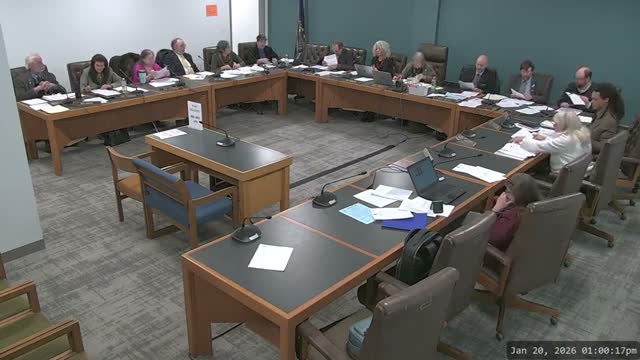
The committee heard extensive testimony on HB 16 02, a bill to establish a producer-funded battery recycling stewardship program that would expand convenient collection, address lithium-ion fire risks, and reimburse municipal collection costs.
Representative Karen Ebel said the proposal follows a recent disposal ban and industry interest in an organized, producer-led system. “This is a really, important safety issue,” she said, linking municipal fires and transfer-station damage to improperly disposed batteries.
Industry groups and manufacturers voiced support for the model program. Mark Boulish of the Portable Rechargeable Battery Association said HB 16 02 mirrors a widely used model and that he and his members “strongly support 16 o 2.” He described the need for limited antitrust protections so manufacturers can jointly run a stewardship program. Producers and trade groups emphasized the program’s design to be free and convenient for consumers and municipalities.
Recyclers raised drafting concerns. Daniel Zotos of Redwood Materials said his company supports the policy goal but opposed specific language that would require independent recyclers to forfeit collected material to the stewardship organization. He recommended technical changes to allow qualified recyclers and new collection models to operate alongside stewardship organizations.
Municipal, fire, and waste-management witnesses described the immediate operational stresses and costs from battery fires. New Hampshire Recycles and municipal partners said existing voluntary options are insufficient and pointed to local transfer-station and MRF fires that have forced expensive shutdowns and repairs.
The committee did not adopt final language or vote. Lawmakers asked the sponsor and stakeholders to work on technical amendments addressing collection, forfeiture and oversight, and to clarify how DES would review stewardship plans and reimburse municipal costs.
Representative Karen Ebel said the proposal follows a recent disposal ban and industry interest in an organized, producer-led system. “This is a really, important safety issue,” she said, linking municipal fires and transfer-station damage to improperly disposed batteries.
Industry groups and manufacturers voiced support for the model program. Mark Boulish of the Portable Rechargeable Battery Association said HB 16 02 mirrors a widely used model and that he and his members “strongly support 16 o 2.” He described the need for limited antitrust protections so manufacturers can jointly run a stewardship program. Producers and trade groups emphasized the program’s design to be free and convenient for consumers and municipalities.
Recyclers raised drafting concerns. Daniel Zotos of Redwood Materials said his company supports the policy goal but opposed specific language that would require independent recyclers to forfeit collected material to the stewardship organization. He recommended technical changes to allow qualified recyclers and new collection models to operate alongside stewardship organizations.
Municipal, fire, and waste-management witnesses described the immediate operational stresses and costs from battery fires. New Hampshire Recycles and municipal partners said existing voluntary options are insufficient and pointed to local transfer-station and MRF fires that have forced expensive shutdowns and repairs.
The committee did not adopt final language or vote. Lawmakers asked the sponsor and stakeholders to work on technical amendments addressing collection, forfeiture and oversight, and to clarify how DES would review stewardship plans and reimburse municipal costs.
View the Full Meeting & All Its Details
This article offers just a summary. Unlock complete video, transcripts, and insights as a Founder Member.
✓
Watch full, unedited meeting videos
✓
Search every word spoken in unlimited transcripts
✓
AI summaries & real-time alerts (all government levels)
✓
Permanent access to expanding government content
30-day money-back guarantee
