Ordinance committee advances change to Complete Streets appeals window to public hearing
January 21, 2026 | Norwalk City, Fairfield, Connecticut
This article was created by AI summarizing key points discussed. AI makes mistakes, so for full details and context, please refer to the video of the full meeting. Please report any errors so we can fix them. Report an error »
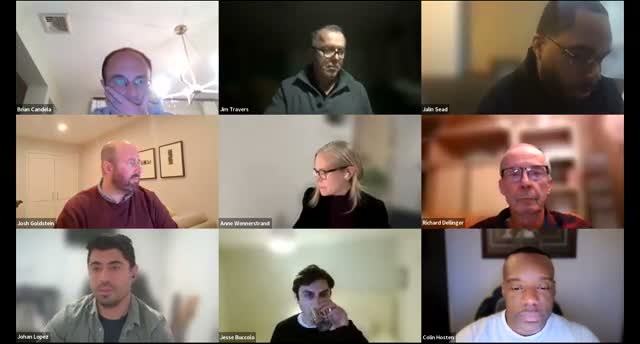
The Norwalk Ordinance Committee voted Jan. 20 to send an amendment to Chapter 33a, section 33a-8 (exceptions), to a public hearing after staff and the ordinance authors said the change simply clarifies the appeal timeline and where appeals should be filed.
Jim Travers, who presented the amendment, said the revision “identif[ies] a period of time within which an applicant can appeal” and adds 30 days while referencing the Superior Court rather than a general citation to state law. Travers described the change as a “minor correction” intended to give applicants and the city clear deadlines.
The amendment sits inside the city’s Complete Streets framework, a multiyear effort Travers summarized as having produced a Complete Streets design manual and a year of active capital work. “We were the fourteenth city in the state of Connecticut to adopt complete streets legislation,” Travers said, and he noted recent results including about 12.3 miles of new sidewalks and added bike lanes and signal upgrades.
Council member Yohan Lopez asked whether the ordinance contains criteria to ensure public comment—especially anecdotal or fear‑based testimony—does not outweigh technical analysis. Members and staff responded that public comment is considered but that final determinations on exceptions are made by the Complete Streets Committee, a panel that includes the Complete Streets coordinator, public‑works and planning staff, ADA and commission representatives.
Staff said the committee typically has 45–90 days to review an exception and that, if denied, a petitioner would have 30 days to appeal. That structure, staff said, is intended to protect due process while avoiding open‑ended delays that could prevent projects from moving forward.
The committee voted unanimously to move the amendment to public hearing. The ordinance will return to committee after the hearing with any public comments and recommended edits.
Jim Travers, who presented the amendment, said the revision “identif[ies] a period of time within which an applicant can appeal” and adds 30 days while referencing the Superior Court rather than a general citation to state law. Travers described the change as a “minor correction” intended to give applicants and the city clear deadlines.
The amendment sits inside the city’s Complete Streets framework, a multiyear effort Travers summarized as having produced a Complete Streets design manual and a year of active capital work. “We were the fourteenth city in the state of Connecticut to adopt complete streets legislation,” Travers said, and he noted recent results including about 12.3 miles of new sidewalks and added bike lanes and signal upgrades.
Council member Yohan Lopez asked whether the ordinance contains criteria to ensure public comment—especially anecdotal or fear‑based testimony—does not outweigh technical analysis. Members and staff responded that public comment is considered but that final determinations on exceptions are made by the Complete Streets Committee, a panel that includes the Complete Streets coordinator, public‑works and planning staff, ADA and commission representatives.
Staff said the committee typically has 45–90 days to review an exception and that, if denied, a petitioner would have 30 days to appeal. That structure, staff said, is intended to protect due process while avoiding open‑ended delays that could prevent projects from moving forward.
The committee voted unanimously to move the amendment to public hearing. The ordinance will return to committee after the hearing with any public comments and recommended edits.
Don't Miss a Word: See the Full Meeting!
Go beyond summaries. Unlock every video, transcript, and key insight with a Founder Membership.
✓
Get instant access to full meeting videos
✓
Search and clip any phrase from complete transcripts
✓
Receive AI-powered summaries & custom alerts
✓
Enjoy lifetime, unrestricted access to government data
30-day money-back guarantee
