Board approves accessory‑dwelling conditional use at Cruzette Way but tables setback variance after heated public comment
January 21, 2026 | Escambia County, Florida
This article was created by AI summarizing key points discussed. AI makes mistakes, so for full details and context, please refer to the video of the full meeting. Please report any errors so we can fix them. Report an error »
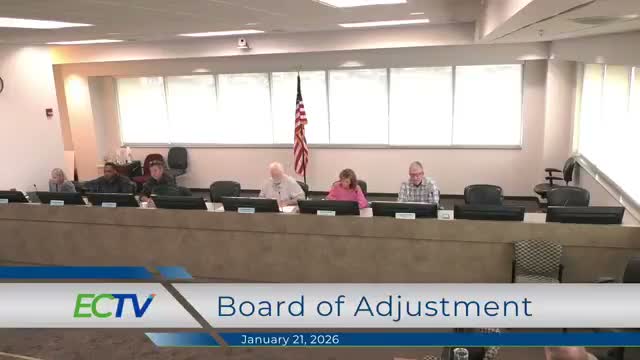
The Escambia County Board of Adjustment on Jan. 21 approved a conditional use to recognize an existing accessory dwelling unit (ADU) at an address listed in the staff packet as 5490 Cruzette Way, but deferred action on a related variance to the parcel’s right‑side setback.
Kimberly Wilson, senior planner, told the board staff reviewed the application and supporting materials — including a sealed survey and site photos — and recommended approval of the conditional use because the existing structure can be used in a manner compatible with adjacent properties if applicable building and floodplain standards are met. The property sits in an AE FEMA flood zone; building inspections had required an elevation certificate before staff could confirm compliance.
Neighbors objected vigorously at the public hearing. Javin Montgomery, who said he lives two doors away, accused the property owner of misrepresenting the structure’s original permitted use and said the building was constructed and occupied as living quarters, not a detached garage. “He lied 100%,” Montgomery said; he pressed the board to deny the ADU and the variance. Other neighbors, including Buddy Stromberg and Marion Abnett, raised concerns about public water access, bollards and signs blocking a county right of way and the effect on neighborhood character.
The applicant’s representative, Meredith Bush, said the structure was previously approved as an accessory structure and that any prior ambiguous language in the 2021 approval did not grant ADU status. Bush said the owner will not rent the ADU, filed sworn affidavits to that effect, and is willing to pay up to four times permitting fees and to record deed‑restriction language to limit short‑term rental use.
Staff explained the technical reason for the variance hearing: the lot is 82 feet wide, which makes the ADU setback requirement 10% (8.2 feet); the sealed survey showed the ADU sitting at roughly 4.76 feet, creating a roughly 1.74‑foot (about 20‑inch) shortfall. Staff’s variance analysis concluded the need resulted from actions by the property owner and, therefore, did not meet the variance criteria; staff recommended denial.
Board members debated the competing points: some emphasized that the law and the land development code require the board to grant relief only when variance criteria are met, while others expressed sympathy for the owner’s efforts to come into compliance. After public comment and extended deliberation, a motion to table the variance to the March 18 BOA meeting passed unanimously; the board directed that the landowner pay the advertising costs for the continued hearing.
The conditional‑use approval and the tabling of the variance leave the ADU recognized for land‑use purposes but the technical setback remains unresolved. Staff noted options moving forward include modifying the building to meet setbacks, recording covenants that restrict future use, pursuing front‑counter minor relief procedures where applicable, or returning to the board with additional evidence at the continued hearing.
Kimberly Wilson, senior planner, told the board staff reviewed the application and supporting materials — including a sealed survey and site photos — and recommended approval of the conditional use because the existing structure can be used in a manner compatible with adjacent properties if applicable building and floodplain standards are met. The property sits in an AE FEMA flood zone; building inspections had required an elevation certificate before staff could confirm compliance.
Neighbors objected vigorously at the public hearing. Javin Montgomery, who said he lives two doors away, accused the property owner of misrepresenting the structure’s original permitted use and said the building was constructed and occupied as living quarters, not a detached garage. “He lied 100%,” Montgomery said; he pressed the board to deny the ADU and the variance. Other neighbors, including Buddy Stromberg and Marion Abnett, raised concerns about public water access, bollards and signs blocking a county right of way and the effect on neighborhood character.
The applicant’s representative, Meredith Bush, said the structure was previously approved as an accessory structure and that any prior ambiguous language in the 2021 approval did not grant ADU status. Bush said the owner will not rent the ADU, filed sworn affidavits to that effect, and is willing to pay up to four times permitting fees and to record deed‑restriction language to limit short‑term rental use.
Staff explained the technical reason for the variance hearing: the lot is 82 feet wide, which makes the ADU setback requirement 10% (8.2 feet); the sealed survey showed the ADU sitting at roughly 4.76 feet, creating a roughly 1.74‑foot (about 20‑inch) shortfall. Staff’s variance analysis concluded the need resulted from actions by the property owner and, therefore, did not meet the variance criteria; staff recommended denial.
Board members debated the competing points: some emphasized that the law and the land development code require the board to grant relief only when variance criteria are met, while others expressed sympathy for the owner’s efforts to come into compliance. After public comment and extended deliberation, a motion to table the variance to the March 18 BOA meeting passed unanimously; the board directed that the landowner pay the advertising costs for the continued hearing.
The conditional‑use approval and the tabling of the variance leave the ADU recognized for land‑use purposes but the technical setback remains unresolved. Staff noted options moving forward include modifying the building to meet setbacks, recording covenants that restrict future use, pursuing front‑counter minor relief procedures where applicable, or returning to the board with additional evidence at the continued hearing.
View the Full Meeting & All Its Details
This article offers just a summary. Unlock complete video, transcripts, and insights as a Founder Member.
✓
Watch full, unedited meeting videos
✓
Search every word spoken in unlimited transcripts
✓
AI summaries & real-time alerts (all government levels)
✓
Permanent access to expanding government content
30-day money-back guarantee
