Astoria staff eye transit pilots and an updated parking study as downtown development raises demand
December 22, 2025 | Astoria City, Clatsop County, Oregon
This article was created by AI summarizing key points discussed. AI makes mistakes, so for full details and context, please refer to the video of the full meeting. Please report any errors so we can fix them. Report an error »
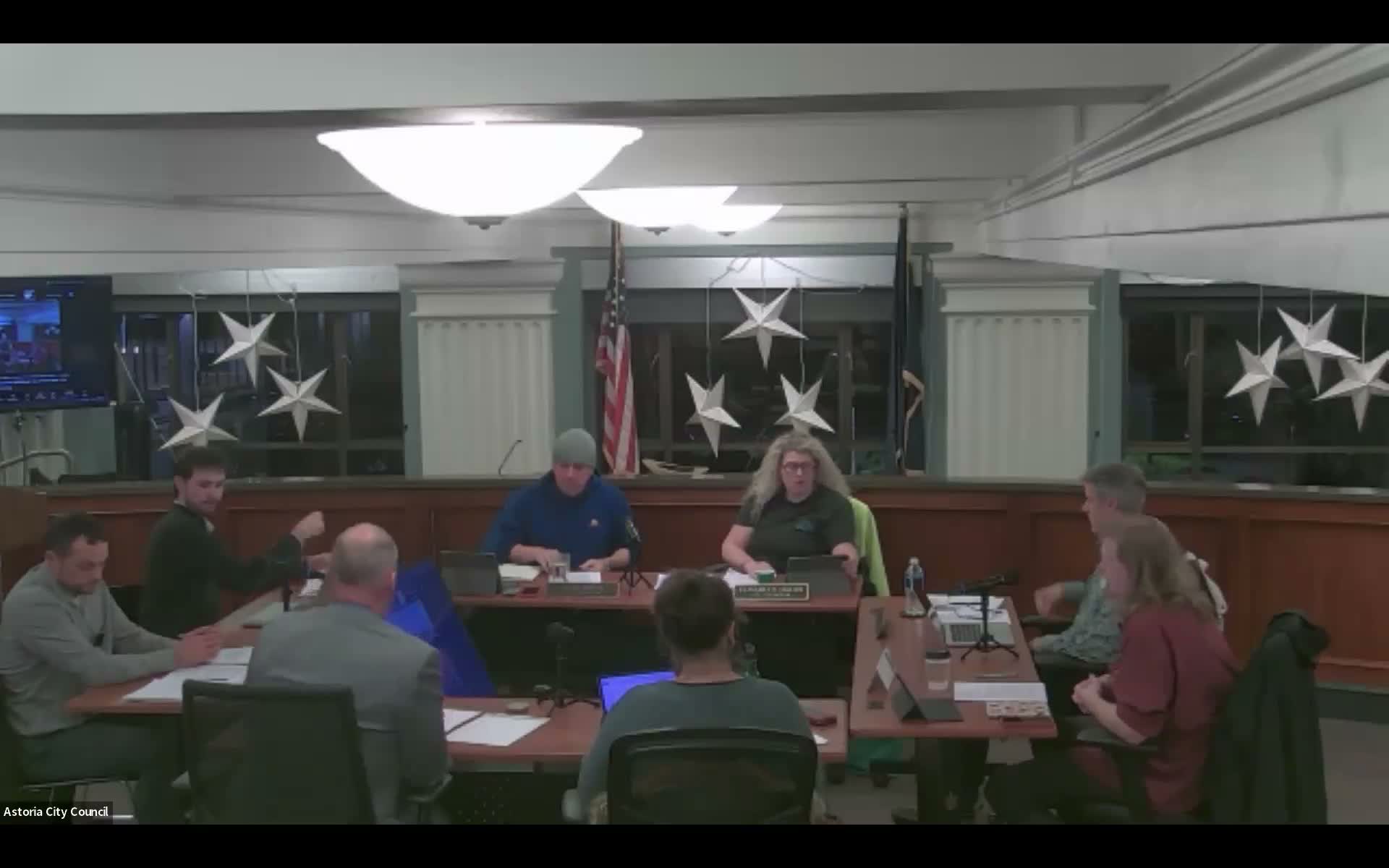
City staff presented options to address downtown parking at the Astoria City Council work session on Dec. 22, citing a 2018–19 parking study and several pending developments that could increase demand.
Staff said the 2018–19 study estimated about 2,205 total parking spaces in the downtown parking district, covering roughly 21 acres, with peak parking hours from about 11 a.m.–1 p.m. and evening peaks around 5–7 p.m. The packet recommends measures including signage, park-and-ride options for employees and peak-day shuttles to shift perceptions and encourage people to park slightly farther from destinations.
Staff highlighted nearby developments that could affect demand: the Oregon Film Museum (parking needs still under review), Dairy Gold (60–120 potential residential units in RFEI responses), Copeland Commons (about 60–64 units), a Department of Human Services location anticipated to need 64 on-street spaces, and Owens Adair 2 (about 50 units). "We'd like to identify how upcoming development will impact parking capacity," staff said.
To address these pressures, staff proposed two parallel efforts: launch community pilot programs with partners (for example, Sunset Empire Transit District and the Port of Astoria) and issue a limited-scope RFP for an updated parking analysis. Staff estimated an RFP-deliverable timeline of six to nine months after contract award and a consultant budget in the $60,000–$90,000 range. "We would receive the report potentially 6 to 9 months from when the contract would be awarded," staff said.
Councilors discussed trade-offs between immediate pilot action and waiting for updated data. Some urged beginning transit pilots without delay, saying pilots could demonstrate alternatives to driving. Others favored a sharper inventory and impact analysis timed to when the Department of Human Services and new residential projects are operating so the study reflects the changed conditions.
Stakeholder input came from Mr. Hayes, executive director of the downtown historic-district association, who said hard data across seasons is essential and suggested paid parking models can help fund consistent enforcement. "It all starts with the data," he told the council, urging seasonal counts and clear enforcement plans.
Council discussion also focused on enforcement mechanics, possible metered parking (including local exemptions, kiosks or app-based payment), and using private lots through leasing to expand publicly available capacity. One councilor said downtown parking citations may be too low to deter overstays and suggested enforcement changes.
Staff said next steps would include refining the RFP scope to split what can be done internally versus what requires consultant expertise, continuing partner work on transit pilots, and conducting an internal enforcement review with the police department. Staff will draft an RFP and bring it back to council for guidance.
Staff said the 2018–19 study estimated about 2,205 total parking spaces in the downtown parking district, covering roughly 21 acres, with peak parking hours from about 11 a.m.–1 p.m. and evening peaks around 5–7 p.m. The packet recommends measures including signage, park-and-ride options for employees and peak-day shuttles to shift perceptions and encourage people to park slightly farther from destinations.
Staff highlighted nearby developments that could affect demand: the Oregon Film Museum (parking needs still under review), Dairy Gold (60–120 potential residential units in RFEI responses), Copeland Commons (about 60–64 units), a Department of Human Services location anticipated to need 64 on-street spaces, and Owens Adair 2 (about 50 units). "We'd like to identify how upcoming development will impact parking capacity," staff said.
To address these pressures, staff proposed two parallel efforts: launch community pilot programs with partners (for example, Sunset Empire Transit District and the Port of Astoria) and issue a limited-scope RFP for an updated parking analysis. Staff estimated an RFP-deliverable timeline of six to nine months after contract award and a consultant budget in the $60,000–$90,000 range. "We would receive the report potentially 6 to 9 months from when the contract would be awarded," staff said.
Councilors discussed trade-offs between immediate pilot action and waiting for updated data. Some urged beginning transit pilots without delay, saying pilots could demonstrate alternatives to driving. Others favored a sharper inventory and impact analysis timed to when the Department of Human Services and new residential projects are operating so the study reflects the changed conditions.
Stakeholder input came from Mr. Hayes, executive director of the downtown historic-district association, who said hard data across seasons is essential and suggested paid parking models can help fund consistent enforcement. "It all starts with the data," he told the council, urging seasonal counts and clear enforcement plans.
Council discussion also focused on enforcement mechanics, possible metered parking (including local exemptions, kiosks or app-based payment), and using private lots through leasing to expand publicly available capacity. One councilor said downtown parking citations may be too low to deter overstays and suggested enforcement changes.
Staff said next steps would include refining the RFP scope to split what can be done internally versus what requires consultant expertise, continuing partner work on transit pilots, and conducting an internal enforcement review with the police department. Staff will draft an RFP and bring it back to council for guidance.
View the Full Meeting & All Its Details
This article offers just a summary. Unlock complete video, transcripts, and insights as a Founder Member.
✓
Watch full, unedited meeting videos
✓
Search every word spoken in unlimited transcripts
✓
AI summaries & real-time alerts (all government levels)
✓
Permanent access to expanding government content
30-day money-back guarantee
