GDOT: record construction costs are forcing strategic investments and project acceleration
January 20, 2026 | Appropriations, HOUSE OF REPRESENTATIVES, Committees, Legislative, Georgia
This article was created by AI summarizing key points discussed. AI makes mistakes, so for full details and context, please refer to the video of the full meeting. Please report any errors so we can fix them. Report an error »
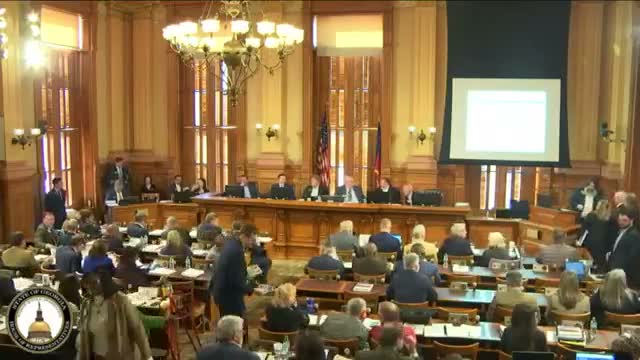
Georgia Department of Transportation Commissioner Russell McMurray told the committee that a national surge in construction commodity and labor costs has outpaced prior budgets and forced project rescheduling unless state funds are used to accelerate work.
"The simple math is freight tonnage almost doubles from 2015 to 2050," McMurray said, and he showed national and state cost indices that put bridge and repaving costs up roughly 90–93 percent over several years. The department described three large projects in the amended package: widening 31 miles of I‑16 to support a major automotive plant, widening I‑95 in Savannah, and completing a 25‑mile east‑west corridor near Macon. He also described $250 million for local maintenance grants (LMIG) and $100 million targeted to rural bridge replacement.
GDOT emphasized that accelerating projects now saves money compared with letting inflation add future cost. The amended budget also includes $1.796 billion in additional payments tied to the I‑75 South express lanes project and proposed using Peach Pass revenues and toll authority partnerships to leverage state funds.
Why it matters: Transportation projects are capital‑intensive, long‑lead investments that affect commerce and safety; rising costs and freight growth create pressure for sizable state investment to avoid multi‑year cascades that push projects farther into the future.
What questions remained: Members asked about financing the express lanes, how Peach Pass revenues would be modeled, parking and rest‑area capacity for truck drivers, and potential impacts of federal continuing resolutions on reimbursements.
"The simple math is freight tonnage almost doubles from 2015 to 2050," McMurray said, and he showed national and state cost indices that put bridge and repaving costs up roughly 90–93 percent over several years. The department described three large projects in the amended package: widening 31 miles of I‑16 to support a major automotive plant, widening I‑95 in Savannah, and completing a 25‑mile east‑west corridor near Macon. He also described $250 million for local maintenance grants (LMIG) and $100 million targeted to rural bridge replacement.
GDOT emphasized that accelerating projects now saves money compared with letting inflation add future cost. The amended budget also includes $1.796 billion in additional payments tied to the I‑75 South express lanes project and proposed using Peach Pass revenues and toll authority partnerships to leverage state funds.
Why it matters: Transportation projects are capital‑intensive, long‑lead investments that affect commerce and safety; rising costs and freight growth create pressure for sizable state investment to avoid multi‑year cascades that push projects farther into the future.
What questions remained: Members asked about financing the express lanes, how Peach Pass revenues would be modeled, parking and rest‑area capacity for truck drivers, and potential impacts of federal continuing resolutions on reimbursements.
View the Full Meeting & All Its Details
This article offers just a summary. Unlock complete video, transcripts, and insights as a Founder Member.
✓
Watch full, unedited meeting videos
✓
Search every word spoken in unlimited transcripts
✓
AI summaries & real-time alerts (all government levels)
✓
Permanent access to expanding government content
30-day money-back guarantee
