Fort Collins staff brief council on demographics, development trends and a cautious municipal finance outlook
January 20, 2026 | Fort Collins City, Larimer County, Colorado
This article was created by AI summarizing key points discussed. AI makes mistakes, so for full details and context, please refer to the video of the full meeting. Please report any errors so we can fix them. Report an error »
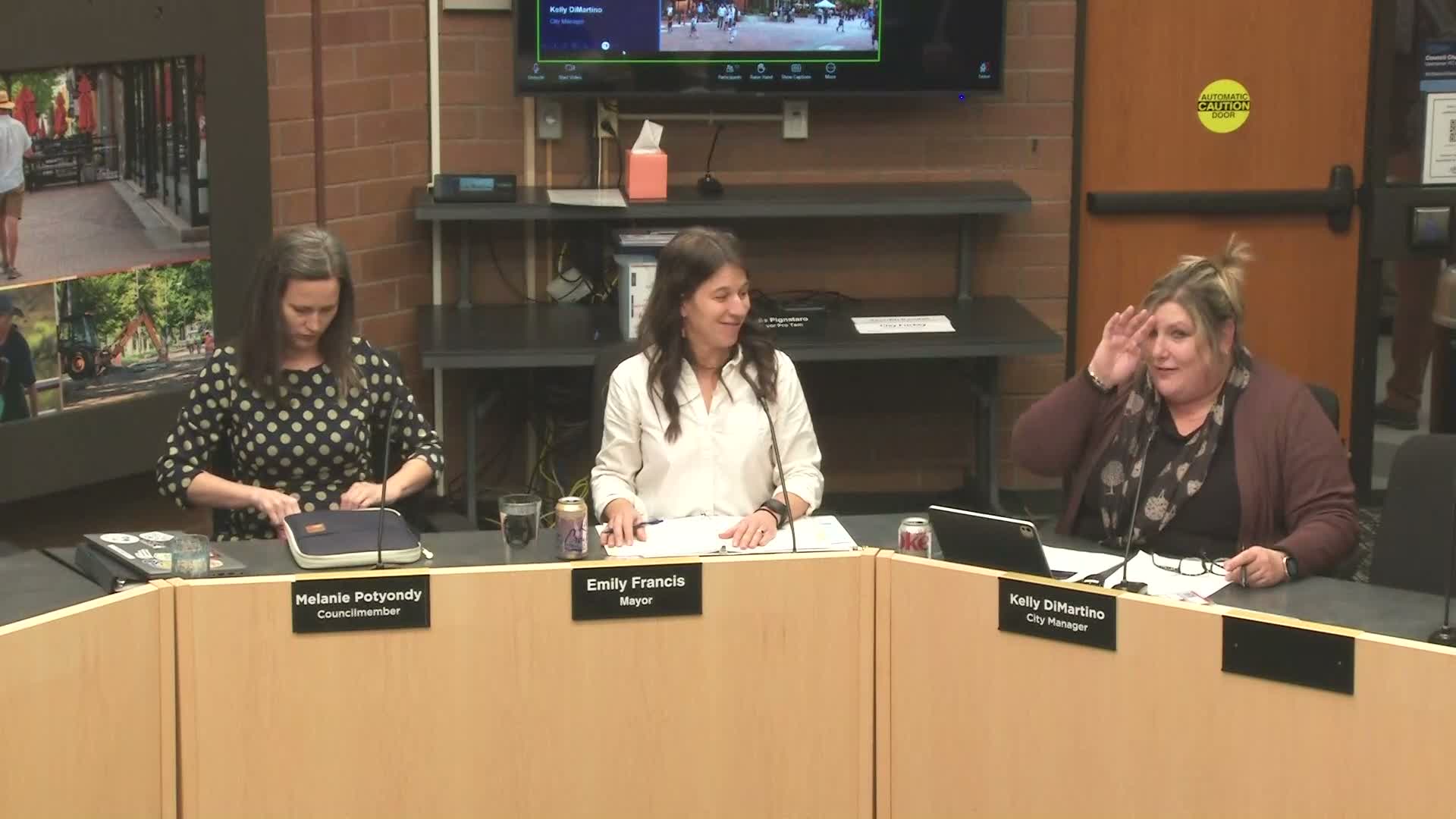
City staff used the Jan. 20 work session to ground the new council in demographic, development and financial trends that will inform the upcoming biannual budget process.
Presentations summarized a community survey (87% satisfied with overall quality of life), demographic trends showing modest population growth (about 0.6% in 2025) and an aging population among the fastest growing cohorts. Planning staff said building permits remained high in 2025 but that development activity is concentrated in multiunit projects, with fewer mid‑size projects and more projects exceeding 100 units.
Chief Financial Officer Caleb White gave a municipal finance primer explaining fund accounting, reserves and the city’s reliance on sales and use tax (roughly 50% of governmental revenue). He noted that the general fund ended 2024 without the excess reserves the city historically used for one‑time priorities, and that a $15.4 million shortfall in the general fund required reductions in the 2026 budget revision (26 vacant positions eliminated, reduced non‑bargaining compensation increases, and a hiring freeze). The CFO said staff currently projects modest sales tax growth (2% in 2027 and 2028) and warned that new priorities will require tradeoffs or reductions elsewhere.
Council members asked for follow‑up information on program inventories, geographic patterns of housing costs, water portfolio differences with neighboring cities and the composition of the development pipeline. Staff committed to memos and additional finance‑committee briefings and said the city will begin a multi‑year project to produce a program inventory to support priority‑based budgeting.
Presentations summarized a community survey (87% satisfied with overall quality of life), demographic trends showing modest population growth (about 0.6% in 2025) and an aging population among the fastest growing cohorts. Planning staff said building permits remained high in 2025 but that development activity is concentrated in multiunit projects, with fewer mid‑size projects and more projects exceeding 100 units.
Chief Financial Officer Caleb White gave a municipal finance primer explaining fund accounting, reserves and the city’s reliance on sales and use tax (roughly 50% of governmental revenue). He noted that the general fund ended 2024 without the excess reserves the city historically used for one‑time priorities, and that a $15.4 million shortfall in the general fund required reductions in the 2026 budget revision (26 vacant positions eliminated, reduced non‑bargaining compensation increases, and a hiring freeze). The CFO said staff currently projects modest sales tax growth (2% in 2027 and 2028) and warned that new priorities will require tradeoffs or reductions elsewhere.
Council members asked for follow‑up information on program inventories, geographic patterns of housing costs, water portfolio differences with neighboring cities and the composition of the development pipeline. Staff committed to memos and additional finance‑committee briefings and said the city will begin a multi‑year project to produce a program inventory to support priority‑based budgeting.
Don't Miss a Word: See the Full Meeting!
Go beyond summaries. Unlock every video, transcript, and key insight with a Founder Membership.
✓
Get instant access to full meeting videos
✓
Search and clip any phrase from complete transcripts
✓
Receive AI-powered summaries & custom alerts
✓
Enjoy lifetime, unrestricted access to government data
30-day money-back guarantee
