Speaker urges defense of United Nations Charter at 80th‑anniversary gathering in London
January 18, 2026 | United Nations, International
This article was created by AI summarizing key points discussed. AI makes mistakes, so for full details and context, please refer to the video of the full meeting. Please report any errors so we can fix them. Report an error »
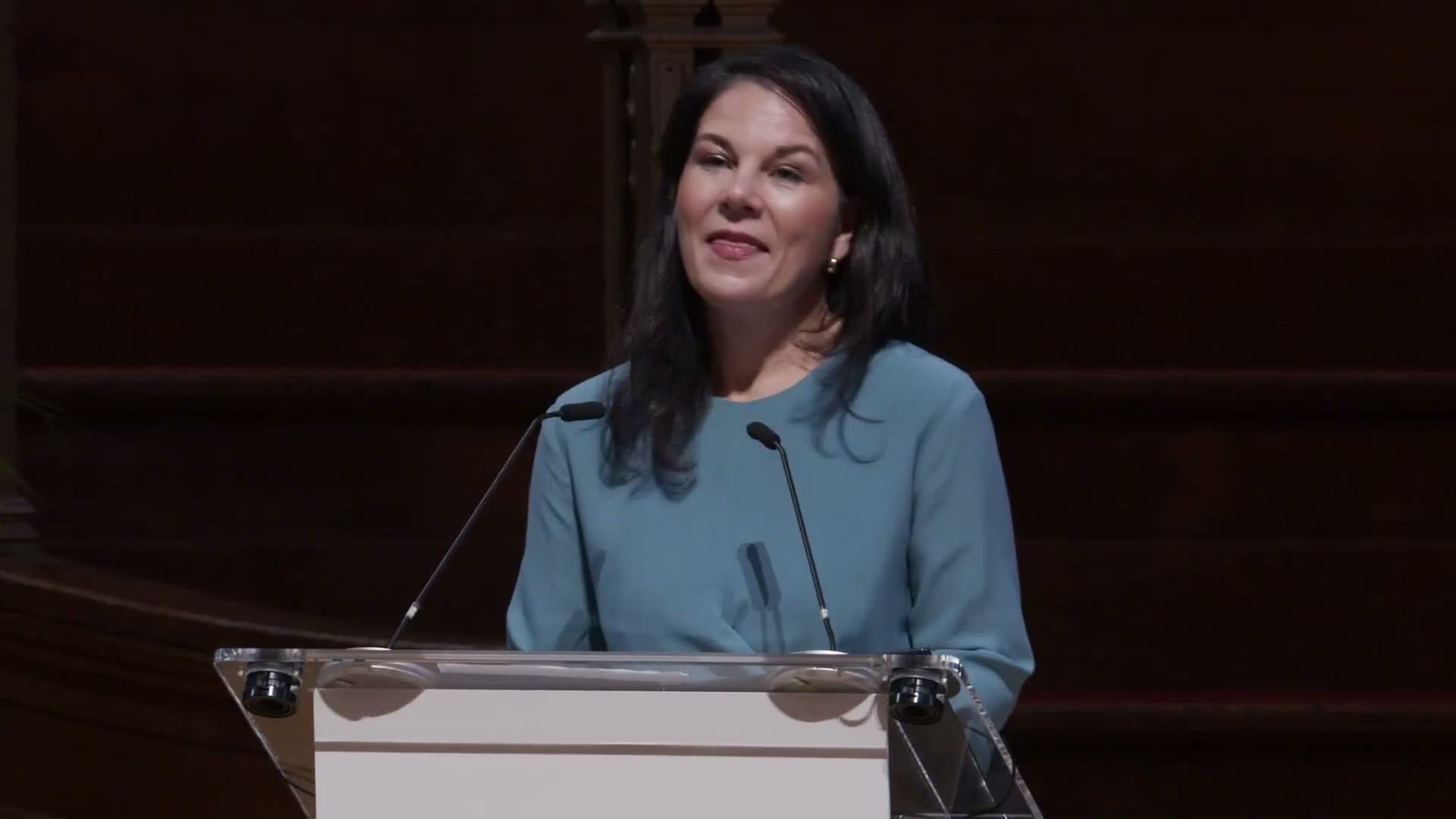
An unidentified speaker at a commemorative gathering convened by the United Nations Association of the United Kingdom in London urged delegates and the public to defend the United Nations Charter and reinvigorate multilateral cooperation on issues from peace and security to human rights and climate change.
"The United Nations and its principles are not only under pressure but under heavy attack," the speaker said, citing examples of UN work such as textbooks distributed by UNICEF, rice delivered through the World Food Programme, and vaccinations by the World Health Organization as evidence of the Charter's practical results.
The speaker framed the event as an 80th‑anniversary reflection on the first General Assembly meeting and recalled the devastation that led to the UN's founding: two world wars that left "70,000,000 dead," the Holocaust, the atomic bombings of Nagasaki and Hiroshima, and an era when "over 700,000,000" people remained under colonial rule. Those historical references, the speaker said, should prompt contemporary leaders to show the same resolve exhibited by early delegates.
Invoking archival footage shown earlier in the program, the speaker quoted British Prime Minister Clement Attlee—"we must and will succeed"—as an example of the determination that helped establish the institution. The speaker warned that tolerating breaches of the Charter, including by "some permanent members of the Security Council," risks the slow erosion of the UN's foundations and urged listeners not to confuse realpolitik with appeasement.
On reform, the speaker cautioned that change should not be used to "weaponize" the United Nations or to uproot the institution's pillars—peace and security, sustainable development, and human rights—but should instead make the organization more effective. The speaker also highlighted historical moments of women's leadership at the UN, including a side event led by Eleanor Roosevelt, and urged that the selection of the next Secretary‑General reflect and serve "all of humanity," including women and girls.
The address concluded with an appeal for governments, civil society, and the public to remain engaged: "We need representatives. We need governments... and we need you, the United Nations Association, civil society, the public, everyone... to remind all of us... that the principles of the United Nations Charter are our common life insurance." The speaker called for decisive, principled action and collective engagement to protect the UN's role going forward.
The gathering served as a public reminder of the institution's history and a call to guard the Charter as leaders prepare for upcoming debates and the next Secretary‑General selection.
"The United Nations and its principles are not only under pressure but under heavy attack," the speaker said, citing examples of UN work such as textbooks distributed by UNICEF, rice delivered through the World Food Programme, and vaccinations by the World Health Organization as evidence of the Charter's practical results.
The speaker framed the event as an 80th‑anniversary reflection on the first General Assembly meeting and recalled the devastation that led to the UN's founding: two world wars that left "70,000,000 dead," the Holocaust, the atomic bombings of Nagasaki and Hiroshima, and an era when "over 700,000,000" people remained under colonial rule. Those historical references, the speaker said, should prompt contemporary leaders to show the same resolve exhibited by early delegates.
Invoking archival footage shown earlier in the program, the speaker quoted British Prime Minister Clement Attlee—"we must and will succeed"—as an example of the determination that helped establish the institution. The speaker warned that tolerating breaches of the Charter, including by "some permanent members of the Security Council," risks the slow erosion of the UN's foundations and urged listeners not to confuse realpolitik with appeasement.
On reform, the speaker cautioned that change should not be used to "weaponize" the United Nations or to uproot the institution's pillars—peace and security, sustainable development, and human rights—but should instead make the organization more effective. The speaker also highlighted historical moments of women's leadership at the UN, including a side event led by Eleanor Roosevelt, and urged that the selection of the next Secretary‑General reflect and serve "all of humanity," including women and girls.
The address concluded with an appeal for governments, civil society, and the public to remain engaged: "We need representatives. We need governments... and we need you, the United Nations Association, civil society, the public, everyone... to remind all of us... that the principles of the United Nations Charter are our common life insurance." The speaker called for decisive, principled action and collective engagement to protect the UN's role going forward.
The gathering served as a public reminder of the institution's history and a call to guard the Charter as leaders prepare for upcoming debates and the next Secretary‑General selection.
View the Full Meeting & All Its Details
This article offers just a summary. Unlock complete video, transcripts, and insights as a Founder Member.
✓
Watch full, unedited meeting videos
✓
Search every word spoken in unlimited transcripts
✓
AI summaries & real-time alerts (all government levels)
✓
Permanent access to expanding government content
30-day money-back guarantee
