UNOPS chief urges immediate fixes in Gaza: fuel, demining, power repair and open corridors
January 18, 2026 | United Nations, International
This article was created by AI summarizing key points discussed. AI makes mistakes, so for full details and context, please refer to the video of the full meeting. Please report any errors so we can fix them. Report an error »
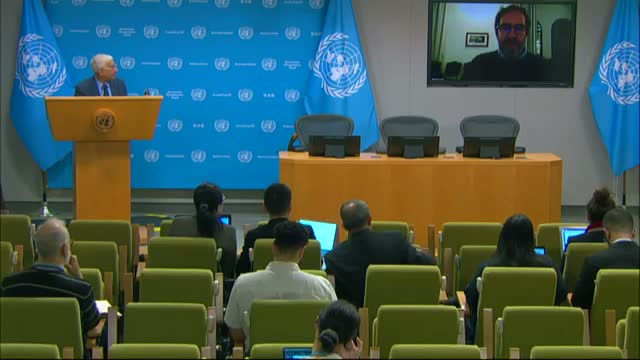
Jorge Moreira da Silva, executive director of the United Nations Office for Project Services (UNOPS), said after a day visiting Gaza that immediate operational fixes — not only long-term reconstruction planning — are needed to prevent further civilian hardship.
"What is needed to put the power station functioning again? $10,000,000," Moreira da Silva said, citing an engineering assessment of the Gaza power plant and urging donors and authorities to fund short-term repairs while larger reconstruction planning proceeds. He said fuel deliveries currently power the only electricity in Gaza and called fuel "life today in Gaza."
The UNOPS chief outlined several urgent needs on his visit: predictable fuel volumes for hospitals, bakeries and schools; mine action and demining so rubble can be removed safely; rehabilitation of water, sanitation and electrical networks; temporary shelters; and building damage assessments to determine which partially standing structures are safe for occupation.
Moreira da Silva also highlighted logistical bottlenecks. He said UNOPS built 10 warehouses in Jordan and procured 300 trucks with U.S. support, but after an incident at a bridge "4 months ago" none of the pallets held there have reached Gaza. He called on authorities to reopen and fully enable the Jordan Corridor, noting that goods parked in those hubs are crucial for winter and flood response.
On transparency and coordination, Moreira da Silva described the "2720 mechanism" as a one-stop approval system for consignments that publishes approved and rejected items online. He said the mechanism improves accountability and that UNOPS places monitors on the ground to track transit, crossings and corridors. He acknowledged, however, that not all consignments go through the mechanism and urged expansion of reporting so website data better reflects supplies arriving via multiple corridors.
Asked about the $53,000,000,000 figure for reconstruction, Moreira da Silva said that estimate comes from the World Bank, the United Nations and the European Commission; he said a first phase would prioritize roughly $30,000,000,000. He emphasized a phased, demand-driven approach and said UNOPS is prepared to engage the private sector in rebuilding efforts.
Journalists at the briefing pressed several operational points. Ibtisam Azim Al Arabi asked who is preventing the Jordan Corridor from opening and whether UNOPS is coordinating with newly formed bodies such as the "Board of Peace"; Moreira da Silva said Israel has not accepted the post-bridge operation to continue and that UNOPS had not yet engaged the Board of Peace but was eager to do so. Islam Douro noted that winter supplies appear to account for about 7% of items on the 2720 website; Moreira da Silva replied that the corridor blockage is a major factor and reiterated that some flows bypass the mechanism entirely.
On safety, Moreira da Silva described the technical complexity of rubble removal: he gave the rough figure of "60,000,000 tons of rubble" and warned of asbestos, mines, unexploded ordnance and, in some locations, human remains. He said rubble clearance therefore requires technical assessment and mine action, not only heavy machinery.
He closed by repeating his central appeal: do not wait for a full reconstruction plan to act on what is possible immediately. "Let's not waste 1 minute on what is possible to do immediately," he said, urging political will, predictable funding and access to spare parts and heavy equipment.
The briefing ended with thanks from the moderator and no immediate announcement of new approvals or fund pledges.
"What is needed to put the power station functioning again? $10,000,000," Moreira da Silva said, citing an engineering assessment of the Gaza power plant and urging donors and authorities to fund short-term repairs while larger reconstruction planning proceeds. He said fuel deliveries currently power the only electricity in Gaza and called fuel "life today in Gaza."
The UNOPS chief outlined several urgent needs on his visit: predictable fuel volumes for hospitals, bakeries and schools; mine action and demining so rubble can be removed safely; rehabilitation of water, sanitation and electrical networks; temporary shelters; and building damage assessments to determine which partially standing structures are safe for occupation.
Moreira da Silva also highlighted logistical bottlenecks. He said UNOPS built 10 warehouses in Jordan and procured 300 trucks with U.S. support, but after an incident at a bridge "4 months ago" none of the pallets held there have reached Gaza. He called on authorities to reopen and fully enable the Jordan Corridor, noting that goods parked in those hubs are crucial for winter and flood response.
On transparency and coordination, Moreira da Silva described the "2720 mechanism" as a one-stop approval system for consignments that publishes approved and rejected items online. He said the mechanism improves accountability and that UNOPS places monitors on the ground to track transit, crossings and corridors. He acknowledged, however, that not all consignments go through the mechanism and urged expansion of reporting so website data better reflects supplies arriving via multiple corridors.
Asked about the $53,000,000,000 figure for reconstruction, Moreira da Silva said that estimate comes from the World Bank, the United Nations and the European Commission; he said a first phase would prioritize roughly $30,000,000,000. He emphasized a phased, demand-driven approach and said UNOPS is prepared to engage the private sector in rebuilding efforts.
Journalists at the briefing pressed several operational points. Ibtisam Azim Al Arabi asked who is preventing the Jordan Corridor from opening and whether UNOPS is coordinating with newly formed bodies such as the "Board of Peace"; Moreira da Silva said Israel has not accepted the post-bridge operation to continue and that UNOPS had not yet engaged the Board of Peace but was eager to do so. Islam Douro noted that winter supplies appear to account for about 7% of items on the 2720 website; Moreira da Silva replied that the corridor blockage is a major factor and reiterated that some flows bypass the mechanism entirely.
On safety, Moreira da Silva described the technical complexity of rubble removal: he gave the rough figure of "60,000,000 tons of rubble" and warned of asbestos, mines, unexploded ordnance and, in some locations, human remains. He said rubble clearance therefore requires technical assessment and mine action, not only heavy machinery.
He closed by repeating his central appeal: do not wait for a full reconstruction plan to act on what is possible immediately. "Let's not waste 1 minute on what is possible to do immediately," he said, urging political will, predictable funding and access to spare parts and heavy equipment.
The briefing ended with thanks from the moderator and no immediate announcement of new approvals or fund pledges.
Don't Miss a Word: See the Full Meeting!
Go beyond summaries. Unlock every video, transcript, and key insight with a Founder Membership.
✓
Get instant access to full meeting videos
✓
Search and clip any phrase from complete transcripts
✓
Receive AI-powered summaries & custom alerts
✓
Enjoy lifetime, unrestricted access to government data
30-day money-back guarantee
