Extended producer-responsibility bill draws strong support and industry criticism over design and funding
January 20, 2026 | Environment and Agriculture, House of Representatives, Committees , Legislative, New Hampshire
This article was created by AI summarizing key points discussed. AI makes mistakes, so for full details and context, please refer to the video of the full meeting. Please report any errors so we can fix them. Report an error »
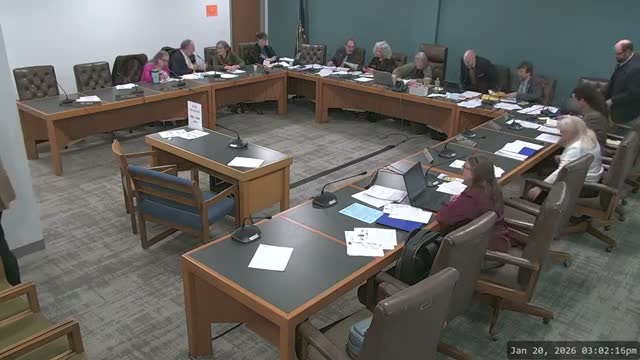
Representative Lucius Parshall introduced a broad extended producer responsibility (EPR) proposal designed to make manufacturers financially and operationally responsible for the end-of-life management of packaging. Supporters called the bill a way to reduce municipal costs, raise recycling rates and incentivize less-toxic, easier-to-recycle packaging designs.
Parshall framed the legislation as an urgency measure: “When your bathtub is overflowing, you may need a mop. But the first order of business has to be to turn off the tap,” he said, urging systemic producer responsibility to reduce packaging waste at source.
Environmental organizations, municipal recyclers and conservation groups offered strong endorsements, saying EPR can raise recycling performance, stabilize municipal budgets and reduce toxic materials entering the waste stream. Municipal and recycling witnesses described volatile commodity markets and rising disposal costs that make a durable funding model attractive.
Industry witnesses, including Andrew Hackman of AmeriPen and the Flexible Packaging Association, opposed the current draft. They flagged key concerns: the bill’s proposed government-held fund and an inspector-general office, aggressive mandatory reduction and recycling targets that lack basis in state infrastructure, and the lack of a prior needs assessment. Hackman recommended a staged approach starting with an independent needs assessment (costs in other states have been in the hundreds of thousands) and a shared funding model rather than a single public account.
DES staff cautioned the committee that states that have passed packaging EPR often required years to implement and that New Hampshire lacks prior in-house EPR implementation experience; DES said start-up costs could be significant and that the bill’s reimbursement mechanism would not cover initial agency resources for several years.
Committee members asked whether a phased or sector-by-sector approach — starting with discrete items or a needs assessment — might reduce implementation risk. Several members signaled interest in carving the measure into tractable steps or pursuing a more staged timetable.
Parshall framed the legislation as an urgency measure: “When your bathtub is overflowing, you may need a mop. But the first order of business has to be to turn off the tap,” he said, urging systemic producer responsibility to reduce packaging waste at source.
Environmental organizations, municipal recyclers and conservation groups offered strong endorsements, saying EPR can raise recycling performance, stabilize municipal budgets and reduce toxic materials entering the waste stream. Municipal and recycling witnesses described volatile commodity markets and rising disposal costs that make a durable funding model attractive.
Industry witnesses, including Andrew Hackman of AmeriPen and the Flexible Packaging Association, opposed the current draft. They flagged key concerns: the bill’s proposed government-held fund and an inspector-general office, aggressive mandatory reduction and recycling targets that lack basis in state infrastructure, and the lack of a prior needs assessment. Hackman recommended a staged approach starting with an independent needs assessment (costs in other states have been in the hundreds of thousands) and a shared funding model rather than a single public account.
DES staff cautioned the committee that states that have passed packaging EPR often required years to implement and that New Hampshire lacks prior in-house EPR implementation experience; DES said start-up costs could be significant and that the bill’s reimbursement mechanism would not cover initial agency resources for several years.
Committee members asked whether a phased or sector-by-sector approach — starting with discrete items or a needs assessment — might reduce implementation risk. Several members signaled interest in carving the measure into tractable steps or pursuing a more staged timetable.
View the Full Meeting & All Its Details
This article offers just a summary. Unlock complete video, transcripts, and insights as a Founder Member.
✓
Watch full, unedited meeting videos
✓
Search every word spoken in unlimited transcripts
✓
AI summaries & real-time alerts (all government levels)
✓
Permanent access to expanding government content
30-day money-back guarantee
