Utilities tell committee they can meet traditional growth but large data‑center requests require new generation and transmission
December 15, 2025 | Legislative, North Dakota
This article was created by AI summarizing key points discussed. AI makes mistakes, so for full details and context, please refer to the video of the full meeting. Please report any errors so we can fix them. Report an error »
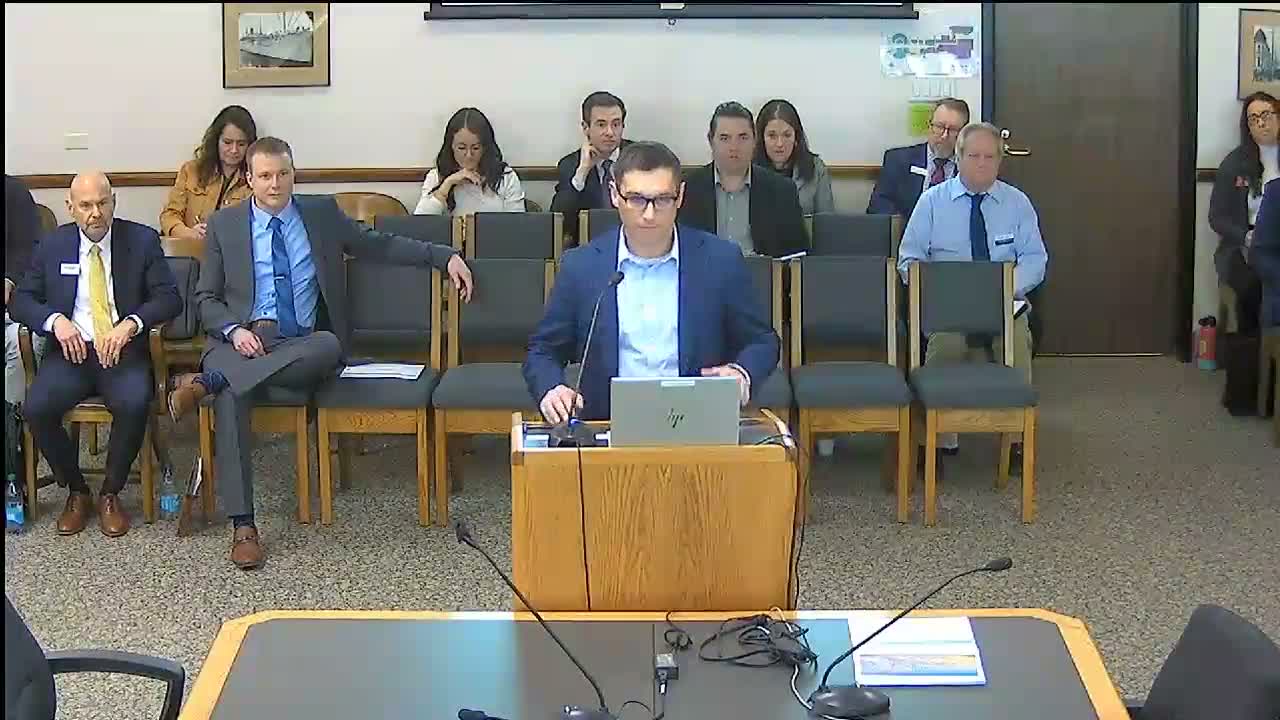
A panel of North Dakota and regional power companies and cooperatives described how traditional customer growth is modest for many utilities but that large‑scale inquiries from data centers and industry could change planning and require accelerated generation and transmission investments.
Benjamin Hertz of Basin Electric said Basin’s base planning forecasts about 2.5% compound annual growth in its footprint driven by oil and gas and residential expansion, but the cooperative is tracking potential large loads separately and has no committed nuclear additions at present; Basin said cost and technology maturity remain central constraints.
Great River Energy (presented by Zach Smith) said its base forecast is modest (about 0.6–0.7% annually) but scenarios for large loads range from 200 MW to 2,700 MW depending on projects; GRE does not include new nuclear in its current integrated resource plan. Minnkota and other local cooperatives reported similar positions: they are developing wind and battery projects where feasible but expect natural gas and transmission upgrades to be central if large data centers proceed. Minnkota announced a contract to supply Apply Digital with 280 MW for an AI data center near Harwood; the presenter said Apply will fund required infrastructure so customers will not bear the fixed transmission cost for that build.
Panelists emphasized the role of tranche/transmission planning processes (SPP MISO ITPs) to identify long‑lead backbone projects and noted utilities are actively studying projects such as Jamestown–Ellendale and the Leland Olds–Tandy lines to bolster export capability. Several utilities said they have seen generators or thermal retirements deferred in response to near‑term adequacy concerns.
Committee members pressed utilities on workforce constraints, undergrounding transmission costs (panelists said burying high‑voltage lines is orders of magnitude more expensive), and potential public‑private partnerships for storage and waste management. Utilities asked for continued state coordination on siting and transmission priorities.
Benjamin Hertz of Basin Electric said Basin’s base planning forecasts about 2.5% compound annual growth in its footprint driven by oil and gas and residential expansion, but the cooperative is tracking potential large loads separately and has no committed nuclear additions at present; Basin said cost and technology maturity remain central constraints.
Great River Energy (presented by Zach Smith) said its base forecast is modest (about 0.6–0.7% annually) but scenarios for large loads range from 200 MW to 2,700 MW depending on projects; GRE does not include new nuclear in its current integrated resource plan. Minnkota and other local cooperatives reported similar positions: they are developing wind and battery projects where feasible but expect natural gas and transmission upgrades to be central if large data centers proceed. Minnkota announced a contract to supply Apply Digital with 280 MW for an AI data center near Harwood; the presenter said Apply will fund required infrastructure so customers will not bear the fixed transmission cost for that build.
Panelists emphasized the role of tranche/transmission planning processes (SPP MISO ITPs) to identify long‑lead backbone projects and noted utilities are actively studying projects such as Jamestown–Ellendale and the Leland Olds–Tandy lines to bolster export capability. Several utilities said they have seen generators or thermal retirements deferred in response to near‑term adequacy concerns.
Committee members pressed utilities on workforce constraints, undergrounding transmission costs (panelists said burying high‑voltage lines is orders of magnitude more expensive), and potential public‑private partnerships for storage and waste management. Utilities asked for continued state coordination on siting and transmission priorities.
Don't Miss a Word: See the Full Meeting!
Go beyond summaries. Unlock every video, transcript, and key insight with a Founder Membership.
✓
Get instant access to full meeting videos
✓
Search and clip any phrase from complete transcripts
✓
Receive AI-powered summaries & custom alerts
✓
Enjoy lifetime, unrestricted access to government data
30-day money-back guarantee
