Blue Ribbon Committee forms ad hoc group for vulnerable adults and hears hospital concerns about infants discharged during withdrawal
January 17, 2026 | Harrison County, Mississippi
This article was created by AI summarizing key points discussed. AI makes mistakes, so for full details and context, please refer to the video of the full meeting. Please report any errors so we can fix them. Report an error »
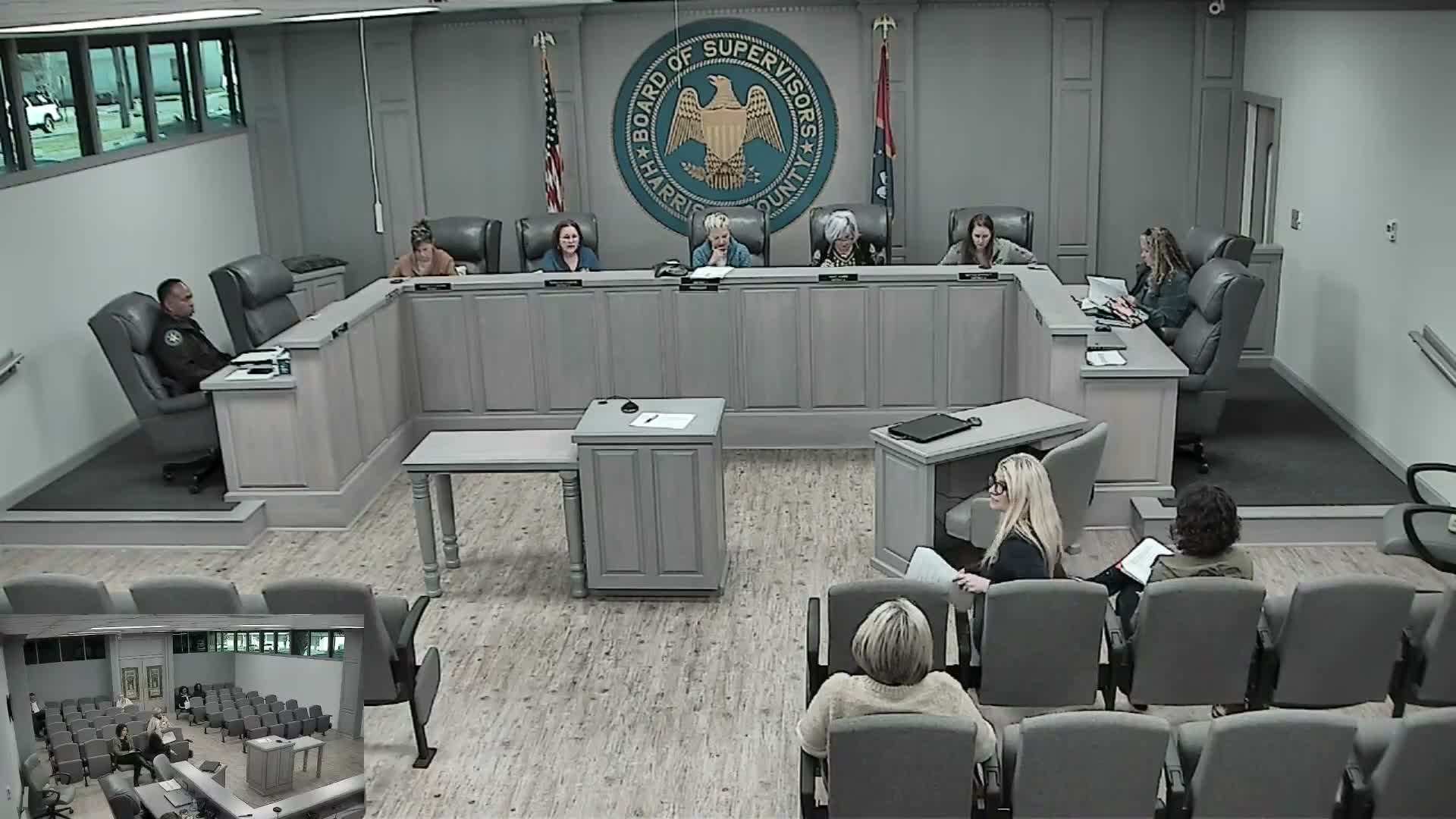
The Harrison County Blue Ribbon Committee voted to form an ad hoc committee to investigate services for vulnerable adults and to make recommendations for improved coordination with child-protection systems after a Memorial Hospital representative reported rising neonatal withdrawal cases.
Speaker 2 moved to form an ad hoc committee that would include hospital and county representatives to investigate advocacy and protection for vulnerable adults; Speaker 6 seconded the motion and the committee advanced the effort. The subgroup’s charge is to develop recommendations and report back to the Blue Ribbon Committee.
Hospital staff and clinicians told the committee they face barriers when Adult Protective Services (APS) or child-protective services (CPS) do not perform timely investigations for inpatients. A hospital representative noted that when patients are hospitalized APS may decline on-the-spot investigation, leaving hospitals without documentation and delaying placements or financial recovery. Hospital clinicians also described infants exposed to opioids and other substances who experience withdrawal: one committee member cited a December 2025 count of 21 such cases at Memorial Hospital.
Speakers urged earlier coordination so caregivers could be trained at the bedside, safety plans could be completed before discharge, and CPS/APS could be engaged earlier. Speaker 6 summarized the clinical risk: “They are not a normal baby. They still scream. They are very temperamental. They still have some feeding coordination issues,” and urged the committee to press for mandated caregiver engagement prior to discharge. Members asked hospital staff to compile average length-of-stay and cost figures for neonatal withdrawal cases to include in the committee’s March report to the Board of Supervisors.
Next steps: the ad hoc subgroup will be formed, hospital staff will supply average length-of-stay and cost estimates for the committee’s report, and members will pursue invitations to relevant APS/CPS supervisors to address investigation timelines and discharge safety planning.
Speaker 2 moved to form an ad hoc committee that would include hospital and county representatives to investigate advocacy and protection for vulnerable adults; Speaker 6 seconded the motion and the committee advanced the effort. The subgroup’s charge is to develop recommendations and report back to the Blue Ribbon Committee.
Hospital staff and clinicians told the committee they face barriers when Adult Protective Services (APS) or child-protective services (CPS) do not perform timely investigations for inpatients. A hospital representative noted that when patients are hospitalized APS may decline on-the-spot investigation, leaving hospitals without documentation and delaying placements or financial recovery. Hospital clinicians also described infants exposed to opioids and other substances who experience withdrawal: one committee member cited a December 2025 count of 21 such cases at Memorial Hospital.
Speakers urged earlier coordination so caregivers could be trained at the bedside, safety plans could be completed before discharge, and CPS/APS could be engaged earlier. Speaker 6 summarized the clinical risk: “They are not a normal baby. They still scream. They are very temperamental. They still have some feeding coordination issues,” and urged the committee to press for mandated caregiver engagement prior to discharge. Members asked hospital staff to compile average length-of-stay and cost figures for neonatal withdrawal cases to include in the committee’s March report to the Board of Supervisors.
Next steps: the ad hoc subgroup will be formed, hospital staff will supply average length-of-stay and cost estimates for the committee’s report, and members will pursue invitations to relevant APS/CPS supervisors to address investigation timelines and discharge safety planning.
Don't Miss a Word: See the Full Meeting!
Go beyond summaries. Unlock every video, transcript, and key insight with a Founder Membership.
✓
Get instant access to full meeting videos
✓
Search and clip any phrase from complete transcripts
✓
Receive AI-powered summaries & custom alerts
✓
Enjoy lifetime, unrestricted access to government data
30-day money-back guarantee
