County adopts East Multnomah County Transportation Safety Action Plan to pursue zero deaths and serious injuries
January 17, 2026 | Multnomah County, Oregon
This article was created by AI summarizing key points discussed. AI makes mistakes, so for full details and context, please refer to the video of the full meeting. Please report any errors so we can fix them. Report an error »
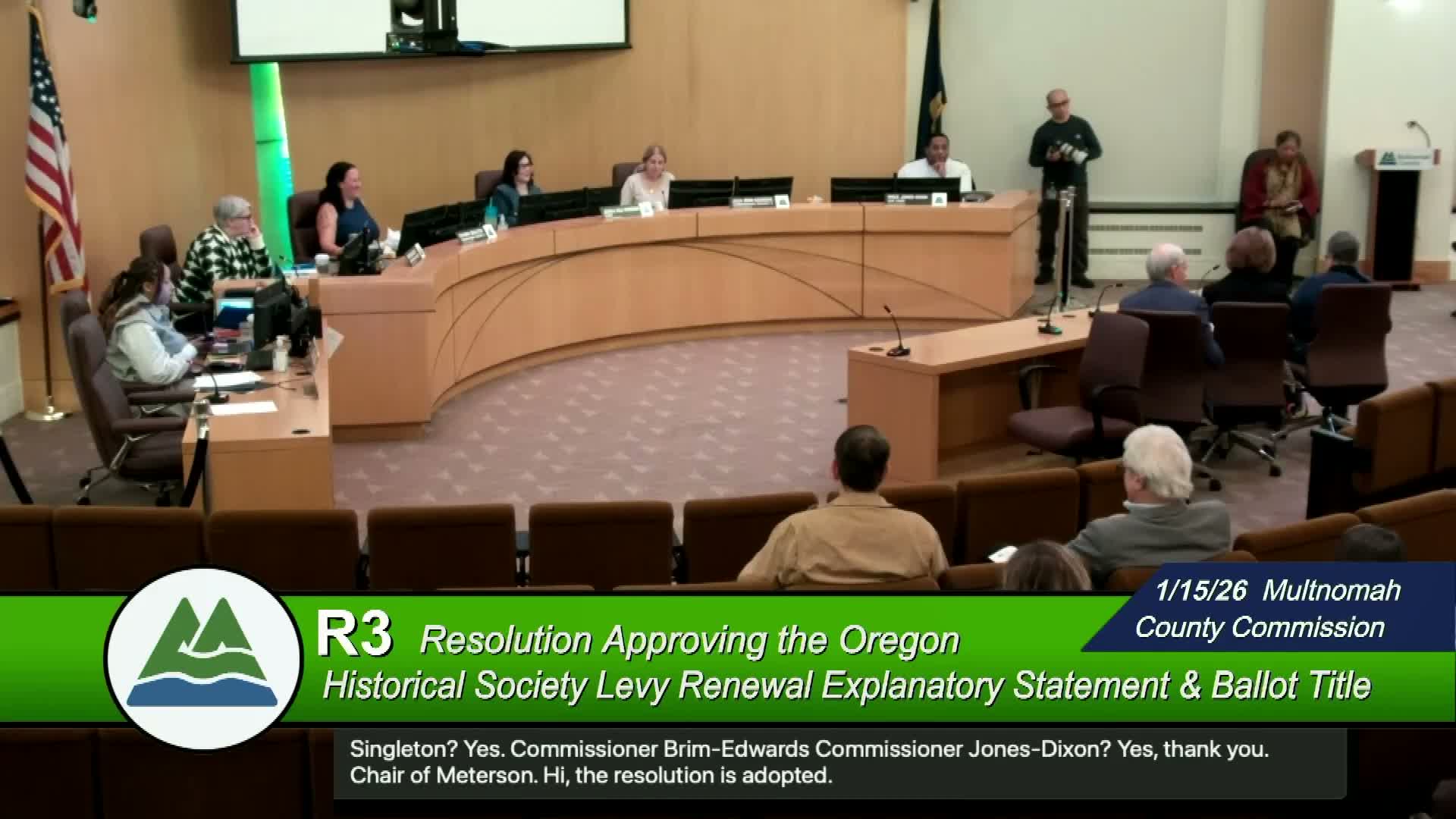
The Multnomah County Board of Commissioners adopted the East Multnomah County Transportation Safety Action Plan (TSAP), a strategy document developed with neighboring cities and regional partners that aims to eliminate traffic deaths and serious injuries by 2035. County staff and consultants outlined extensive public engagement (more than 3,000 participants), data analysis of the past decade showing over 8,400 crashes in East County and roughly 50–58 people seriously injured or killed annually, and a set of recommendations including priority corridor projects, speed management, intersection safety improvements, lighting, funding advocacy and policy changes.
Presenters emphasized equity and community‑driven priorities: engagement materials were translated into six prominent languages and outreach included in‑person events, surveys and listening sessions to reach underserved communities. The consultant team identified ten priority corridors that surfaced from engagement and analysis. Metro counselor Ashton Simpson spoke in support of adoption and said the plan will position the county to compete for Safe Streets for All and other funding; staff noted Metro’s grant supported plan development.
Board members praised the collaboration and requested cleaner crash‑data slides for follow‑up; commissioners stressed that the plan’s effectiveness depends on implementation and funding. The resolution was moved and seconded and approved by roll call.
What comes next: staff identified immediate next steps across design and construction, speed management, funding advocacy, process and policy changes, and named responsible agencies to carry forward implementation.
Presenters emphasized equity and community‑driven priorities: engagement materials were translated into six prominent languages and outreach included in‑person events, surveys and listening sessions to reach underserved communities. The consultant team identified ten priority corridors that surfaced from engagement and analysis. Metro counselor Ashton Simpson spoke in support of adoption and said the plan will position the county to compete for Safe Streets for All and other funding; staff noted Metro’s grant supported plan development.
Board members praised the collaboration and requested cleaner crash‑data slides for follow‑up; commissioners stressed that the plan’s effectiveness depends on implementation and funding. The resolution was moved and seconded and approved by roll call.
What comes next: staff identified immediate next steps across design and construction, speed management, funding advocacy, process and policy changes, and named responsible agencies to carry forward implementation.
Don't Miss a Word: See the Full Meeting!
Go beyond summaries. Unlock every video, transcript, and key insight with a Founder Membership.
✓
Get instant access to full meeting videos
✓
Search and clip any phrase from complete transcripts
✓
Receive AI-powered summaries & custom alerts
✓
Enjoy lifetime, unrestricted access to government data
30-day money-back guarantee
