Committee reviews H.588 to broaden OPR enforcement, create academic dental license and new registration powers for massage establishments
January 17, 2026 | Government Operations & Military Affairs, HOUSE OF REPRESENTATIVES, Committees, Legislative , Vermont
This article was created by AI summarizing key points discussed. AI makes mistakes, so for full details and context, please refer to the video of the full meeting. Please report any errors so we can fix them. Report an error »
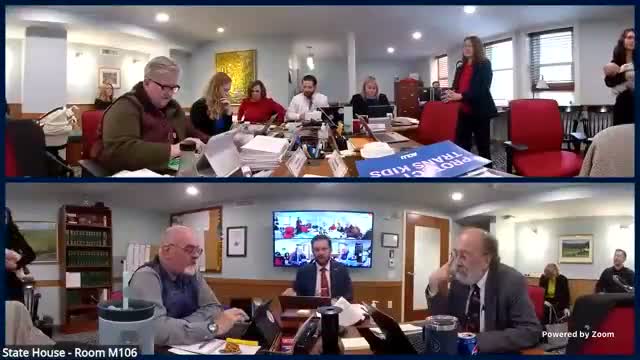
On Jan. 16 the Vermont House Government Operations & Military Affairs Committee reviewed H.588, a multi-part Office of Professional Regulation bill designed to change how the state licenses and oversees many professions. Legislative counsel and OPR staff described changes ranging from new administrative tools for OPR to a registration regime for massage establishments intended to help identify illicit activity.
The bill covers broad administrative changes in Title 3 and profession-specific amendments in Title 26. The changes would authorize the Office of Professional Regulation to rescind credentials in certain administrative circumstances and adopt a voluntary diversion program for licensees with substance-use disorders, clarify reporting duties for health-care facilities, add attempted fraudulent procurement or use of credentials to unprofessional-conduct statutes, and require board members to be adults. It also includes a collection of profession-specific provisions: a limited academic dentist license, a registration and inspection regime for massage establishments, removal of duplicative midwife reporting, expanded authority for pharmacist vaccination protocols, an explicit definition of funeral services that lists disposition methods, and temporary supplementation policies for psychologist licensure.
OPR director Jennifer Cohen said the office regulates “over 80,000 licensees in the state” and framed the package as both a public-protection and a workforce-development effort. On administrative rescission, Deputy Secretary Lauren Hibbert explained the distinction to the committee: “Rescission is an administrative action that doesn't involve misconduct…[for example] if we issue a license and then the payment for the credential doesn't go through.” Cohen described the proposed diversion program as an alternative for licensees with substance issues who voluntarily seek treatment and monitoring rather than immediate disciplinary action.
The committee heard detailed provisions for professions. For dentists, staff described a limited academic license for full-time instructors who would practice only in an accredited training facility under the supervision of a Vermont-licensed dentist, with renewal every two years and continuing-education requirements. Cohen told the committee the dentist provisions would take effect Sept. 1, 2026, and the massage provisions Dec. 1, 2026.
On massage establishments OPR staff said complaints the office receives are rarely about clinical injury or lack of qualifications and are more often reports of inappropriate touching or patterns consistent with human trafficking. Cohen said registration and inspection authority would allow OPR to demand ownership information, inspect before registration, deny registrations where prior unprofessional conduct occurred, and prosecute establishments themselves for unauthorized practice. “We receive a lot of complaints about … inappropriate touching in massage,” she said, noting that registration gives investigators tools to determine whether a business is legitimate and to coordinate with law enforcement.
Pharmacist provisions would decouple the limited ability to prescribe or administer vaccinations from an exclusive reliance on the federal ACIP recommendation list, allowing the commissioner of health to develop standing protocols — including for shared-decision vaccines — in consultation with stakeholders and OPR boards. OPR staff said the change is intended to give health officials more flexibility in fast-moving public-health situations and to close gaps that previously left some vaccines unavailable at pharmacies.
Several technical cleanups are included: removing an obsolete “preliminary denial” procedure, clarifying license-denial cross-references for foreign applicants, and specifying that funeral-service practice includes cremation, alkaline hydrolysis and natural organic reduction so disposition work does not require a separate license. For psychologists the bill would authorize temporary supplementation policies for education requirements, then require the board to adopt permanent rules within three years or let the temporary authority sunset.
The committee did not take final action; members and staff agreed to continue section-by-section work, identify witnesses for testimony, and coordinate with other bills that contain overlapping provisions. Representative Nugent will serve as a lead on the effort alongside the committee chair. The committee also noted a related bill in human services that contains similar pharmacist language and said staff will coordinate on drafting and any needed amendments.
Next steps: the committee will schedule subject-matter testimony and continue drafting the proposed committee amendment before taking any formal votes.
The bill covers broad administrative changes in Title 3 and profession-specific amendments in Title 26. The changes would authorize the Office of Professional Regulation to rescind credentials in certain administrative circumstances and adopt a voluntary diversion program for licensees with substance-use disorders, clarify reporting duties for health-care facilities, add attempted fraudulent procurement or use of credentials to unprofessional-conduct statutes, and require board members to be adults. It also includes a collection of profession-specific provisions: a limited academic dentist license, a registration and inspection regime for massage establishments, removal of duplicative midwife reporting, expanded authority for pharmacist vaccination protocols, an explicit definition of funeral services that lists disposition methods, and temporary supplementation policies for psychologist licensure.
OPR director Jennifer Cohen said the office regulates “over 80,000 licensees in the state” and framed the package as both a public-protection and a workforce-development effort. On administrative rescission, Deputy Secretary Lauren Hibbert explained the distinction to the committee: “Rescission is an administrative action that doesn't involve misconduct…[for example] if we issue a license and then the payment for the credential doesn't go through.” Cohen described the proposed diversion program as an alternative for licensees with substance issues who voluntarily seek treatment and monitoring rather than immediate disciplinary action.
The committee heard detailed provisions for professions. For dentists, staff described a limited academic license for full-time instructors who would practice only in an accredited training facility under the supervision of a Vermont-licensed dentist, with renewal every two years and continuing-education requirements. Cohen told the committee the dentist provisions would take effect Sept. 1, 2026, and the massage provisions Dec. 1, 2026.
On massage establishments OPR staff said complaints the office receives are rarely about clinical injury or lack of qualifications and are more often reports of inappropriate touching or patterns consistent with human trafficking. Cohen said registration and inspection authority would allow OPR to demand ownership information, inspect before registration, deny registrations where prior unprofessional conduct occurred, and prosecute establishments themselves for unauthorized practice. “We receive a lot of complaints about … inappropriate touching in massage,” she said, noting that registration gives investigators tools to determine whether a business is legitimate and to coordinate with law enforcement.
Pharmacist provisions would decouple the limited ability to prescribe or administer vaccinations from an exclusive reliance on the federal ACIP recommendation list, allowing the commissioner of health to develop standing protocols — including for shared-decision vaccines — in consultation with stakeholders and OPR boards. OPR staff said the change is intended to give health officials more flexibility in fast-moving public-health situations and to close gaps that previously left some vaccines unavailable at pharmacies.
Several technical cleanups are included: removing an obsolete “preliminary denial” procedure, clarifying license-denial cross-references for foreign applicants, and specifying that funeral-service practice includes cremation, alkaline hydrolysis and natural organic reduction so disposition work does not require a separate license. For psychologists the bill would authorize temporary supplementation policies for education requirements, then require the board to adopt permanent rules within three years or let the temporary authority sunset.
The committee did not take final action; members and staff agreed to continue section-by-section work, identify witnesses for testimony, and coordinate with other bills that contain overlapping provisions. Representative Nugent will serve as a lead on the effort alongside the committee chair. The committee also noted a related bill in human services that contains similar pharmacist language and said staff will coordinate on drafting and any needed amendments.
Next steps: the committee will schedule subject-matter testimony and continue drafting the proposed committee amendment before taking any formal votes.
Don't Miss a Word: See the Full Meeting!
Go beyond summaries. Unlock every video, transcript, and key insight with a Founder Membership.
✓
Get instant access to full meeting videos
✓
Search and clip any phrase from complete transcripts
✓
Receive AI-powered summaries & custom alerts
✓
Enjoy lifetime, unrestricted access to government data
30-day money-back guarantee
