Rep. Hedrick backs UAP task force bill to centralize Vermont airspace reporting
January 17, 2026 | Government Operations & Military Affairs, HOUSE OF REPRESENTATIVES, Committees, Legislative , Vermont
This article was created by AI summarizing key points discussed. AI makes mistakes, so for full details and context, please refer to the video of the full meeting. Please report any errors so we can fix them. Report an error »
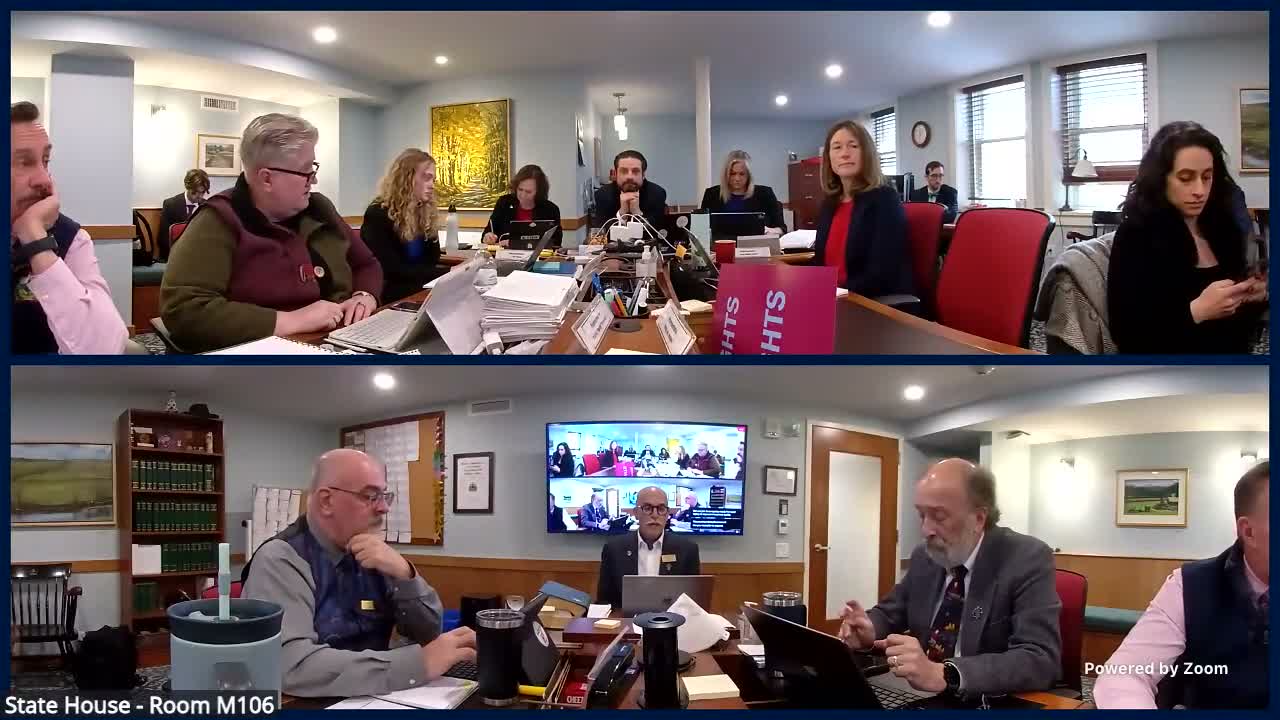
Representative Troy Hedrick presented H 654 to the Government Operations & Military Affairs committee on Jan. 16, proposing a Vermont Airspace Safety and Unidentified Anomalous Phenomena (UAP) Task Force to centralize reporting, data analysis and recommendations related to unidentified aerial and underwater observations.
Hedrick said the bill would create a ten‑member task force co‑chaired by the commissioner of public safety and the secretary of transportation to evaluate reports, assess aviation and public‑safety risks, coordinate with federal, academic and private partners, and develop recommendations to improve incident reporting, response and scientific analysis. Hedrick emphasized the group would be a data‑collection and advisory body, not a regulatory or enforcement agency: "This does not authorize state surveillance in any way, or any sort of invasive monitoring, and it does not presume that UAPs are extraterrestrial," he said.
Counsel provided a statutory walkthrough of the draft. Key provisions include a defined UAP term; the appointment of representatives from the Vermont National Guard, the Vermont Bureau of Criminal Investigation, aviation or general‑aviation operations, an academic aerospace expert, an independent radar/sensor expert, and a Vermont Intelligence Center representative; administrative support from the Department of Public Safety and the Agency of Transportation; and SCU (Scientific Coalition for UAP Studies) designated as the principal scientific analyst to receive reports and produce analytical findings for the task force.
The bill requires the task force to hold at least one public meeting annually, maintain a public web page with nonconfidential materials, and submit an annual written report by Dec. 15 to the governor and the relevant committees. Counsel also noted an explicit clause that nothing in the bill shall be construed to supersede FAA jurisdiction over airspace or authorize the task force to promulgate air‑safety regulations.
Members asked logistical questions about who currently receives reports, whether federal jurisdiction would conflict, and how classified or sensitive information would be handled. Hedrick and counsel suggested federal partners and experts (including named independent researchers) could advise on confidentiality protocols and investigative standards; they said the task force could develop guidance for secure voluntary reporting and public transparency consistent with state and federal privacy or security restrictions.
The committee did not vote on the bill during the session; Hedrick encouraged members to consult external subject-matter witnesses and research already underway at federal and academic levels.
Hedrick said the bill would create a ten‑member task force co‑chaired by the commissioner of public safety and the secretary of transportation to evaluate reports, assess aviation and public‑safety risks, coordinate with federal, academic and private partners, and develop recommendations to improve incident reporting, response and scientific analysis. Hedrick emphasized the group would be a data‑collection and advisory body, not a regulatory or enforcement agency: "This does not authorize state surveillance in any way, or any sort of invasive monitoring, and it does not presume that UAPs are extraterrestrial," he said.
Counsel provided a statutory walkthrough of the draft. Key provisions include a defined UAP term; the appointment of representatives from the Vermont National Guard, the Vermont Bureau of Criminal Investigation, aviation or general‑aviation operations, an academic aerospace expert, an independent radar/sensor expert, and a Vermont Intelligence Center representative; administrative support from the Department of Public Safety and the Agency of Transportation; and SCU (Scientific Coalition for UAP Studies) designated as the principal scientific analyst to receive reports and produce analytical findings for the task force.
The bill requires the task force to hold at least one public meeting annually, maintain a public web page with nonconfidential materials, and submit an annual written report by Dec. 15 to the governor and the relevant committees. Counsel also noted an explicit clause that nothing in the bill shall be construed to supersede FAA jurisdiction over airspace or authorize the task force to promulgate air‑safety regulations.
Members asked logistical questions about who currently receives reports, whether federal jurisdiction would conflict, and how classified or sensitive information would be handled. Hedrick and counsel suggested federal partners and experts (including named independent researchers) could advise on confidentiality protocols and investigative standards; they said the task force could develop guidance for secure voluntary reporting and public transparency consistent with state and federal privacy or security restrictions.
The committee did not vote on the bill during the session; Hedrick encouraged members to consult external subject-matter witnesses and research already underway at federal and academic levels.
Don't Miss a Word: See the Full Meeting!
Go beyond summaries. Unlock every video, transcript, and key insight with a Founder Membership.
✓
Get instant access to full meeting videos
✓
Search and clip any phrase from complete transcripts
✓
Receive AI-powered summaries & custom alerts
✓
Enjoy lifetime, unrestricted access to government data
30-day money-back guarantee
