Vermont commission urges clearer state-local roles, default closure process and shared staffing
January 17, 2026 | Education, SENATE, Committees, Legislative , Vermont
This article was created by AI summarizing key points discussed. AI makes mistakes, so for full details and context, please refer to the video of the full meeting. Please report any errors so we can fix them. Report an error »
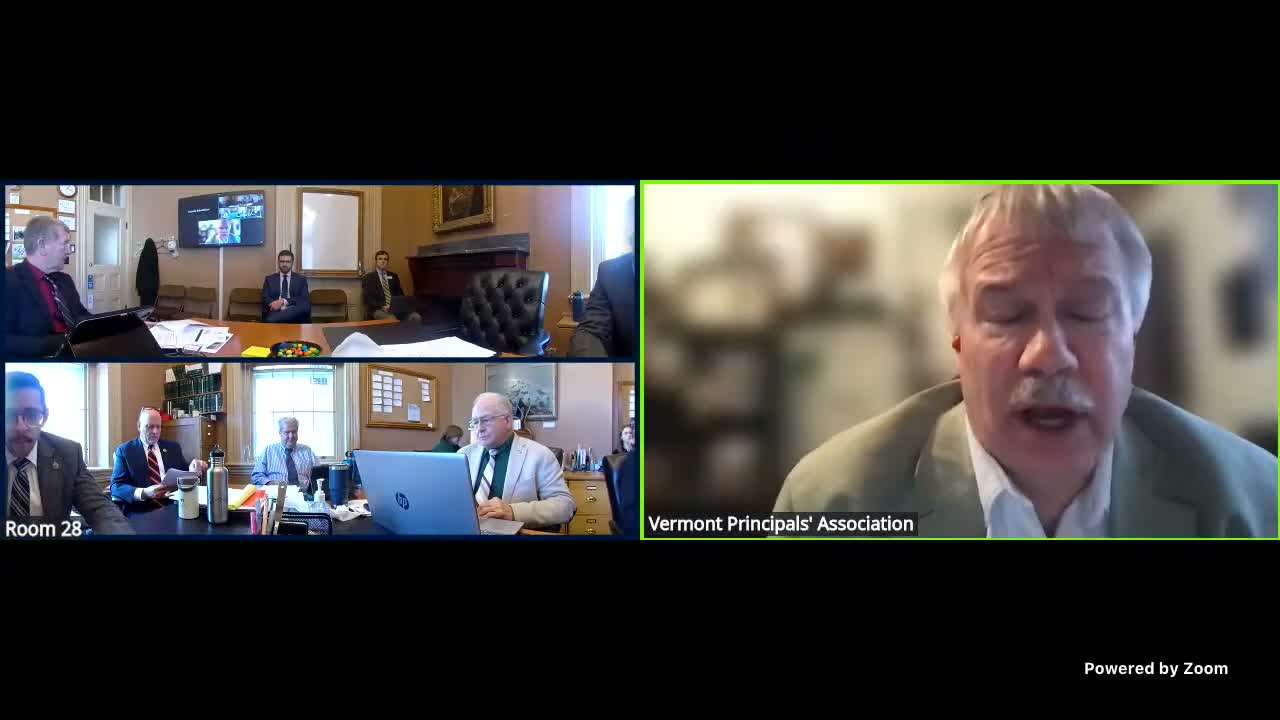
The commission on the future of public education in Vermont on Dec. 15 presented lawmakers with recommendations to clarify what should remain locally controlled and what should be set at the state level, and proposed default procedures to guide district mergers and potential school closures.
Jay Nichols, chair of the commission and executive director of the Vermont Principles Association, told legislators the panel agreed most policy-level decisions should remain at the local level, while the state board and Agency of Education should co-lead a statewide vision and be sufficiently resourced to support implementation. "If we're serious about education transformation, we need to make sure that the Agency of Education and the State Board of Education have the resources necessary," Nichols said.
Why it matters: The proposals are intended to guide implementation of Act 73’s governance changes and to reduce confusion as districts potentially merge or reorganize. Nichols urged the legislature to avoid rigid district-size targets and said voters should have clear, simple ballots when asked to approve supplemental spending.
Key recommendations and details
- State vs. local roles: The commission favored keeping most policy decisions at local district level but recommended that mandatory policies be at least as stringent as state model policies and that the state set a common vision. The panel emphasized the need for professional learning and resources so districts can meet statewide priorities.
- Ballot format for supplemental spending: The commission recommended a standardized, simple ballot format for any community vote on supplemental education spending, but was split over whether the ballot should explicitly translate that spending into an estimated tax-rate increase.
- School-closure and repurposing process: The commission proposed a default process if merged districts do not create their own: form a steering committee to lead consideration, hold no fewer than three public meetings, conduct either an advisory vote or a public input survey (the commission was divided on which is preferable), and require a majority vote of the entire school district for closure or repurposing. Nichols said an appeal could be triggered if 5% of district voters request review within 30 days; the Agency of Education would collect the record and forward it to the State Board of Education for final consideration.
- Employment and staffing: The commission recommended that all licensed educators be employees of the overall governance structure (the new district or supervisory entity) rather than a single school, to permit sharing of staff across schools and provide stronger job protections. Nichols described cases where districts struggle to deploy staff (for example, moving a nurse between small schools) and said shared employment would reduce costly redundancies.
- Compensation and bargaining: A majority of commission members favored coupling health-insurance bargaining with salary/compensation negotiations, though the commission did not take a position on whether such bargaining should be conducted at the state or local level.
- Monitoring and transparency: Nichols recommended that the Agency of Education monitor Act 73 implementation and provide regular reports to relevant legislative committees and the State Board of Education so changes are transparent to Vermonters.
Public input and concerns
Nichols cited the commission's survey and public sessions, saying the panel received about 5,000 responses and that respondents repeatedly described the initial reform process as "rushed, disorganized" and lacking deep community engagement. "Respondents also overwhelmingly felt that Vermont's education reform efforts must slow down and center the voices of those most impacted," Nichols said.
On the question of whether a district-wide majority vote would bind a school board, Nichols said he believed it would but noted statutory clarifications may be necessary and that pre-existing articles of agreement can preserve local veto language where written.
Next steps
Nichols urged the General Assembly to review the full report and materials and to allow time for careful deliberation and community engagement. The commission's recommendations are advisory; statutory changes would be required for some proposals, including any adjustments to voting or appeal rights.
Jay Nichols, chair of the commission and executive director of the Vermont Principles Association, told legislators the panel agreed most policy-level decisions should remain at the local level, while the state board and Agency of Education should co-lead a statewide vision and be sufficiently resourced to support implementation. "If we're serious about education transformation, we need to make sure that the Agency of Education and the State Board of Education have the resources necessary," Nichols said.
Why it matters: The proposals are intended to guide implementation of Act 73’s governance changes and to reduce confusion as districts potentially merge or reorganize. Nichols urged the legislature to avoid rigid district-size targets and said voters should have clear, simple ballots when asked to approve supplemental spending.
Key recommendations and details
- State vs. local roles: The commission favored keeping most policy decisions at local district level but recommended that mandatory policies be at least as stringent as state model policies and that the state set a common vision. The panel emphasized the need for professional learning and resources so districts can meet statewide priorities.
- Ballot format for supplemental spending: The commission recommended a standardized, simple ballot format for any community vote on supplemental education spending, but was split over whether the ballot should explicitly translate that spending into an estimated tax-rate increase.
- School-closure and repurposing process: The commission proposed a default process if merged districts do not create their own: form a steering committee to lead consideration, hold no fewer than three public meetings, conduct either an advisory vote or a public input survey (the commission was divided on which is preferable), and require a majority vote of the entire school district for closure or repurposing. Nichols said an appeal could be triggered if 5% of district voters request review within 30 days; the Agency of Education would collect the record and forward it to the State Board of Education for final consideration.
- Employment and staffing: The commission recommended that all licensed educators be employees of the overall governance structure (the new district or supervisory entity) rather than a single school, to permit sharing of staff across schools and provide stronger job protections. Nichols described cases where districts struggle to deploy staff (for example, moving a nurse between small schools) and said shared employment would reduce costly redundancies.
- Compensation and bargaining: A majority of commission members favored coupling health-insurance bargaining with salary/compensation negotiations, though the commission did not take a position on whether such bargaining should be conducted at the state or local level.
- Monitoring and transparency: Nichols recommended that the Agency of Education monitor Act 73 implementation and provide regular reports to relevant legislative committees and the State Board of Education so changes are transparent to Vermonters.
Public input and concerns
Nichols cited the commission's survey and public sessions, saying the panel received about 5,000 responses and that respondents repeatedly described the initial reform process as "rushed, disorganized" and lacking deep community engagement. "Respondents also overwhelmingly felt that Vermont's education reform efforts must slow down and center the voices of those most impacted," Nichols said.
On the question of whether a district-wide majority vote would bind a school board, Nichols said he believed it would but noted statutory clarifications may be necessary and that pre-existing articles of agreement can preserve local veto language where written.
Next steps
Nichols urged the General Assembly to review the full report and materials and to allow time for careful deliberation and community engagement. The commission's recommendations are advisory; statutory changes would be required for some proposals, including any adjustments to voting or appeal rights.
Don't Miss a Word: See the Full Meeting!
Go beyond summaries. Unlock every video, transcript, and key insight with a Founder Membership.
✓
Get instant access to full meeting videos
✓
Search and clip any phrase from complete transcripts
✓
Receive AI-powered summaries & custom alerts
✓
Enjoy lifetime, unrestricted access to government data
30-day money-back guarantee
